Hey everyone, if you’ve ever dabbled in drones, RC planes, electric bikes, or even those little e-scooters zooming around your neighborhood, you’ve probably used an outrunner brushless motor without even realizing it. I’m Jake, and my team and I have been supplying these bad boys to hobbyists, small manufacturers, and tech tinkerers for over seven years now. Every time someone comes to us confused about how these things actually work, I try to break it down in plain English—no jargon, no confusing textbook stuff. Today, let’s get into it. Outrunner Brushless Motor

First, let’s start with the basics: what even is an outrunner? If you’ve ever held a brushless motor, you’ve seen the two main types: inrunner and outrunner. Inrunners have the spinny part (the rotor) inside the coils, right? Outrunners flip that— the coils are stationary, and the outer shell (the motor case, usually with a shaft sticking out to connect to your prop or wheel) is what spins. That might sound like a tiny difference, but it changes everything.
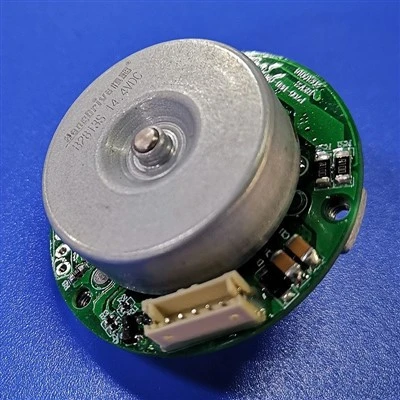
Let’s talk about the core parts here—we don’t overcomplicate these, so it’s just a handful of key pieces. First, the stator: that’s the stationary part inside. It’s a stack of thin steel sheets (called laminations, but don’t worry about the name) with copper wire wrapped around it, forming multiple “phases.” Most outrunners have three phases, that’s standard for a reason. Then the rotor: that’s the outer ring we mentioned, and inside it, there are permanent magnets—usually neodymium, the strong ones. These magnets are attached to the inside of the outrunner’s outer shell, so when the rotor spins, the whole shell and whatever’s connected to it spins too. Then you have the electronic speed controller (ESC)—that’s the brain buddy, right? No mechanical brushes here, which is the big thing that makes brushless motors different from old brushed motors. Brushed motors use little carbon brushes to transfer power to the coils, but those wear out, spark, and are less efficient. Brushless motors ditch that entirely, using electronics to control power.
Now, how does the magic happen? Let’s walk through it step by step. When you turn on your drone or e-bike, you send a signal to the ESC. That ESC doesn’t just send a constant jolt of electricity to the coils—instead, it switches the current between the three stator phases really fast. Each time the current changes, it creates an electromagnetic field around that phase. The permanent magnets on the rotor are either attracted to or repelled by this field—same poles repel, opposite attract, basic physics stuff. The ESC is timing these switches perfectly, so it’s like it’s “pulling” the rotor around in a circle. That’s why it spins.
Wait, why is outrunner better than inrunner for most of the stuff our customers use? Let’s be real: outrunners spin slower with more torque, and that’s exactly what hobbyists and small manufacturers need. If you’re powering a 5-inch drone prop, you don’t need a super high RPM—you need enough torque to lift the drone off the ground. If you’re making an electric bike motor, you don’t want to spin the wheel super fast out of the gate; you want torque to get you moving from a stop. Inrunners spin way faster, so you need a gearbox to slow them down, which adds weight and complexity. Outrunners are direct drive most of the time—just connect your prop or wheel straight to the motor shell, no extra parts. That’s why our outrunners are so popular with people who want simplicity and reliability.
Let’s clear up a common mix-up people have: “Why do some outrunners have more magnet poles than others?” That’s not just for show. The number of stator poles and rotor magnets affects how the motor performs. For example, a motor with more poles will have more torque at lower RPM, which is great for e-bikes or large quadcopters. Fewer poles mean higher RPM, good for small drones where you need faster prop speed. When we’re making our motors, we size the poles to match what our customers ask for—we can tweak that if you need something specific for your project.
Another question we get all the time: “Do I need to size my motor right?” Oh, so important. If you get a motor that’s too small, it’ll burn out quick—can’t handle the load, overheats. If it’s too big, you’re wasting weight and power. For example, a tiny 1806 outrunner is perfect for a 2-inch micro drone, but you’d never use that for a full-size plane that weighs 5 pounds. When customers come to us, we ask a bunch of quick questions: what’s your application, how much weight are you lifting, what’s your power source (battery volts matter a lot here), and we point them to the right motor. We don’t do one-size-fits-all, and that’s why so many people come back.
Let’s touch on efficiency too—brushless outrunners are way more efficient than old brushed motors. Brushed motors lose a lot of energy as heat from those sparking brushes, and they have more friction. Outrunners? No brushes, so less friction, and the design means more of the electrical power turns into mechanical power that actually does work. That means longer battery life for your drone, more miles for your e-bike, less energy wasted. Our customers tell us that’s one of the biggest wins—they don’t have to recharge as often, which is a huge deal for both hobbyists and small business owners.
Wait, what about maintenance? Since there are no brushes to wear out, outrunner motors are basically maintenance-free. You don’t have to replace parts every few months, you just make sure the bearings are lubricated (which we do at the factory, so that’s one less thing for you to worry about) and keep dirt or water out of the main shaft. That’s why we tell people these are a set-it-and-forget-it kind of motor—perfect for things that are hard to get to, like drone parts on a plane, or e-bike motors that are sealed up.
I should also mention a few common uses we see day to day. Our top sellers are for small drones (150 to 500mm frame sizes), e-bike mid-drives and hub motors, small electric boats, and even some automation parts for small factories. Recently, we’ve had a lot of people making DIY electric skateboards reach out—they love the torque of our outrunners for climbing hills. The versatility is what makes this motor so cool.
Now, let’s address something that trips up new builders: the KV rating. You’ve probably seen that number, like “2300 KV” or “1000 KV.” KV stands for kilovolt, but wait, not exactly—it’s the RPM per volt. So a 2300 KV motor on a 3S battery (about 11.1 volts) will spin around 2300 x 11 = 25,300 RPM. A 1000 KV motor on the same battery would spin around 11,000 RPM. That’s why if you’re making a fast 5-inch drone, you pick a high KV motor, and if you’re making a heavy e-bike, you pick a lower KV for more torque. We list the KV right on our product pages, so you don’t have to do the math if you don’t want to—just tell us what you’re building, and we’ll guide you to the right KV.
A lot of first-time buyers also ask about power requirements. We always say don’t skimp on the ESC! The ESC has to match the motor’s current rating. If your motor can handle 30 amps, get an ESC that can do at least 30 amps—underpower it, and you’ll get overheating, or even worse, damage the motor. We sell ESCs too, but even if you’re getting a motor from someone else, we’ll tell you what ESC works best with our outrunners to avoid mistakes.
We’ve been in this game long enough to see a lot of people make the same mistakes, so part of our job as suppliers is to not just ship a motor, but help you get it working right. Last month, a kid came to us with a drone that wouldn’t fly—he’d bought a cheap generic motor online, didn’t match the KV, and the ESC was too small. We pointed him to our 2207 2400 KV outrunner, sent him a quick guide on hooking it up, and he had it flying in a week. That’s the stuff we love—helping people turn their ideas into something that works.
If you’re reading this, chances are you’re either building something that needs a motor, or just curious how these things work. Whether you’re a hobbyist with a weekend project, a small company making electric tools, or a maker looking for a reliable motor, our outrunners are designed to fit. We don’t do cheap knockoffs—our motors use top-grade neodymium magnets and copper windings, so they hold up even when you’re pushing them a little. No overheating, no burning out after a few uses, consistent performance every time.
I know a lot of suppliers out there are just in it to sell as many motors as possible, but we care about the people using them. If you’re not sure which motor is right for your project, just reach out. We’ll ask the right questions, send you specs, even help with sizing if you send us details about your application. No pressure, no confusing sales pitches—just real talk from someone who’s been working with these motors for years.
We’re always updating our product line too, making smaller motors for micro drones, higher-torque versions for e-bikes, and even weather-resistant ones for outdoor use. If you have a custom request, we can work with that too—we’ve done small runs for custom drone builders, and bulk orders for small businesses. There’s no job too big or too small.
At the end of the day, the outrunner brushless motor is such a clever design—simple, efficient, and versatile. It’s the reason so many of the electric gadgets we use every day work as well as they do. And as a supplier, we’re here to make sure you get the right one for your needs, no hassle, no headaches.
If you’re ready to find the right outrunner for your project, or just have questions about specs, performance, or sizing, don’t hesitate to reach out. We’re here to help you make the best choice for whatever you’re building.
Inrunner Brushless Motor References:
- "Brushless Motor Basics" – HobbyKing Technical Resources
- "Electric Motor Design for Small Electric Vehicles" – SAE International
- "Outrunner vs Inrunner Brushless Motors: A Performance Analysis" – RC Model Science Journal
- "Permanent Magnet Synchronous Motors for Small UAVs" – IEEE Transactions on Industrial Electronics
Shenzhen HengDrive Technologies Co., Ltd.
Shenzhen HengDrive Technologies Co., Ltd. is one of the most professional outrunner brushless motor manufacturers and suppliers in China, specialized in providing high quality customized service. We warmly welcome you to buy the newest outrunner brushless motor in stock here from our factory.
Address: Building A & F, FuNing Hi-Tech Park, XinTian Road, FuHai Street, BaoAn District, ShenZhen, GuangDong Province, China.
E-mail: Marketing001@hengdrive.com
WebSite: https://www.hengdrivemotor.com/
