Hey guys, let’s cut to the chase—if you’ve ever shopped for metal cabinets, you’ve probably wondered this: do metal cabinets scratch easily? As a metal cabinet supplier, I get this question all the time, and honestly? It’s the kind of thing that makes or breaks a purchase, right? Whether you’re outfitting a home garage, a small office, a school, or a warehouse, you don’t want to drop a bunch of cash on something that gets scuffed up after one move or a random tool slip. Today, I’m breaking this down like we’re hanging out at my shop—no fancy jargon, just real answers based on what I’ve seen over the years, plus some actual science to back it up. Metal Cabinet
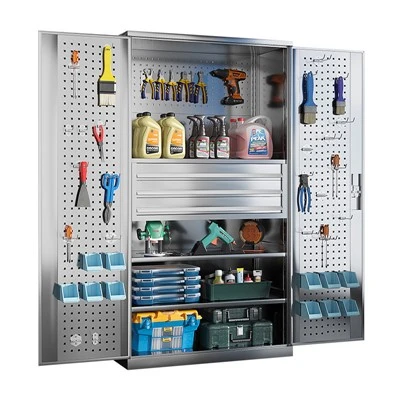
First off, let’s get one thing straight: not all metal cabinets are created equal. If you walk into a big-box store and grab the cheapest thin-gauge steel cabinet they’ve got, yeah, that’s going to scratch super easy. But that’s not the metal itself failing—that’s the thickness, the finish, and how it’s made. Let’s start with the basics of metal hardness, because that’s the big sciency part people skip. You’ve probably heard of the Mohs scale, right? It’s the thing that ranks how scratch-resistant minerals are—talc is a 1, diamond is a 10. For metal, we use a similar thing, often called the Rockwell hardness test, which measures how much a material resists permanent indentation (which is basically what a scratch is, deep down).
Steel, the most common metal we use for cabinets, usually lands around Rockwell B 60 to Rockwell C 40, depending on the type. Mild steel (the thin, cheap stuff) is around Rockwell B 70, which is like the hardness of a copper penny. Drop a wrench on that? Yep, you’ll see a mark. But when we up the gauge to steel that’s thicker—like 16-gauge or 14-gauge, which is what most quality cabinets use—that jumps to Rockwell B 90 to C 25. That’s way harder. It’s more like the hardness of a pocket knife blade, so it can handle a lot more. Aluminum cabinets, if you’ve seen those, are usually softer—Rockwell B 50 to 80—so they scratch easier than steel, especially the thicker steel options.
Wait, but even hard metal is nothing without a good finish. That’s the other huge part people miss. Think of the finish as the armor on your metal cabinet. If the metal is the core, the finish is what’s actually touching whatever is going to scratch it. Let’s go over the most common finishes we use, because this is where the real scratch resistance lives.
First, powder coating. This is my go-to for almost all our cabinets, and here’s why: it’s not just a paint—it’s a dry powder that we electrostatically spray on, then bake at super high temps so it melts and fuses into a solid, smooth layer. A good powder coat is usually around 2 to 3 mils thick (that’s about the thickness of a credit card), and it’s way more scratch-resistant than regular wet paint. I’ve had customers load these cabinets with heavy tools, slam drawers, drag stuff over them, and only rarely see a scratch—usually if someone dragged a cinder block across it or dropped a crowbar from 10 feet up. Compare that to wet paint, which is often less than 1 mil thick, chips if you so much as bump it with a ladder, and scratches like crazy.
Then there’s stainless steel. Wait, a lot of people think stainless steel is unscratchable, and yeah, it’s harder than mild steel, but it’s not invincible. The most common grade for cabinets is 304 stainless, which is around Rockwell B 80 to 90—so similar to 16-gauge steel with a good powder coat. If you drag a metal tool across it, you might get a light scuff, and if you use a rough abrasive pad (like steel wool) on it, you’ll definitely scratch it. The thing about stainless is that scratches are actually a lot more visible on it because of its shiny surface. A powder coat cabinet in black or gray, on the other hand, will hide light scuffs way better, which is why a lot of workshops go for that—you don’t have to polish it every month to keep it looking good.
What about the cheap finish you see on some budget cabinets? Like the thin, painted steel that has that weirdly smooth but fragile feel. That’s usually called “cold-rolled steel” with a wet paint finish, or sometimes even a veneer to make it look thicker. That stuff scratches so easy because the metal core is thin, and the finish is super thin. I’ve had customers bring those back after a week, saying their kid’s bike handlebar scraped the side—we’re talking deep, permanent marks. So when you’re comparing cabinets, don’t just look at the price tag. Ask about the gauge of the steel and the type of finish. That’s the real difference between a cabinet that lasts 10 years with minimal scratches and one that looks beat up after 6 months.
Now, let’s talk about factors that make scratches more likely, even on a good cabinet. This is stuff I see every single day, so it’s not just about the product—it’s about how you use it. First, what you put on and around the cabinet. If you’re storing heavy metal tools, sharp hardware, or moving parts that are rough, obviously that’s going to be more abrasive than storing soft cloths or plastic bins. I always tell customers to use drawer liners, even if it’s just a cheap rubber mat or a piece of felt. It creates a buffer between the metal drawer surface and whatever’s inside, so when you yank a wrench out, it doesn’t scrape the bottom of the drawer.
Another big one: installation. A lot of people mount their cabinets in garages or workshops and then bump them with ladders, wheelbarrows, or even their cars (don’t laugh—people back into cabinets all the time). If the cabinet is wobbly or not secured to the wall, it’s way easier for it to shift and scratch against stuff. We always recommend wall-mounting heavy cabinets, especially if they’re going in a high-traffic area. It keeps them stable and out of the way, so less accidental bumps.
Cleaning habits matter too, believe it or not. If you use harsh abrasives like Brillo pads, steel wool, or even a rough sponge to clean your cabinet, you’re basically sanding the finish down. Even powder coat can scratch if you scrub it with something abrasive. I tell customers to use a soft microfiber cloth and mild soap and water—easy, and it keeps the cabinet looking new without damage.
Wait, but what about when scratches do happen? Can you fix them? A lot of people panic when they see a mark, and yeah, minor scratches are fixable on most cabinets. For powder coat cabinets, you can get touch-up paint pens that match the finish—they’re cheap, you just dab them on, and they cover small scuffs. For stainless steel, if the scratch is light, you can buff it out with a stainless steel polish that’s designed to remove light marks. Deeper scratches? Well, that’s a whole other thing, but even then, a professional can sometimes recoat that spot, or most people don’t even notice it unless they’re right on top of the cabinet.
Let me give you a real example, because that’s what matters. Last year, we sold a set of our 14-gauge steel powder coat cabinets to a guy who runs a small auto repair shop. He was skeptical, because he’d bought cheap ones before that scratched so bad he threw them out in 2 years. A year later, he hit me up and said he was impressed—his cabinets had a tiny scratch on one drawer from when he dropped a socket extension, and that was it. He even had a customer who dropped a heavy impact wrench on the side, and it just left a small dent, not a long scratch. Compare that to his old budget cabinets, which he replaced right away because every week had a new mark.
Another example: we had a school order aluminum cabinets for their art room. Aluminum is softer, so we warned them that storing metal rulers, scissors, and other sharp tools might leave scuffs. They went in knowing that, and they used drawer dividers and soft liners. 3 years later, those cabinets look fine—light scuffs, but nothing major. If they’d gone with stainless steel, the scuffs would be way more visible, and if they’d gone with cheap powder coat, the finish would have chipped long ago.
So, to answer the original question: do metal cabinets scratch easily? It depends. If you buy thin-gauge steel, cheap wet paint, and use it like a crash pad, yeah, it will scratch easy. But if you get a quality metal cabinet—think 14 or 16-gauge steel, a durable powder coat finish, and you take basic care of it—scratches are going to be rare, and only minor when they do happen.
Here’s the thing: I’ve been in this business for over 12 years, and I’ve seen every type of metal cabinet out there. The best ones aren’t the ones that never scratch—nothing is. They’re the ones that hold up to real use, hide small scratches, and don’t get ruined because of a cheap finish or thin metal. A lot of customers come to me worried about scratches, and I always tell them: the biggest mistake is buying the cheapest thing you can find. You’ll end up replacing it in a year, spending more money in the long run, and being frustrated the whole time.
If you’re in the market for metal cabinets, don’t just look at the price. Ask the supplier: what’s the gauge of the steel? What kind of finish is it? How thick is the finish? Those are the numbers that matter. And if you’re not sure, just reach out—we’re here to answer questions, no pressure. Whether you need cabinets for a garage, office, warehouse, or any other space, we can help you pick the right one that won’t scratch up the second you use it. No guesswork, no hidden fees, just solid cabinets that last.

So yeah, metal cabinets can scratch, but only if you get the wrong ones. Get quality, and you’ll be good for years. If you want to chat more about what kind of cabinet fits your space, feel free to reach out—we’d love to help.
Production Cart References:
- Metals, Materials & Minerals Society. (2019). Hardness Scales for Metal Applications. MMMS Technical Bulletin.
- Powder Coating Industry Association. (2021). Performance Standards for Industrial Metal Finishes. PCIA Report No. 7.
- Stainless Steel Development Association. (2020). Scratch Resistance Characteristics of Common Cabinet-Grade Stainless Steels. SSDA Technical Paper.
Shenzhen Gladiator Technology Co., Ltd.
As one of the most professional metal cabinet manufacturers and suppliers in China, we’re featured by quality products and low price. Please rest assured to buy discount metal cabinet in stock here from our factory. We also accept customized orders.
Address: Room 201, Building 1, No.3 Yangkeng Road, Shanxia Community, Pinghu Street, Longgang District, Shenzhen
E-mail: gladiator@fu-en.com
WebSite: https://www.eastgladiator.com/
