If you’ve ever stepped into a modern kitchen or bathroom and marveled at the seamless, sleek finish of the walls, chances are quartz wall cladding played a big part in that look. As a long-time quartz wall cladding supplier, I get asked this question all the time: “What’s the standard size?” It’s not a one-size-fits-all answer, but understanding the standard sizes—both industry-wide and tailored to common installation needs—makes all the difference for contractors, interior designers, and homeowners alike. Let me break this down, from what I’ve learned on job sites and from working with hundreds of clients over the years. Quartz Wall Cladding
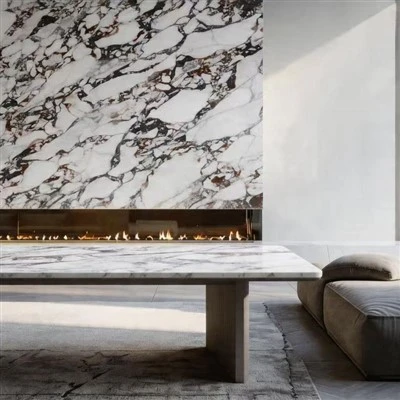
First, let’s clear up a common misconception: quartz wall cladding is different from quartz countertops. Countertops are usually larger, bulkier slabs, but wall cladding is designed to cover vertical surfaces efficiently, so sizing focuses on ease of handling, installation speed, and minimizing seams. That’s why standard sizes are calibrated for real-world use, not just manufacturing convenience.
Across most of North America and Europe, the standard panel size for quartz wall cladding is 300mm x 1200mm (roughly 12 inches x 48 inches) or 600mm x 1200mm (24 inches x 48 inches). Wait, why two main sizes? The smaller 300×1200 panels are super versatile. They’re lightweight enough for a single installer to carry, which cuts down on labor costs—huge for small residential projects like bathroom accent walls or kitchen backsplashes. The larger 600×1200 panels are popular for big open spaces, like commercial office lobbies or living room feature walls, because fewer seams mean a more polished, uninterrupted look. I’ve seen designers choose 600×1200 panels to avoid that “tiled” feel, and they’re right—less grout line clutter makes a room feel bigger.
But it’s not just about these two go-to sizes. We also stock sub-sizes for tricky spots. For example, 300x600mm (12×24 inches) panels are perfect for around window frames, under cabinets, or along narrow hallways where a full 1200mm length would require cutting a lot off. I remember a client last year renovating a tiny downtown condo—they had a slanted ceiling in the guest bathroom, and those 300×600 panels fit perfectly into the angled space without wasting material. No one likes leftover quartz, so having smaller standard sub-sizes is a game-changer.
Now, what about thickness? That’s another part of the “standard size” question people often overlook. Most quartz wall cladding panels are 10mm thick. It’s thin enough to feel lightweight and modern, but thick enough to hold up to daily wear—splashes from cooking, accidental bumps in high-traffic areas, even mild moisture in bathrooms. We do stock 12mm thick panels for commercial spaces that get more foot traffic, like retail store walls or school corridors, but 10mm is the residential standard, and it’s what most of our clients order.
But why do some suppliers offer different sizes? It comes down to manufacturing capabilities and regional preferences. In parts of Asia, for example, some suppliers use 600x1200mm as their primary panel, while in the U.K., 300x1000mm is a popular smaller option. From my experience, the 1200mm length is consistent globally because it’s long enough to cover most wall sections without too many joints, but short enough to ship easily—no need for extra-long trucks or special handling that adds cost.
I’ve had clients ask us to make custom sizes, too. For high-end projects, sometimes designers request oversized panels, like 750x1500mm, to get a truly seamless look. But here’s the thing: oversized panels come with tradeoffs. They’re heavier, so you need two installers instead of one, and the shipping cost goes up because you can’t fit as many on a pallet. For most projects, the standard sizes are the sweet spot—they balance cost, ease of installation, and aesthetics.
Let me share a story that illustrates how important size is. A few years back, a local contractor came to us frustrated. They’d used a custom 900x1500mm quartz panel for a kitchen backsplash, and it kept cracking during installation because it was too large to handle alone. They ended up having to replace three panels, which delayed the job and added $1,500 in costs. We suggested switching to 600x1200mm panels, and their next three projects were on time and under budget. That’s when I realized how much the right standard size can impact a project’s success.
Another factor to consider when choosing a size is grout lines. The standard grout width for quartz wall cladding is usually 2-3mm, and the panel size affects how many grout lines you’ll have. A room with 600x1200mm panels will have far fewer grout lines than one with 300x1200mm panels, which is why it’s a top choice for modern, minimalist designs. For a bohemian-style bathroom, though, the smaller panels work great—more grout lines can add texture and warmth.
We also test all our standard sizes for consistency. Unlike cheaper quartz knockoffs, we make sure every 300x1200mm panel is exactly the same size, so when installers cut them, they fit together perfectly. No gaps, no uneven edges, no having to trim a panel twice. That consistency is why so many contractors come back to us—they know they can count on the size to make their job easier.
Wait, let’s address a common mistake homeowners make. When they’re budgeting, they often think larger panels are more expensive, but that’s not always the case. Because you need fewer panels to cover the same area, the cost per linear foot is often lower with larger standard panels. For example, covering a 10-square-meter wall would take about 14 600x1200mm panels, or 28 300x1200mm panels. Even if each larger panel costs a bit more, the total for 14 is less than 28 smaller ones. It’s a small detail, but it adds up for clients trying to stay on budget.
So, to wrap this up: the standard sizes for quartz wall cladding are 300x1200mm (12×48 inches) and 600x1200mm (24×48 inches), with 10mm thickness as the residential standard. We also carry smaller sub-sizes like 300x600mm to handle tight spaces, and 12mm thick panels for heavy-use commercial areas. But every project is different, which is why we work closely with every client to pick the right size, no matter how big or small the job.

If you’re planning a renovation, whether it’s a small bathroom upgrade or a large commercial build, getting the size right is half the battle. We’ve helped hundreds of clients choose the right quartz wall cladding sizes, and we’re here to help you too. Don’t hesitate to reach out to our team to discuss your project, ask questions, or get a custom quote. We’re happy to walk you through every step, from choosing the right size to picking the perfect finish, to make your space exactly what you imagined.
Outdoor Quartz References
- Natural Stone Institute. (2022). Quartz Wall Cladding Installation Best Practices.
- Euro Natural Stone Association. (2021). Standard Dimensions for Architectural Stone Panels.
- National Kitchen and Bath Association. (2023). Material Sizing Guidelines for Residential Wall Finishes.
- International Stone Fabricators Association. (2022). Efficiency Metrics for Wall Cladding Panel Sizing.
Wuhu Junde New Material Technology Co., Ltd.
As one of the most experienced quartz wall cladding manufacturers and suppliers in China since 1998, we warmly welcome you to wholesale top-quality quartz wall cladding made in China here from our factory. If you have any enquiry about cooperation, please feel free to email us.
Address: No.8 Yulin Road, Xinwu Economic Development Zone, Anhui Province, China
E-mail: 1127319898@qq.com
WebSite: https://www.jundequartz.com/
