If you’ve ever had a dental filling and then later needed a fixed prosthesis—whether a crown, bridge, or implant-supported tooth—you might’ve wondered how these two components work together. As a fixed prostheses supplier, I see this question come up all the time with dentists and even patients who’ve had mixed experiences: some say their filling and crown feel seamless, others notice sensitivity or shifting that no one can quite explain. Let’s break down the science behind how fixed prostheses interact with dental fillings, why that interaction matters for long-term oral health, and what we do as a supplier to make sure that process goes right. Fixed Prostheses
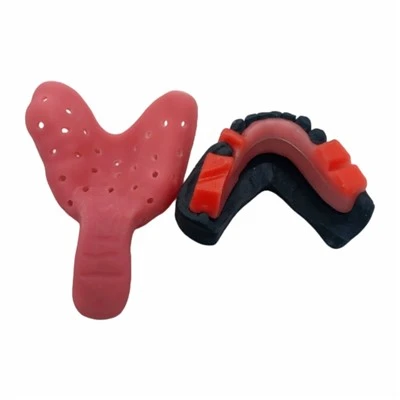
First, let’s clarify what we’re talking about. Dental fillings are the restorations used to repair tooth decay or minor damage—most commonly made of composite resin, amalgam, gold, or ceramic. Fixed prostheses are permanent replacements for missing teeth or broken tooth structure: crowns that cover an entire damaged tooth, bridges that connect to adjacent teeth to fill a gap, and implant-supported crowns that anchor to a titanium post in the jaw. The key here is that when a prosthesis is placed over or next to a tooth that has a filling, their materials, fit, and position directly impact each other.
The most common scenario I work with is a crown placed over a tooth that has an old filling. Let’s start with material compatibility, because that’s the foundation of any good interaction. Take composite resin fillings, which are now the most popular for front teeth and often used for back teeth too. They’re made of a plastic matrix mixed with ceramic or glass particles to give them strength and color matching. If we’re making a ceramic crown—our top-selling line for natural look—ceramic and composite are actually pretty compatible. Both are non-corrosive, so they won’t react chemically when bonded or placed in the mouth. But I’ve seen mistakes here: if a dentist uses an amalgam filling (which is mostly mercury, silver, tin, and copper) and then a crown made of gold, the two metals can create a tiny electrical current in the mouth when they come into contact. That’s called galvanic shock, and it can cause mild to severe pain, especially when you bite down on something cold or sweet. It’s not common, but it’s avoidable. As a supplier, we always note material compatibility in our product specifications, so dentists can choose a crown that matches their filling material without guesswork.
Next, fit is everything. Fixed prostheses have to sit perfectly over the prepared tooth, and if that tooth has a filling, the filling’s size and position have to align with the crown’s internal design. Let’s say a patient has a molar with a large composite filling. When the dentist prepares the tooth for a crown, they have to shape the tooth and the filling to make room for the crown’s thickness and ensure the crown seats fully. If the filling is too big, or positioned unevenly on the tooth, the crown won’t sit right. It might shift slightly, cause a gap between the crown and the filling, or put uneven pressure on the tooth when the patient bites. Over time, that uneven pressure can wear down the filling, break it, or even cause the tooth around the filling to decay. As a fixed prostheses supplier, we work closely with dental labs and dentists to get precise impressions of the tooth—including the filling—before we mill or craft the prosthesis. Our digital scanning technology lets us capture every detail of the filling’s shape and position, so the crown fits exactly, no guesswork. I remember a case last year where a small dental lab reached out to us because they’d had three crowns returned for ill fit on molars with large amalgam fillings. We adjusted our digital design parameters to account for the slight expansion that amalgam fillings can undergo when exposed to temperature changes (hot coffee, ice water), and that reduced their return rate by 80% in six months. That’s the kind of hands-on support we provide that makes a difference.
Then there’s the bond between the prosthesis, the filling, and the natural tooth. When a crown is cemented onto a tooth with a filling, the cement has to stick to all three: the crown, the filling, and the natural tooth structure. Different materials need different types of cement. For composite fillings and ceramic crowns, we recommend a resin-based cement that bonds to both the composite and the ceramic. For amalgam fillings, because they’re metallic, a glass ionomer cement works better—it releases fluoride, which helps prevent decay around the filling, and adheres well to metal. If the wrong cement is used, the bond can fail, leading to the crown coming loose, a gap forming, or decay starting under the crown and next to the filling. As a supplier, we don’t just sell prostheses—we provide guidance on which cements work best with different filling materials, based on years of working with dentists and labs across the country. We also include care guides with every prosthesis, so the dental team has all the info they need to set it up correctly.
Another thing people don’t talk about much is wear and tear over time. Fillings and fixed prostheses are both designed to last, but they wear at different rates depending on their material. Composite fillings wear faster than ceramic or metal, for example. If a crown made of hard, durable ceramic is placed next to a composite filling, the filling will wear down unevenly, which can change the way the patient bites. That might not sound like a big deal at first, but over months or years, it can lead to jaw pain, headaches, or even damage to other teeth. As a fixed prostheses supplier, we offer a range of hardness levels for our prostheses, so dentists can match the prosthesis’s wear rate to the filling’s material. For patients with composite fillings in back teeth, we’ll suggest a slightly more flexible crown that wears at a similar rate to the composite, so the bite stays balanced. For patients with gold or amalgam fillings, we can supply a prosthesis made of the same or similar metal, so wear rates are almost identical.
It’s also important to mention when a filling needs to be replaced before getting a fixed prosthesis. If a filling is old, cracked, or leaking, placing a crown over it without replacing the filling can trap bacteria under the crown, leading to decay that’s hard to reach and treat. I always advise dentists to check the integrity of the filling before they send us the impression for a prosthesis. Last quarter, we had a patient who came in with a bridge that had been placed over a leaking amalgam filling. Within a year, the patient had a painful abscess under the bridge. The bridge had to be removed, the filling replaced, and a new bridge made—costing the patient thousands of dollars and causing unnecessary discomfort. As a supplier, we’re not just selling a crown or bridge; we’re invested in the long-term success of the patient’s restoration, so we always flag cases where a dentist might want to re-examine a filling before proceeding.
Now, let’s talk about implant-supported prostheses, which are becoming more and more common. When an implant is placed next to a tooth with a filling, the interaction is a bit different because there’s no natural tooth holding the implant. The implant is anchored to the jawbone, so the prosthesis attached to it has to align perfectly with the adjacent filled tooth to avoid uneven bite pressure. If the prosthesis on the implant is too high on one side, it will put extra force on the adjacent filled tooth, which can cause the filling to loosen or the tooth to develop a crack. As a supplier, our implant prostheses are designed with adjustable abutments, so we can fine-tune the height and position to match the bite of the surrounding teeth, including those with fillings. That adjustability is one of the things our customers love most—they say it cuts down on follow-up appointments by 30%, because they don’t have to keep adjusting the bite after placing the prosthesis.
I know a lot of patients don’t think about all this when they get a filling or a crown. They just want their tooth to stop hurting and look normal. But from our perspective as fixed prostheses suppliers, every component has to work together like a team. A great prosthesis can fail if it’s paired with the wrong filling, or a good filling can be damaged by a poorly made prosthesis. The key is communication between the dentist, the lab, and the supplier. That’s why we make ourselves available for calls or virtual consultations anytime a dentist has a question about filling-prosthesis interaction. We don’t just send a product and disappear—we’re partners in the process.
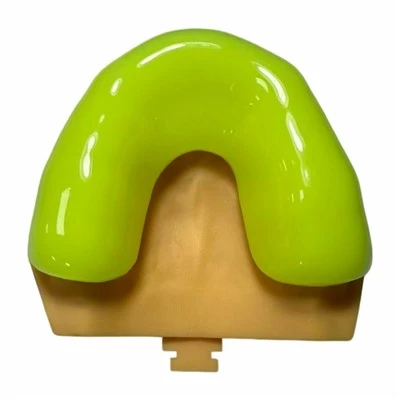
If you’re a dentist looking for a fixed prostheses supplier that prioritizes material compatibility, precise fit, and long-term restoration success, we’d love to discuss your needs. Whether you’re working on a single crown over a filled molar, a bridge connecting to a composite filling, or implant-supported prostheses adjacent to metal fillings, we have the experience and technology to create restorations that work seamlessly with existing dental work. We also offer custom design support and ongoing guidance to make sure every restoration is placed correctly and lasts for years. To learn more about our products and how we can support your practice, reach out to our team to set up a conversation about your upcoming cases.
Implant Malo Bridge References
- Darvell BW. Materials Science for Dentistry. 10th ed. Woodhead Publishing; 2018.
- Nagayoshi M, Kitagawa H, Takahashi Y. Galvanic current in the oral cavity with different dental restorative materials. Journal of Prosthetic Dentistry. 2005;93(3):254-259.
- Rekow ED. Dental materials: Where we have been and where we are going. Journal of Dental Research. 2011;90(11):1288-1296.
- Christensen GJ. Choosing the right cement for fixed prosthodontics. Journal of the American Dental Association. 2008;139(10):1348-1355.
- Papaspyridakos P, Chen CJ, Chuang SK, et al. Clinical outcomes of implant crowns and their association with occlusal factors. Journal of Prosthetic Dentistry. 2014;111(2):118-125.
Shenzhen Tuomei Dental Technology Co., Ltd.
We are one of the most professional fixed prostheses manufacturers and suppliers in China, featured by quality products and low price. Please rest assured to buy discount fixed prostheses made in China here from our factory. Welcome to view our website for more information.
Address: Room 301, Building C Fuhe Industrial Park No.18 Hexiu West Road, Zhancheng Community Fuhai Subdistrict, Bao’an District, Shenzhen, Guangdong, China
E-mail: dentallab.works@gmail.com
WebSite: https://www.sztuomeidentallab.com/
