If you’ve ever asked yourself, “How much does a good drive motor actually cost?” you’re not alone. Every day, I talk to teams from automotive manufacturers to robotics startups to material handling companies, and that question always leads to a deeper conversation. I’ve been in this drive motor supply business for 12 years now, and I can tell you straight away: there’s no one-size-fits-all price tag. A small motor for a AGV in a warehouse isn’t the same as the high-torque motor that moves an electric truck, and trying to compare them is like comparing a backpack to a shipping container. Let me break this down the way I do with every new client, mixing real-world supply chain lessons, engineering realities, and the factors that actually make that final number jump. Drive Motor
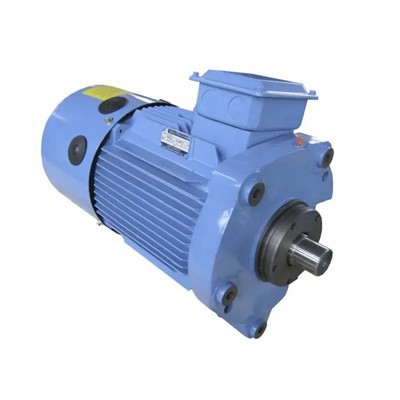
First, let’s start with the baseline to set context. Last year, our average selling price for a standard off-the-shelf drive motor was between $180 and $950, but that’s just a number. We recently did a custom order for a manufacturer of autonomous cleaning robots, and that entire project (design, prototype, and 500 units) came to over $12,000 per unit when all was said and done. That gap doesn’t happen by accident—every choice made during design, materials selection, and even the order volume ripples straight to the final cost.
The biggest factor that hits our pricing first is power and performance specifications. It’s not just about how much horsepower a motor puts out; it’s about the details that matter for the application. For example, a motor designed for an electric forklift needs to handle intermittent peak torque of 3,000 Nm to lift a 10,000-pound load, while a motor for a consumer drone needs to be less than 200 grams and deliver high RPM with minimal heat buildup. Rare earth magnets are the core here; neodymium magnets are standard in high-efficiency permanent magnet synchronous motors (PMSMs) because they deliver more torque in a smaller, lighter package than ferrite magnets. But neodymium prices are volatile—they spiked 27% globally between 2022 and 2023 due to supply chain constraints and increased demand from electric vehicles. That alone can add $50 to $200 to the cost of a single motor, depending on size. Efficiency is another big part of performance; motors that hit IE4 or IE5 efficiency ratings (the highest industry standards) use better winding materials, tighter tolerances, and optimized lamination stacks. A standard IE2 motor might cost $300, but an IE5 equivalent of the same power can be $450. The extra $150 isn’t just for bragging rights—those motors reduce energy bills for clients by 15-20% over their lifespan, so it’s an investment, not just a cost.
Next, there’s the difference between off-the-shelf motors and custom solutions. That’s where a lot of new teams get tripped up. Off-the-shelf models are designed for general use, so we can manufacture them in bulk, keep inventory in stock, and pass those savings on to clients. A standard 2kW PMSM for conveyor systems will run around $220-$280 in volume of 1,000 units, because we’ve refined the design over years, use standardized parts, and don’t have to engineer anything new. But when a client comes to us with a unique requirement—like a motor that has to fit into a very tight space on a medical device, or that has to operate in temperatures ranging from -40°C to 85°C for a mining application—we have to start from scratch. That means custom winding designs, specialized coatings for corrosion resistance, testing for extreme conditions, and often, small initial production runs. The engineering and setup costs for a custom motor can add $2,000 to $5,000 just in upfront fees, plus per-unit costs that are 30-50% higher than off-the-shelf, at least until volume picks up. Last year, we had a medical device client that needed a brushless DC (BLDC) motor that could be sterilized with high-temperature autoclaves; we had to develop a new housing material and test 7 prototype iterations, which pushed the per-unit cost up to $1,200 for their first 200 units, compared to $400 for a standard BLDC. It’s a tradeoff, but for industries like medical or aerospace, there’s no substitute for custom.
Order volume is another non-negotiable factor that I see clients underestimate all the time. The first time a startup orders 50 motors, that’s a low-volume run. We have to schedule production separately, set up tooling specifically for that small order, and there’s not enough volume to spread fixed costs (like machine setup, quality control, and logistics) across units. Those 50 motors might cost $600 each. But when that same startup scales to 5,000 units, suddenly we can run production lines more efficiently, buy materials in bulk at discounted rates, and reduce per-unit labor and overhead. That 5,000-unit order of the same motor will drop to $280 per unit, almost half the price. We have a tiered pricing structure built into our system, and it’s not just a tactic to get more orders—it’s a reflection of real manufacturing costs. I always tell clients: order what you need for the next 6 months, but if you’re forecasting more than that, talk to us early. We can often adjust pricing and even help with inventory planning to save you money down the line.
Qualification and compliance costs are a hidden factor that most people don’t think about until they get a surprise bill. Drive motors have to meet industry standards, and those vary wildly by use case. For automotive applications, motors need to pass ISO 16750 for environmental testing, AEC-Q for component reliability, and often specific manufacturer standards from clients like Tesla or Volkswagen. For medical devices, we have to comply with IEC 60601 for electrical safety, and often conduct biocompatibility testing if the motor is going to be near bodily fluids. For industrial robotics, it’s ISO 9409 for mounting dimensions and IEC 61800 for adjustable speed drives. Each of these tests costs money—we conduct third-party testing, adjust designs to meet specific requirements, and maintain documentation trails that clients need for their own certifications. A motor for a standard conveyor that might cost $250 will jump to $350 if it needs AEC-Q200 certification for automotive use, just to cover the testing and documentation.
Then there are secondary components that add up. The motor itself isn’t just a metal and magnet core—it needs a gearbox if it’s going to drive heavy loads, an encoder to control speed and position, a housing to protect internal parts, and wiring and connectors that match the application’s environment. A basic motor without accessories is cheaper, but adding a high-precision encoder for robotics can add $100-$200 per unit, while a sealed gearbox for wet or dusty environments adds $150-$300. Last quarter, a food processing client came to us with a motor that needed to be washdown-safe, so we had to use stainless steel fasteners and a sealed housing rated for IP69K, which added $180 to the base motor cost. Those small parts might seem insignificant, but they add up fast, and skipping them leads to premature motor failure, which costs clients way more in downtime than the extra cost of the parts.
Now, let’s talk about some common misconceptions I hear from clients. The first is that “cheaper is better.” I can’t tell you how many times a client has chosen a $150 motor over our $250 option, only to have it fail 6 months later because it used low-grade magnets and thin laminations. Those failures lead to production downtime, repair costs, and lost revenue that’s way higher than the $100 saved per motor. Another misconception is that all motors of the same power are comparable. A 2kW motor from a mass-produced overseas supplier might be $200, but it might have a 90% efficiency rating, while our 2kW motor has a 95% efficiency rating. Over the 5-year lifespan of the motor, that 5% efficiency difference can save a client $300-$400 in electricity bills, so the higher upfront cost is actually a long-term saving.
So, what’s the takeaway here? If you’re in the market for a drive motor, don’t go into the conversation thinking about a single number. Figure out what your application actually needs: how much power and torque do you need, what environmental conditions will the motor face, how many units do you need over the next 1-3 years, and what compliance standards do you have to meet. For our part, we work with clients at every stage—from startups with 50-unit prototype runs to large manufacturers with 100,000-unit annual orders. We don’t believe in one-size-fits-all pricing, and we always provide a detailed breakdown of costs so you know exactly where your money is going, whether it’s high-grade materials, rigorous testing, or custom engineering.
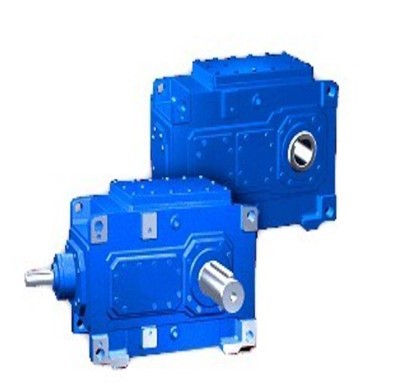
If you’re ready to discuss your drive motor needs, whether that’s a standard off-the-shelf model or a custom solution tailored to your application, we’re here to help. We can walk through your requirements, provide a transparent quote, and even suggest cost-saving adjustments that don’t sacrifice performance or reliability. Every client’s needs are different, and that’s why we take the time to listen first, before talking numbers.
Gear Motor References
- International Electrotechnical Commission. (2020). IEC 60034: Rotating electrical machines.
- Institute of Electrical and Electronics Engineers. (2022). NEMA MG 1: Motors and generators.
- Roskill Information Services Ltd. (2023). The Global Market for Rare Earth Magnets 2023.
- Deloitte. (2022). Automotive Supply Chain Resilience: Balancing Cost and Performance in Drive Components.
- International Organization for Standardization. (2021). ISO 16750: Road vehicles – Environmental conditions and testing for electrical and electronic equipment.
Zibo Auric Mechanical and Electrical Technology Co., Ltd.
Address: B419, High-tech Entrepreneurship Park, High-tech Zone, Zibo City
E-mail: cui@auricmotor.com
WebSite: https://www.auricmotor.com/
