If you’ve ever relied on a portable water treatment setup for a remote construction site, emergency relief, or even a research outpost, you know how much a containerized system’s reliability can make or break an operation. As someone who’s spent the last 8 years building and fine-tuning these units (and fielding way too many late-night calls from clients who thought their system “just worked” until it didn’t), let me pull back the curtain on what actually keeps these units from failing when you need them most. A containerized water treatment system isn’t just a bunch of pipes and filters crammed into a shipping container—it’s a compact, self-contained operation that needs to deliver consistent, safe water 24/7, no matter if it’s sitting in 100°F Texas heat, sub-zero Canadian cold, or a dusty desert construction site. That’s why quality control (QC) isn’t a one-and-done checkbox for us; it’s baked into every step, from the first weld on the container to the day your team turns the system on for the first time. Containerized Water Treatment System
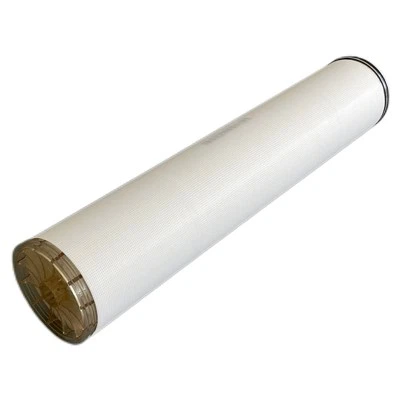
First up, let’s talk about the actual equipment inside the container before it even leaves our facility. A lot of suppliers cut corners here, right? They buy cheap filters or pumps from Alibaba, throw them in a container, and call it a day. Not us. We test every single pre-assembled component long before it’s mounted. For example, reverse osmosis (RO) membranes—those little black flat sheets that are basically the heart of most treatment systems—are notorious for getting damaged in shipping or even sitting on a shelf for a few months. So before we even put an RO membrane into a system, we run a “bubble test” on each one. It’s simple: we submerge the membrane in filtered water, blow a small amount of air through the feed side, and watch for bubbles. If bubbles leak through the product side, that membrane’s bad, no ifs, ands, or buts. We toss it immediately. For pumps and pressure gauges, we don’t just plug them in for 5 minutes and call it good—we run them for 12 straight hours, varying the pressure up and down to simulate real operating conditions. Last year, we had a batch of 15 centrifugal pumps that passed the quick 5-minute test, but died after 8 hours of extended use. We caught that before any of our clients got a dud, and saved them a ton of downtime (and us a bad Yelp review, for that matter).
Next, there’s the container itself, which might seem like just a metal box, but it’s the backbone of the whole system. If the container leaks during rain or condensation, that’s a big problem—water can seep into the electrical panels, short out sensors, or even damage sensitive filters. So we do a full hydrostatic test on every single container before we put any equipment inside. That means we close all the doors and vents, hook up a hose to fill the container with water, and let it sit for 2 hours. If there’s even a single drip on the inside wall, we patch it and test again. We also add extra insulation and a vapor barrier to the walls and ceiling, because temperature swings can wreak havoc on treatment chemicals and electronic sensors. I’ve seen a system in Arizona where the contractor skipped the insulation and the pH sensors would go haywire in the middle of the day when the container heated up to 120°F. Now we mark every container with an insulation thickness sticker before it leaves, so our clients know exactly what they’re getting—no surprises.
Now, the big one: the full system integration test. This is where we run the entire unit for 72 straight hours, no breaks, simulating the exact conditions the client will face. Wait, why 72? Because most small tests only run for a few hours, but we want to catch things that only show up after a day or two of use—like a slow leak in a pipe joint, a sensor that glitches under constant load, or a filter that starts to clog prematurely. For example, last quarter we had a client who needed a system for removing heavy metals from well water, so we simulated their feed water (we used a local well water sample and spiked it with trace metals to match their actual water) and ran the system for 72 hours straight. On the 68th hour, we noticed that the chlorine residual in the product water was dropping slightly, and after digging into it, we found that the carbon filter had a small gap in the packing that we missed during the initial installation. We fixed it right there, so when the system arrived at the client’s site, it was ready to go from day one—no troubleshooting, no waiting for replacement parts. During this 72-hour test, we also collect water samples every 12 hours and send them to a third-party lab to make sure they meet NSF/ANSI standards (that’s the gold standard for drinking water in the U.S., by the way). We don’t just test for pH and chlorine—we test for all the contaminants the system is designed to remove: bacteria, heavy metals, PFAS, nitrates, whatever the client needs. If the product water doesn’t hit every mark, we don’t ship. Period.
Wait, let’s not forget about the electrical and control systems, which are the unsung heroes of these containers. If the control panel dies, the whole system stops, even if the filters are working fine. So we do a series of electrical safety tests too: we check for loose wires (a common issue that causes shorts), test the circuit breakers to make sure they trip when they’re supposed to, and run the programmable logic controller (PLC) through 100 different operation cycles to make sure it doesn’t freeze up. We also add a backup power supply (a small battery bank) for the control panel, so even if the main power goes out, the system will shut down properly instead of crashing and risking damage to the RO membranes (which are super expensive to replace if the pressure spikes unexpectedly). Last year, a client in a rural area had a power outage that lasted 3 days—their old system just shut down hard, damaging two RO membranes that cost them $1,200 each. Our system’s backup power kicked in, shut everything down smoothly, and when power came back, it restarted automatically without any issues. That’s the kind of thing QC catches before it becomes a disaster.
Another thing we do that not all suppliers offer is field testing, even before the container leaves our lot. We bring in a portable test rig and connect the container to a supply of feed water, then have our techs work the system like it’s actually on site—turning valves, adjusting settings, troubleshooting fake “problems” (like a clogged pre-filter) to make sure the operators know how to fix them when they get to their location. We also put together a full manual with step-by-step photos for every part of the system, from changing a filter to resetting the control panel. And we mark every component with a QR code that links to a video tutorial—no more guessing what size wrench you need to remove a filter, just scan the code and watch a 2-minute video. It’s small stuff, but it cuts down on downtime when the operators are on site, not sitting there Googling how to fix their system.
Wait, let’s talk about post-shipping checks too. A lot of people think the QC ends when the container leaves our facility, but that’s not true. We also require our clients to do a post-delivery inspection within 48 hours of the system arriving. We send them a checklist that includes checking for dents in the container that might have damaged pipes, making sure all the valves and gauges are properly calibrated, and running a 1-hour test cycle to confirm everything works. If they find any issues, we send a tech out the same day (or arrange for a replacement part if it’s something small) because we know time is money when you’re waiting on water for a project or emergency. Last month, a client in Alaska had a container that got a dent in the frame during shipping—they did the post-delivery check, notified us, and we sent a repair tech up there a few days later. It was a small dent that didn’t affect the system, but better safe than sorry, right?
Now, let’s be real—no QC process is perfect, and even the best systems can have issues out in the field. That’s why we have a full support team on call 24/7. We keep a log of every system we build, with the exact specifications, lab results, and test data, so if a client calls us with a problem, we can pull up their system’s info immediately and help them troubleshoot over the phone. We also do annual maintenance check-ins, sending our techs out to calibrate sensors, replace worn parts, and run a full test cycle to make sure the system is still performing as it should.
At the end of the day, building a containerized water treatment system is about trust. Our clients rely on us to deliver water that’s safe, consistent, and reliable, whether they’re using it for a small town, a mining site, or emergency disaster relief. QC isn’t just a buzzword for us—it’s the reason we’ve been in this business for 8 years and still have clients coming back to us when they need another system. If you’re in the market for a containerized water treatment system, don’t just go with the cheapest option. Ask about their QC process—do they test each component? Do they run the full system before shipping? Do they offer post-delivery support? Those are the things that separate a system that works for 5 years from one that breaks down every 6 months.

If you’re ready to chat about your water treatment needs, or have questions about our QC process, reach out anytime. We’re happy to walk you through every step of what we do to make sure your system is built to last.
Hollow Fiber Ultrafiltration Membrane References
American Water Works Association. (2020). Water Treatment Equipment Quality Control Guidelines. AWWA Press.
NSF International. (2021). Standard 61: Drinking Water System Components – Health Effects. NSF.
World Health Organization. (2019). Quality Control for Small-Scale Water Treatment Systems. WHO Press.
Hangzhou Nanoimp Environmental Technology Co., Ltd.
With abundant experience, we are one of the most professional containerized water treatment system manufacturers and suppliers in China. Welcome to wholesale high quality containerized water treatment system in stock here and get pricelist from our factory. We also accept customized orders.
Address: Road 25, Baiyang Street, Qiantang District, Hangzhou City, Zhejiang Province
E-mail: keith.wang@nano-sepmer.com
WebSite: https://www.nanoimp-membrane.com/
