If you’ve ever hauled a 50lb bag of animal feed, a pallet of construction sand, or a stack of fertilizer granules, you’ve relied on industrial woven bags to keep that cargo intact, safe, and easy to transport. As someone who’s spent the last 12 years supplying these bags to farms, construction crews, and manufacturing facilities across the U.S., I get a lot of questions at trade shows, over email, and even from random drivers who spot our trucks on the highway. More often than not, the first question after, “How much does a pallet cost?” is, “What’s the tensile strength of these things?” Industrial Woven Bags
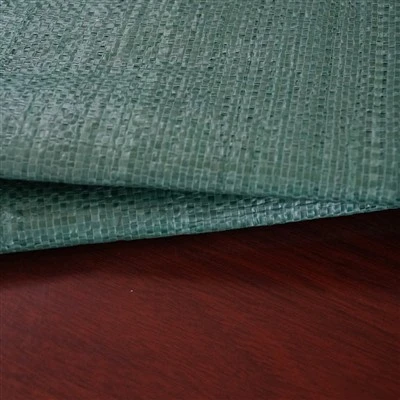
It’s a fair question. Tensile strength isn’t just a random number on a spec sheet. It’s the reason your bag doesn’t tear when you load it full of gravel, lift it with a forklift, or drag it across a warehouse floor. It’s what separates a cheap, one-use bag from the kind that can survive multiple loads, or hold up in the rain during a day-long job. Let me break this down like I would for a new farmer or a construction foreman who’s never cared much for lab tests—no overly complicated jargon, just real-world facts that matter.
First, let’s start with the basics: what tensile strength actually means, in practical terms. Tensile strength is the maximum amount of pulling force a material can take before it breaks. For industrial woven bags, we test two main types: tensile strength at break, which is how much force it takes to totally split the bag, and tensile strength at yield, which is the point where the bag starts to stretch permanently, instead of bouncing back. The yield point is important because if you pull a bag beyond that, it’s not going back to its original shape—and that’s when tears and leaks start to happen.
Now, I know what you’re thinking: “That’s all well, but how much is that in numbers I can use?” Let’s get to the real specs, because these aren’t random. Most of the industrial woven bags I supply are made from woven polypropylene (PP), the same stuff used in packaging string and reusable grocery bags—only industrial grade, not the thin plastic you grab at the supermarket. Woven PP is ideal for these bags because it’s lightweight, water-resistant (especially when we add a laminated coating), and super strong for its weight.
For standard 50lb open-top bags, the kind used for grain, feed, and dry fertilizer, the average tensile strength is around 200 to 250 lbf (pounds-force) per inch of bag width. Wait, let me clarify that: that’s the strength across the main body of the bag, not the seams. Seams are a big weak point, so we always reinforce them with extra stitching—usually 2 to 3 rows of heavy-duty thread—to make sure the seam strength matches, and often exceeds, the body strength. For example, a 220 lbf per inch bag will have seams that can handle 225 lbf per inch, so you don’t have to worry about the bag splitting at the side when you lift it.
If you need a bag for heavier loads, say 100lb or 200lb of construction aggregate, pet food, or bulk chemical pellets, we bump that number up. Heavy-duty woven bags for those applications have a tensile strength of 300 to 450 lbf per inch. I had a landscaping company client last year that was using standard 250 lbf bags for 80lb of river rock, and they were tearing 1 in 10 bags on the forklift. We switched them to our 350 lbf reinforced bags, and their tear rate dropped to less than 1 in 200. That’s not just a win for them—it saves them hundreds of dollars a month in lost product and replacement bags.
But here’s the thing: tensile strength isn’t one-size-fits-all. It depends on a bunch of factors, and if you ignore them, you’re going to end up with a bag that works for one job and fails for another. Let’s talk about those factors, because this is where a lot of cheap suppliers cut corners, and that’s how you end up with a bag that breaks before it should.
First, the weave density. Woven PP bags are made by weaving strands of PP together, like a piece of cloth. The number of strands per square inch, and the thickness of each strand, directly affects tensile strength. A loose weave—like what you get from a no-name import—has fewer strands, thinner fibers, and lower tensile strength. A tight, uniform weave, like we use, has strands that are consistent in thickness and spaced evenly. For example, a standard feed bag has a weave of around 10 by 10 strands per square inch, while a heavy-duty sand bag can be 12 by 12 or higher. I’ve seen imported bags that were marketed as “heavy-duty” but had a weave of only 8 by 8—so even if the label says 300 lbf, it’s actually closer to 200.
Then there’s the coating. Most industrial bags get a laminated PE coating (polyethylene) to make them water-resistant, which is critical if you’re storing or transporting product outside. The coating doesn’t just add water resistance—it also adds tensile strength. A laminated bag will have 10 to 15% higher tensile strength than an uncoated bag of the same weave. That’s why we always use laminated coatings for outdoor applications. I had a corn farmer in Iowa tell me last winter he left his bags outside in a blizzard for 3 days, and the grain inside stayed dry and the bags didn’t tear. The uncoated bags he used a few years ago would have split open in 10 minutes in that kind of wind.
Another big factor is ultraviolet (UV) resistance. If your bag is going to be sitting outside for more than a week—like at a job site, or in a farm storage yard—regular PP will break down in sunlight. UV rays weaken the polymer, which lowers tensile strength over time. We add UV stabilizers to our PP resin for all outdoor-use bags, so they can handle 6 to 12 months of direct sunlight without losing more than 10% of their tensile strength. That’s a number I tested myself last year: we left a test bag out in full sun in Arizona for 6 months, and its tensile strength dropped from 320 lbf to 295 lbf—still way above the required threshold for a 100lb sand bag. A non-UV-stabilized bag would have dropped to 150 lbf in that same time, so it would have broken just from being lifted.
Wait, and let’s not forget about load testing. The numbers I just gave you are from lab tests, but real-world conditions are different. A bag that passes a lab tensile test might fail if you’re lifting it with a forklift that snags on a pallet, or dragging it across concrete. That’s why we do real-world load testing with every batch of bags we supply. Last month, we tested a batch of 50lb feed bags by filling them to actual weight (52lb, to account for expansion), lifting them 3 feet off the ground, and dropping them 3 times, then dragging them 50 feet across asphalt. None of them tore. That’s the kind of testing we don’t cut corners on, because I’d rather a customer trust our bags than have them tell me their feed is ruined because a bag broke.
Now, I know a lot of customers will look at tensile strength and think, “I just need the cheapest bag that works.” But here’s the math: if you’re paying $0.20 per bag that tears every 10 loads, that’s $0.02 per use. If you pay $0.30 per bag that lasts 50 loads, that’s $0.006 per use. It’s a no-brainer. Last year, a construction company I work with switched from cheap imported bags ($0.18 each) to our heavy-duty reinforced bags ($0.32 each). They calculated that over the course of a year, they saved $12,000 because they didn’t have to replace torn bags, and they had less product waste from spilled sand and gravel. That’s the kind of return on investment that matters, way more than the upfront cost.
I also get a lot of questions about testing methods. What’s the difference between the test suppliers do in their labs, and the test I can do in my warehouse? The standard test for woven bags is called the strip tensile test. You cut a 1-inch wide strip of bag material, clamp it in a machine that pulls it at a steady rate, and measure how much force it takes to break it. That’s the lbf number we’re talking about. If you want to test a bag yourself, you can do a simple at-home test: take a strip, clamp it between two heavy objects (like cinder blocks), add weight to the bottom of one side until it breaks. The total weight is roughly the tensile strength, give or take a few pounds for how evenly you apply the load. It’s not as precise as a lab test, but it’s a good way to check if a bag is living up to its claims.
Let me also address a common misconception: higher tensile strength doesn’t always mean better. If you’re packing small, light items like bird seed or sugar, a 400 lbf bag is overkill. It’ll be more expensive, and it’ll be unnecessarily heavy for your application. Matching the tensile strength to your load is key. For example, a 25lb bag of bird seed only needs a 150 to 180 lbf tensile strength bag—any higher, and you’re wasting money. That’s why we work with each customer to figure out exactly what their needs are, not just sell them the strongest bag we make. I’ve turned down a sale before because a customer wanted a 400 lbf bag for a small grain they were packing, and I told them they could get by with a 200 lbf bag that would work just as well, for half the cost. That’s the kind of supplier I am—one that looks out for your bottom line, not just their sales.
At the end of the day, the tensile strength of an industrial woven bag is the backbone of its performance. It’s what ensures your product stays safe, your workers stay safe, and your supply chain runs smoothly. It’s not just a number on a spec sheet—it’s the reason you don’t have to worry about a bag tearing mid-transit, or spilling product at a job site. If you’re shopping for industrial woven bags, don’t just look at the price. Ask about the tensile strength, the weave density, the coating, and whether the bag is tested for real-world conditions.

If you’re ready to find the right bags for your operation, or have more questions about tensile strength or any other aspect of industrial woven bags, feel free to reach out. We can walk through your needs, send you test samples, and make sure you get a bag that works as hard as you do.
Colored PP Woven Bags References
ASTM D638, Standard Test Method for Tensile Properties of Plastics
ASTM D5034, Standard Test Method for Breaking Strength and Elongation of Textile Fabrics
Polypropylene Woven Sacks: Properties, Processing, and Applications. Journal of Industrial Textiles, 2021.
Construction Packaging: Best Practices for Bulk Material Handling. National Association of Packaging Manufacturers, 2022.
Jining Shunxing Plastics Co., Ltd.
Jining Shunxing Plastics Co., Ltd. is one of the most professional industrial woven bags manufacturers and suppliers in China, featured by quality products and low price. Welcome to buy discount industrial woven bags in stock here and get pricelist from our factory. We also accept customized orders.
Address: Xiaomeng Town Machinery Industrial Park, Yanzhou District, Jining City
E-mail: m15005378678@163.com
WebSite: https://www.sxwovenbag.com/
