If you’ve ever picked up a point-and-shoot, held a DSLR up to your eye to snap a pic, or even used a sleek mirrorless camera to capture a family vacation, you’ve interacted with one of the most underrated pieces of consumer tech out there: a finished camera. As someone who’s been on the supply end of these things for over a decade—sourcing parts, testing prototypes, and shipping finished units to everything from hobbyist brands to small production studios—I’ve seen how most people think cameras are just “boxes with lenses.” Spoiler: there’s way more going on under the hood than most casual users realize, and it all comes together in that finished product you pick up in a store. Let’s break down how a finished camera actually works, no boring engineering jargon I was forced to memorize back in my tech college days. Finished Camera

First, let’s get one thing straight: a finished camera isn’t just a lens glued to a plastic body. It’s a perfectly synced team of parts, each doing a tiny job that adds up to that photo you get to frame or post. I’ve watched hundreds of these roll off our assembly line, and I’ll admit, even after all this time, I still get a little thrill when I flip a switch and watch it fire up for the first time. Let’s start with the most obvious part people fixate on: the lens.
You know that glass cylinder on the front? No, it’s not just a single piece of glass—unless we’re talking about super basic disposable cameras, which are a whole different beast. A finished camera (we’re talking interchangeable lens cameras, mirrorless, DSLR, even the compact point-and-shoots) has a lens made up of multiple glass elements, each ground to a precise curve. The job of these elements is to bend light, right? But not just bend it—bend it so it focuses sharply on the sensor at the back. If even one element is misaligned by a fraction of a millimeter, you get blurry photos, and that’s why our quality control team spends half their time testing lens alignment before anything else even gets close to the sensor. We get parts from different manufacturers, but we test every single lens against every camera body before they leave our facility. No exceptions. That’s how we stay a trusted finished camera supplier, y’know?
Next up, the star of the show: the image sensor. I used to mix this up with the old film rolls back in the day, but modern sensors are way cooler. They’re flat, rectangular chips (most are APS-C or full-frame for pros, smaller 1-inch for compact point-and-shoots) covered in millions of tiny light-sensitive dots called photosites. Each photosite captures one tiny speck of light, turning it into an electrical signal. Here’s the thing: those photosites only capture black and white light—wait, no, actually, they capture brightness, not color. That’s why there’s a tiny, super thin grid of color filters (red, green, blue, duh) placed directly on top of the sensor. It’s called a Bayer filter, and it lets each photosite “see” one color. The camera’s processor then takes all those signals from millions of photosites, combines them, and figures out what colors the other dots around it should be. If that processor messes up even a little, you get that weird color fringing on edges, or pink skin tones that look like something out of a bad 90s movie. Been there, fixed that.
Wait, but how does the light actually get to the sensor? For DSLRs, there’s that big mirror you might’ve heard about, right? When you look through the viewfinder, that mirror is flipped up, bouncing light straight into the pentaprism (or pentamirror, for cheaper models) that sends it to your eye. When you press the shutter button, that mirror flips up out of the way, and a tiny curtain (called a shutter) opens for a split second—like 1/1000 of a second, sometimes way faster—letting light hit the sensor. Then the curtain closes, the mirror flips back down, and you’ve got a photo. Mirrorless cameras skip that mirror entirely, though—they have a tiny electronic viewfinder (EVF) or just show you a live feed on the back screen. That’s why mirrorless cameras are smaller and lighter, but they have to deal with a little lag sometimes, especially when you’re shooting fast action. Our team tests that lag all the time, because nobody wants a camera that shows you a blurry version of what you’re trying to shoot.
Now, let’s talk about the brain of the whole operation: the image processor. This is a tiny, powerful chip that does all the heavy lifting once the sensor captures that light. It takes the raw data from the sensor, fixes any weird color distortions, adjusts brightness, sharpens edges, and then compresses the file into something you can actually save—like JPEGs, which are the most common, or RAW files if you’re a pro who wants to edit every little thing later. The processor also handles all the other stuff most people take for granted: auto-focus, auto-exposure, white balance, even the little beep that tells you focus is locked. For example, when you half-press the shutter to focus, the processor is calculating how much to move the tiny motor in the lens to adjust the glass elements so the light hits the exact right spot on the sensor. That’s why some lenses focus fast and quiet, and others sound like a bee trying to escape a jar—depends on the processor and the lens motor working together. We test every focus combo here, because if a finished camera’s auto-focus is slow or misses shots, it’s useless.
Wait, can’t forget the little extras that make a camera usable, right? The back screen, the buttons, the battery, the storage, all that stuff. The rear LCD or OLED screen is calibrated to show you a preview of what your photo will look like, but not exactly—because the actual saved photo has way more detail. The battery is a lithium-ion pack, usually, and we size it so it can handle at least 500 shots on a single charge, even for the more power-hungry mirrorless models. Storage is usually SD or microSD cards, and the camera has a tiny built-in controller that writes the data from the processor to the card. I’ve had clients tell us their finished cameras are taking too long to save photos, and nine times out of ten it’s a cheap card they’re using, but sometimes it’s the camera’s controller. We test that too—making sure it can write a 20-megapixel photo in under a second, even when shooting bursts of 10 photos in a row.
And let’s not talk about what makes a finished camera different from a bunch of parts thrown in a box. That’s the quality control, for one—we don’t just slap parts together and ship ’em. Every unit goes through at least 12 checks: lens alignment, sensor calibration, focus speed, shutter accuracy (yes, even a shutter that’s only off by a fraction of a second can mess up photos), battery life, screen brightness, and even how the buttons feel. If a button is too stiff or too squishy, we send it back. If a photo comes out with a hot pixel (a tiny bright dot that shouldn’t be there), we fix that too. That’s the part most people don’t see—turning individual parts from different suppliers into a camera that works consistently, every single time, no matter if it’s $200 or $2,000.
I’ve been doing this for long enough that I’ve seen a lot of changes, too. Ten years ago, most finished cameras had physical dials for shutter speed and aperture; now a lot of entry-level ones don’t, or they have touchscreens. Ten years ago, sensor sizes were way more standard; now there’s a whole range for different uses. But the core stuff is still the same: light hitting glass, hitting a sensor, turned into a photo by a processor. The tech gets fancier, but the basics haven’t changed since the first digital cameras hit the market.
If you’re reading this, odds are you’re either someone who’s shopping for a finished camera—whether you’re a hobbyist looking for your first one, a small business needing a camera for product shots, or someone who’s tired of blurry vacation photos. If you’re on the business end, looking for a reliable supplier, that’s where we come in. We don’t cut corners on parts, we test every unit before it leaves our facility, and we ship on time, every time. Whether you need 500 point-and-shoots for a new brand launch or 100 professional mirrorless kits for a studio, we’ve got the capacity and the know-how to get you what you need.
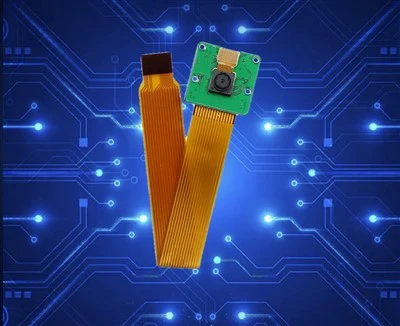
At the end of the day, a finished camera isn’t just a gadget—it’s a tool that lets you capture moments. From a kid’s first steps to a wedding, from a landscape you want to remember to a product shot that sells, that camera is the middleman between what you see and what you get to keep. That’s why we take our job seriously, even when it’s just shipping boxes full of lenses and sensors. If you’re in the market for a reliable finished camera partner, hit us up to chat about your needs. We’re here to help you find the right setup, no matter what you’re capturing.
Mid Resolution (13–32MP) References
- National Geographic Photography. (2022). How Digital Cameras Work. Retrieved from educational resources on photographic technology fundamentals
- Camera and Imaging Products Association. (2021). Standard Testing Methods for Digital Camera Sensors and Lenses
- Hudson, J. (2020). The Assembly and Quality Control Process for Consumer Digital Cameras. Industry Tech Quarterly
Shenzhen Juchangxing Technology Co., Ltd.
We are one of the most experienced finished camera manufacturers and suppliers in China, also support custom service. We warmly welcome you to wholesale durable finished camera at competitive price from our factory. If you have any enquiry about cooperation, please feel free to email us.
Address: 3rd Floor, Build A, No. 8, Huangdiyin IndustrialZone, Longhua District, Shenzhen.
E-mail: sales@juchangxing.com
WebSite: https://www.jcxcamera.com/
