If you’ve ever stood next to a power plant on a humid summer day, you’ve probably watched plumes of steam curl from its cooling towers. What you might not know is that every drop of that steam, every gallon of water used to spin turbines, every liter that cycles through boilers, has to be pure—so pure that even a tiny impurity would spell big trouble for the plant. As a supplier of pure water systems, I’ve spent the last 18 years working side-by-side with power plant engineers, maintenance managers, and operations teams to get these systems right. I’ve seen what happens when purity standards fall short: turbine blades corrode, heat exchangers foul, and unplanned shutdowns that cost millions of dollars. Today, I want to break down exactly what a power plant needs from its pure water system, based on the lessons we’ve learned in the field. Pure Water System

First, let’s start with why purity isn’t just a preference—it’s non-negotiable. Power plants rely on water to do two critical jobs: generate heat (in boilers) and transfer waste heat (in condensers and cooling systems). Impurities like dissolved minerals, suspended solids, and microbes can mess with both. For example, calcium and magnesium salts (the stuff that makes tap water hard) can build up as scale on boiler tubes. That scale insulates the tubes, so the boiler has to burn more fuel to heat water, cutting efficiency by as much as 10% in severe cases. Worse, scale can cause overheating and tube failure, triggering a shutdown that could last for days. Even dissolved gases like oxygen and carbon dioxide are bad—they eat away at metal pipes and turbines, leading to corrosion that weakens equipment over time.
So, what are the hard requirements? The first big category is demineralization, and it’s not just about reducing total dissolved solids (TDS). Most power plant boiler water needs a TDS level below 1 part per million (ppm) for high-pressure units (those operating above 1,000 psi; newer supercritical plants need even less, often less than 0.1 ppm). To get there, we use a combination of treatment steps that work like a series of filters for the tiniest contaminants. The process starts with pretreatment, which clears out big stuff like sand, clay, and organic matter that would damage the more sensitive downstream equipment. That usually includes multimedia filters—tanks filled with layers of sand, anthracite, and activated carbon—to trap suspended solids and remove chlorine (which would ruin ion exchange resins later in the process). After pretreatment, the water moves to deionization (DI) systems or reverse osmosis (RO), the workhorses of pure water production. RO uses a semipermeable membrane to push water through at high pressure, blocking 99% of dissolved salts and minerals. For the highest purity needed in supercritical boilers, we pair RO with mixed-bed DI units, which use resins that swap ions in the water for pure hydrogen and hydroxide, leaving almost no contaminants. It’s a precise process—we monitor TDS levels every 15 minutes, because even a spike of 0.5 ppm can throw off the entire system.
Next up is degasification, and this is a step that a lot of new plant engineers overlook, but it’s make-or-break. When water is taken from a river, lake, or well, it’s full of dissolved oxygen and carbon dioxide. Both are corrosive, so they need to be removed before the water goes to the boiler. We use vacuum degasifiers for this: tall columns where water is sprayed down while a vacuum pulls gases out, or membrane degasifiers that use thin plastic sheets to separate gases from water. For plants with the strictest standards, we also add oxygen scavengers—chemicals like hydrazine that bind to any remaining oxygen to make it harmless. The key here is balance: too much scavenger can leave behind its own impurities, so we have to dose it carefully based on real-time oxygen levels.
Microbiological control is another requirement that’s often underestimated. Water systems are breeding grounds for bacteria, algae, and fungi, especially in warm, humid environments. These microbes can form slimy biofilms that clog RO membranes, foul heat exchangers, and even introduce organic contaminants that break down into acids. So, our pure water systems include regular disinfection steps—usually using ultraviolet (UV) light or mild doses of hydrogen peroxide—to kill microbes, plus biocide dosing for longer-term control. We also design the system to have low-velocity flow in unused pipes, so there’s no standing water where biofilms can grow. I remember one coal-fired plant we worked with a few years ago that had frequent fouling in their RO membranes. It turned out they were skimping on UV treatment, and biofilms were blocking 30% of membrane surface area, forcing them to replace membranes every 18 months instead of the expected 3 to 4 years. Adding a properly sized UV system fixed that, cutting membrane replacement costs by 60%.
Then there’s the matter of stability—pure water is actually very unstable, meaning it’s highly reactive and will leach minerals from pipes or absorb carbon dioxide from the air if not handled right. That’s called “corrosive water syndrome,” and it can cause more hidden damage than a sudden spike in TDS. To prevent this, we adjust the pH level of the pure water to be slightly alkaline (between 8.2 and 8.5) for boiler feedwater. Alkaline water is less likely to corrode metal, and it also helps keep any remaining dissolved solids in a non-reactive form. We also design the pure water distribution system with materials that don’t leach contaminants—stainless steel 316L or high-density polyethylene (HDPE), no cheap plastic pipes that can add chemicals. It’s a detail that’s easy to cut corners on, but over time, it adds up to equipment failure and higher maintenance costs.
Another big requirement is reliability and redundancy. Power plants run 24/7, 365 days a year, so the pure water system can’t shut down unexpectedly. That means we design in backup systems: if one RO unit goes down, another can take over; if a DI tank needs to be regenerated, a spare is ready to switch in. We also build in continuous monitoring with alarms that trigger if any parameter—TDS, pH, oxygen levels, flow rate—drifts outside the set range. Some of our larger clients even connect our system to their plant’s control room, so operations teams can track performance in real time, without having to send someone to check gauges every hour. I’ve seen plants try to save money by skipping redundancy, only to experience a shutdown when their primary DI unit failed on a Monday morning, costing them hundreds of thousands of dollars in lost generation before they could get a replacement. The cost of adding redundancy upfront is tiny compared to that risk.
Now, let’s talk about scale. Pure water systems for power plants aren’t one-size-fits-all—they’re built to match the plant’s generating capacity. A small 50 MW natural gas plant needs about 50,000 gallons of pure water per day. A big 1,000 MW coal or nuclear plant? That’s 500,000 gallons or more per day, depending on how much of the water is recycled from the condenser. We size every system based on the plant’s load profile, local water source (well water has different impurities than river water, so pretreatment changes), and the type of boiler it has. Supercritical boilers, which are more efficient and becoming more common, need even higher purity water than subcritical units, so we adjust the DI and RO stages to hit those stricter numbers. We also build in flexibility so that if the plant expands or switches to a different water source later, the system can be modified without a full replacement.
Regulatory compliance is the final piece here, and it’s not just a box to check. Power plants are subject to strict environmental and operational regulations from local, state, and national agencies. The pure water system has to meet the standards set by groups like the Electric Power Research Institute (EPRI) and the American Society of Mechanical Engineers (ASME), which outline purity limits for every type of power generation. We design our systems to exceed these standards, because compliance isn’t just about avoiding fines—it’s about the plant operating efficiently and safely. For example, some regions require plants to reduce water usage, so we integrate water recycling systems into the pure water design, treating condensate from the condenser to reuse it instead of taking new water from the source. This not only meets regulations but also cuts the plant’s water costs significantly.
Over the years, I’ve learned that the best pure water systems for power plants aren’t just about the equipment—they’re about the partnership. We don’t just deliver a system and walk away. We work with the plant’s team during the design phase to understand their unique needs, we train their operators to run and maintain the system correctly, and we provide ongoing support with regular testing, maintenance, and part replacement. I’ve seen too many plants buy a cheap system that doesn’t work right, then blame the supplier. That’s why we focus on long-term performance, not just a quick sale. For example, we recently installed a pure water system for a 750 MW combined-cycle plant in the Midwest. The plant had been dealing with condenser fouling for years, and we designed a system with modified RO membranes that remove even trace organic contaminants, plus a continuous biocide dosing system tailored to their local river water. In the first year after installation, their condenser efficiency went up by 12%, and they haven’t had an unplanned shutdown related to water quality in 18 months.
If your power plant is designing a new facility, upgrading an existing one, or dealing with recurring issues related to water quality—like scale, corrosion, or equipment fouling—our team can help. We don’t just sell pure water systems; we partner with plant operators to solve real problems. We’ll come site to audit your current water sources, run tests to find out what impurities you’re dealing with, and design a system that meets your specific requirements for purity, reliability, and efficiency. Our systems are built to last, with high-quality components and a focus on long-term performance, so you can focus on running your plant without worrying about water-related issues.
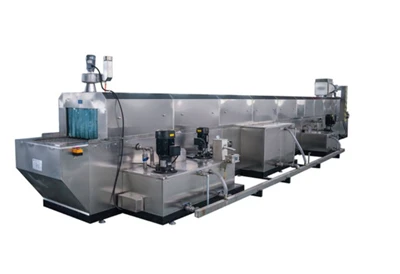
If you’re ready to discuss your power plant’s pure water needs and how we can help, reach out to our team to schedule a consultation. We’ll walk through your challenges, review your existing systems if you have them, and put together a customized plan that fits your budget and operational goals.
Ultrasonic Parts Washer References:
- Electric Power Research Institute (EPRI). (2021). Water Chemistry Guidelines for Fossil and Nuclear Power Plants. EPRI Press.
- American Society of Mechanical Engineers (ASME). (2020). ASME Boiler and Pressure Vessel Code: Water Quality Requirements for Power Boilers. ASME International.
- Ballard, M. (2019). Pure Water Systems for Power Generation: Design, Operation, and Maintenance. Water Treatment Press.
- World Bank Group. (2022). Water Efficiency in Power Generation: Technical Guidelines. World Bank Publications.
- International Electrotechnical Commission (IEC). (2021). IEC 60076-15: Water Quality for Power Plant Cooling Systems. IEC.
Shenzhen Jkon Environmental Protection Technology Co., Ltd.
As one of the most professional pure water system manufacturers and suppliers in China, we’re featured by quality products and good service. Please rest assured to buy customized pure water system made in China here from our factory. Contact us for more details.
Address: Shanghenglang Industrial park, Daloang Street, Longhua District, Shenzhen, China
E-mail: sales@jkontech.com
WebSite: https://www.jkontech.com/
