If you’ve ever stood next to an industrial pump running at full tilt, watched a pipeline swing with the rhythm of a reciprocating compressor, or felt a storage tank hum with the frequency of its contents moving, you know vibration is one of the quiet, constant threats to industrial equipment. As a flange supplier who’s walked countless factory floors and sat through too many design reviews where someone asks “Wait, what about the flange’s vibration resistance?”, I can tell you this isn’t just a technical checkbox—it’s the difference between a run-of-mill connection and one that keeps operations up for years, not weeks. Let’s break this down like I do when I’m working through a project with a client, no overly dense jargon, just real-world context and the why that matters. Flange
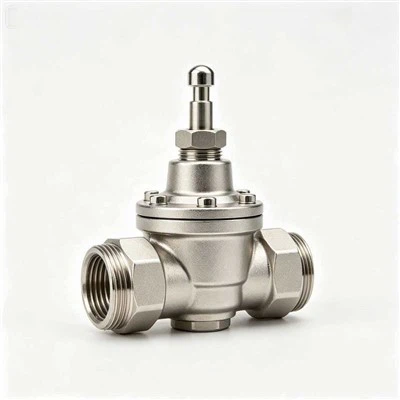
First, let’s start with what vibration resistance even means for a flange, because a lot of folks mix it up with basic strength or pressure rating. A flange is a mechanical fastener that connects two sections of pipe, a pipe to a vessel, or a pipe to a pump, right? Its core job is to hold two components together tightly enough to stop leaks, while also accounting for thermal expansion, pressure spikes, and movement. Vibration resistance, specifically, is the flange’s ability to handle repeated, cyclic mechanical force from dynamic operating conditions without failing—whether that failure is a leak, a cracked flange face, or bolts that work loose over time. It’s not about being unbreakable; it’s about withstanding millions of tiny, repeated loads without giving in.
The biggest mistake I see new clients make is assuming a flange rated for 150 psi static pressure will work fine on a vibrating pump application. That’s a quick path to downtime. Let’s take an example: a reciprocating air compressor at a parts manufacturing plant. The compressor’s piston moves back and forth, creating pressure pulses every half-second, which shake the entire piping system. Over a month, that’s more than 2.5 million cyclic loads on every connection. A standard carbon steel flange that works great for a steady, low-vibration water line will start to show signs of fatigue here: first, small gaps between the gasket and flange face, then bolt loosening as the vibration works the threads loose, and eventually a pinhole leak that shuts down the production line. I’ve gotten emergency calls like that—clients who bought the cheapest flanges online, skipped vibration design, and had to replace a dozen flanges in a single weekend at triple the cost of using the right part from the start.
So what actually makes a flange vibration-resistant? It’s a mix of material choice, design specifications, installation best practices, and matching the flange to the specific vibration profile of the application. Let’s go through each part, because this is where a good supplier earns their keep, not just selling metal rings.
Material is the foundation, plain and simple. Carbon steel is common, but not all carbon steel is the same for vibration. Standard A105 carbon steel, which works for most static pressure applications, has a tensile strength around 60,000 psi, but it can be prone to fatigue failure under cyclic loads if not treated right. For high-vibration applications, I almost always recommend either a higher-strength carbon steel or alloy steel, like A350 LF2, which is designed for low-temperature and cyclic loading, or even duplex stainless steel for corrosive environments that also have vibration. Duplex steel, for example, has twice the yield strength of standard austenitic stainless steel, so it can handle the repeated stress of vibration without deforming or cracking. Another factor here is material ductility. A brittle material, like cast iron, might seem strong, but it’s terrible for vibration because it doesn’t flex. When a vibrating load hits it, it doesn’t absorb the energy—it transfers it straight to the material, leading to cracks. I once had a client try to use cast iron flanges on a vibrating boiler feed line, and within two weeks, three flanges had split down the center. We switched to ductile iron flanges, which have the flexibility of steel but the corrosion resistance of cast iron, and those connections ran for 10 years without an issue. Ductility is non-negotiable for vibration resistance, because it lets the flange absorb small, repeated loads instead of breaking.
Next, design and rating. The standard flange rating (150, 300, 600 psi, etc.) is for static pressure, but when vibration is involved, you have to look at additional design factors. One of the most important is the flange’s face type. Flat face (FF) flanges are common, but in high-vibration applications, they have a flaw: if the bolts loosen even a tiny bit, the gasket can shift, creating a leak. Ring-type joint (RTJ) flanges, on the other hand, have a grooved face that the gasket sits in, so even if the bolts move slightly from vibration, the gasket stays in place, and the seal remains intact. I can’t tell you how many times a client comes to me after a leak because they used FF flanges on a compressor or pump, and switching to RTJ fixed the problem immediately. Another design factor is the flange’s class and thickness. A 300-class flange is thicker and has more structural rigidity than a 150-class flange of the same size, which helps it resist bending under cyclic vibration. For applications with very high vibration, like large reciprocating compressors or mining equipment pipelines, we also work with clients to specify raised-face (RF) flanges with bolt pattern reinforcement, or even slip-on flanges with full penetration welds, instead of the partial penetration that’s sometimes used for low-pressure static lines.
Then there’s the bolted joint design, which is half the vibration resistance puzzle. Even the best flange won’t handle vibration if the bolts aren’t installed correctly. The key here is bolt preload—how tight you torque the bolts to pull the two flange faces together. For steady applications, torqueing to the manufacturer’s specified value works, but for vibrating applications, preload needs to be higher and more consistent, because vibration will work the bolts loose over time. That’s why I always recommend using bolt locking mechanisms for high-vibration jobs: either lock washers, nylon insert lock nuts, or chemical thread lockers. I’ve seen clients skip lock washers to save a few cents, only to have all bolts loosen and cause a major leak within a month. Another trick we share with clients is using torque wrenches that are calibrated regularly, because a torque wrench that’s off by 10% can mean bolts are either too loose (vibration will loosen them) or too tight (the flange face will deform under pressure, leading to leaks). For really extreme vibration, we even help clients use stud bolts instead of regular bolts and nuts, because stud bolts extend through both flanges and create a more uniform load distribution, reducing the chance of uneven tightening that leads to failure.
Installation practices matter too, and this is where a supplier who provides full support (not just selling flanges) makes a difference. When I work with a new client on a high-vibration project, I don’t just ship the flanges and bolt them up. I go over installation best practices with their maintenance team: how to clean the flange faces before installation (no dirt, rust, or old gasket residue that creates uneven gaps), how to place the gasket correctly (centered, not overlapping the bolt holes), and how to torque the bolts in a crisscross pattern, not in a circle, to ensure even pressure across the flange face. Uneven pressure is one of the biggest hidden causes of vibration-related failure—if one bolt is tighter than the one next to it, the flange will bend slightly under load, and vibration will amplify that bending until something breaks. I once had a client who insisted on installing flanges themselves instead of using our on-site support, and they torqued bolts in a clockwise circle, leading to uneven pressure. Within three days, they had a leak. We sent a technician to redo the installation with crisscross torqueing, and that line ran for 15 years without a single issue. That’s the difference between a flange supplier who just moves metal and one who solves real problems.
Now, let’s talk about real-world examples, because theory is great, but results are what count. Last year, I worked with a small chemical processing plant that was having constant leaks on their pipeline leading to a centrifuge. The centrifuge runs 24/7, spinning at 12,000 RPM, creating extremely high vibration that shook the entire piping system. The plant had been using 150-class carbon steel FF flanges, tightening them with a standard torque wrench. They were replacing 2-3 flanges every month, at a cost of over $10,000 a month in parts and downtime. We switched them to 300-class A350 LF2 RTJ flanges, used stud bolts with nylon lock nuts, and trained their maintenance team on crisscross torqueing. It’s been almost two years, and they haven’t had a single leak on that line. That’s the value of getting vibration resistance right—you don’t just buy a flange, you avoid costly downtime. Another example: a mining company that needed flanges for slurry pipelines that run through vibrating rock crushers. Slurry is abrasive, so material resistance is key, and vibration makes that harder. We supplied them with duplex stainless steel RTJ flanges, specified thicker than standard for their 600-class rating, and added RTJ gaskets designed for high cyclic loads. They went from replacing 10+ flanges a month to 1 every 6 months, cutting their maintenance costs by 80%.
I know a lot of buyers out there are focused on upfront cost, and I get it—everyone is looking to keep expenses low. But when it comes to vibration resistance, the cheapest option is almost never the best. A $20 flange that fails in a month costs you $10,000 in downtime, lost production, and emergency repairs. A $50 flange from a supplier who understands vibration and supports you through installation is a fraction of the cost of that downtime. That’s why as a flange supplier, I don’t just quote price—I ask questions: what’s the operating vibration frequency? How many cyclic loads will the line see per year? What’s the application (pump, compressor, centrifuge, slurry line)? Those questions let us recommend the right flange, not just the cheapest one.
Let’s also address a common question I get: can you add vibration resistance to an existing flange installation? Yes, in most cases. If you already have a line that’s leaking due to vibration, there are steps you can take to fix it without replacing every flange. Adding lock washers or lock nuts to existing bolts, replacing FF flanges with RTJ flanges, or adding vibration dampeners between the flange and the equipment can reduce cyclic loads. But it’s always better to design for vibration from the start, because retrofits are more expensive and take equipment out of service temporarily.
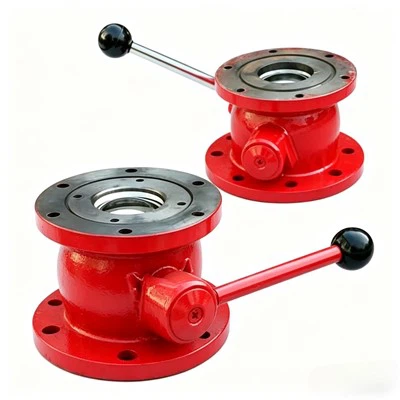
At the end of the day, vibration resistance isn’t a single feature you can stamp on a flange spec sheet—it’s a combination of material, design, installation, and support. As someone who’s been in the flange business for over 15 years, I’ve seen how a small mistake in specifying or installing a flange can shut down an entire plant. That’s why we take the time to work with each client, no matter how big or small, to make sure their flanges are built to handle their specific operating conditions, including whatever vibration they face.
Storm Drain Grate If you’re working on a project where vibration is a concern, whether it’s a new installation or a retrofit for an existing line, we’re here to help. We don’t just ship flanges—we provide engineering support, installation guidance, and custom solutions tailored to your application. Don’t let vibration cause unplanned downtime that costs you thousands of dollars. Reach out to us today to talk about your vibration resistance needs, and let’s find the right flange for your operation.
References
- ASME B16.5 – Pipe Flanges and Flanged Fittings, 2023 Edition
- Norton, R.L. Machine Design: An Integrated Approach, 5th Edition, Pearson Education, 2011
- Machinery’s Handbook, 31st Edition, Industrial Press Inc., 2020
- American Petroleum Institute (API) Standard 6A – Specification for Wellhead and Christmas Tree Equipment, 22nd Edition, 2021
Shanxi Yuanhang Machinery Construction Industry and Trade Co., Ltd.
We’re well-known as one of the most experienced flange manufacturers in China. With a professional production team, we are able to meet the needs of the majority of our customers. Welcome to buy discount flange in stock here from our factory. Contact us for pricelist and free sample.
Address: Taiyuan City, Shanxi Province
E-mail: anzhiyuan@yhmadeinprc.com.cn
WebSite: https://www.yhmadeinprc.com/
