Substation transformers play a pivotal role in the electrical power system, serving as the linchpin that enables the efficient transmission and distribution of electricity. As a seasoned supplier in the field of substation transformers, I’ve witnessed firsthand the diverse requirements and applications across different sectors. In this blog, I’ll delve into the various types of substation transformers, their unique features, and the scenarios where they shine. Substation Transformer
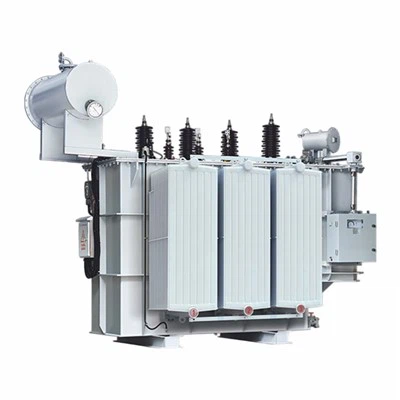
Power Transformers
Power transformers are the heavy – lifters of the substation world. These transformers are designed to handle large amounts of electrical power, typically at high voltage levels in the range of 33 kV and above. Their primary function is to step up or step down the voltage for long – distance power transmission and distribution.
Step – up Transformers
Step – up transformers increase the voltage level from the generating station to a higher level suitable for long – distance transmission. When electricity is generated at a power plant, say at a relatively low voltage like 11 kV or 22 kV, it is not efficient to transmit this power over long distances due to high resistive losses. By using a step – up transformer, the voltage can be raised to hundreds of kilovolts, such as 220 kV or 500 kV. This significantly reduces the current flowing through the transmission lines, as per the power equation (P = VI) (assuming power (P) is constant, an increase in voltage (V) leads to a decrease in current (I)). The lower current results in lower (I^{2}R) losses (where (R) is the resistance of the transmission line), making the long – distance power transfer more efficient.
We often supply step – up transformers to large – scale power generation facilities, including coal – fired, hydroelectric, and nuclear power plants. These transformers are built with robust insulation systems and large – capacity windings to handle the high power and voltage levels.
Step – down Transformers
Step – down transformers are used at the receiving end of the transmission system to reduce the high voltage to a level that is safe and suitable for industrial, commercial, and residential use. For example, when the high – voltage power is transmitted to a substation near a city, a step – down transformer will reduce the voltage from 220 kV or 132 kV to a medium voltage level like 33 kV or 11 kV. Further step – down transformers at local substations or distribution points will then reduce the voltage to the standard 400 V (three – phase) or 230 V (single – phase) for household and small – business consumption.
Our customers in urban and industrial areas highly rely on our step – down transformers to ensure a stable and safe power supply. These transformers need to be reliable and have good voltage regulation capabilities to maintain a consistent voltage output under varying load conditions.
Distribution Transformers
Distribution transformers are responsible for the final stage of voltage transformation in the power distribution network. They are typically used to step down the medium – voltage (e.g., 11 kV or 33 kV) to low – voltage levels (230 V/400 V in most countries) for direct use by consumers.
One of the key characteristics of distribution transformers is their wide deployment. They can be found in residential areas on utility poles (pole – mounted transformers), in industrial parks, and in commercial buildings. These transformers are often rated from a few kilovolt – amperes (kVA) to a few thousand kilovolt – amperes.
Our distribution transformers are designed with high efficiency to minimize energy losses during the transformation process. They also feature compact sizes and good over – load capabilities to meet the fluctuating demands of consumers. For example, during peak hours in a residential area, when most households are using electrical appliances simultaneously, the distribution transformer needs to be able to handle the increased load without significant voltage drops.
Instrument Transformers
Instrument transformers are not used for power transfer in the traditional sense but rather for measuring electrical quantities and protecting the power system. There are two main types: current transformers (CTs) and potential transformers (PTs).
Current Transformers
Current transformers are used to step down high – current levels in a power system to a lower, measurable level. In high – voltage transmission and distribution lines, the current can be extremely high, sometimes thousands of amperes. It is not practical or safe to directly measure such high currents. A current transformer steps down the current proportionally to a value that can be easily measured by instruments such as ammeters, watt – meters, and protective relays.
For example, if a current transformer has a ratio of 1000:5, it means that for every 1000 amperes of current flowing through the primary winding, 5 amperes will flow through the secondary winding. Our current transformers are engineered with high accuracy to ensure precise measurement and reliable operation of the protection devices in the power system.
Potential Transformers
Potential transformers, also known as voltage transformers, are used to step down high – voltage levels to a lower, standardized voltage level for measurement and protection purposes. Similar to current transformers, in high – voltage systems, direct measurement of the high voltage is difficult and dangerous. A potential transformer steps down the voltage to a level (e.g., 110 V) that can be safely measured by voltmeters, watt – meters, and other control and protection devices.
Our potential transformers are built with excellent insulation and accuracy to provide reliable voltage measurement and proper functioning of the protection equipment. They are crucial for ensuring the safety and stability of the entire power system.
Autotransformers
Autotransformers are a special type of transformer that has a single continuous winding with a tap or a set of taps. Unlike conventional two – winding transformers, where the primary and secondary windings are electrically isolated, in an autotransformer, part of the winding is common to both the primary and secondary circuits.
Autotransformers are more economical in terms of cost and size compared to two – winding transformers when the voltage transformation ratio is relatively close to 1. For example, if the voltage needs to be stepped up or down by a small amount, such as from 110 kV to 132 kV or vice versa, an autotransformer can be a good choice.
However, autotransformers do not provide electrical isolation between the primary and secondary circuits, which can be a drawback in some applications where isolation is required for safety reasons. We supply autotransformers to customers who have specific voltage transformation requirements where cost – efficiency and space – saving are important factors, such as in some industrial power systems.
Special – Purpose Transformers
In addition to the above – mentioned common types, there are also special – purpose transformers designed for specific applications.
Furnace Transformers
Furnace transformers are used in the metal – melting industry, such as in electric arc furnaces and induction furnaces. These transformers need to provide a high current at a relatively low voltage to generate the intense heat required for melting metals. Our furnace transformers are built with heavy – duty windings and special cooling systems to withstand the high – current operation and the harsh environment in the furnace area.
Rectifier Transformers
Rectifier transformers are used in conjunction with rectifiers to convert alternating current (AC) to direct current (DC). They are widely used in applications such as electroplating, electrolysis, and DC traction systems. These transformers are designed to provide a specific output voltage and current waveform to meet the requirements of the rectifier circuit. Our rectifier transformers are engineered with high – quality core and winding materials to ensure efficient and reliable operation.

In conclusion, the world of substation transformers is rich and diverse, with each type catering to specific needs in the power system. Whether it’s the high – power requirements of long – distance transmission, the final voltage transformation for end – users, or the specialized needs of industrial processes, we have a comprehensive range of substation transformers to offer.
Structural Transformer If you are in the market for substation transformers and have specific requirements, we encourage you to reach out to us for a detailed discussion. Our team of experts is ready to assist you in finding the most suitable transformer solution for your project.
References
- Electric Power Systems: Analysis and Control, by Claudio A. Cañizares
- Power System Analysis and Design, by J. Duncan Glover, Mulukutla S. Sarma, and Thomas J. Overbye
- Transformers: Theory, Design, and Application, by Sydor, R.
Nantong Yawei New Energy Technology Co., Ltd.
As one of the most professional substation transformer manufacturers and suppliers in China, we’re featured by quality products and good service. Please rest assured to wholesale durable substation transformer made in China here from our factory. Customized orders are welcome.
Address: Room 28-101, Building 27 and 28, No.333 Kaiyuan Avenue, Sunzhuang Subdistrict, Hai’an City, Nantong City, Jiangsu Province, China
E-mail: admin@nantongyawei.com
WebSite: https://www.nantongyawei.com/
