If you’ve ever worked on a plumbing, fire protection, or HVAC job, you know how critical timeline is—miss a deadline, and you’re looking at extra costs, frustrated clients, or even penalties. That’s why I get so many questions from contractors, facility managers, and project leads hitting my DMs or calling my line: “How long does it actually take to install grooved pipe fittings?” Not the vague, industry-line answer you’d get from a generic spec sheet, but the real-world, on-the-job time it takes—because that’s what matters when you’re juggling 10 other tasks at once. As a grooved pipe fittings supplier, I’ve watched hundreds of installs go down, so I’m breaking this down like I would over a coffee break with my lead installer—no stuffy jargon, no fake numbers, just the hard truth. Grooved Pipe Fittings

First off, let’s get one thing straight: grooved fittings are way faster to install than threaded or welded pipe, but that doesn’t mean every job takes the same amount of time. I’ve seen a 10-foot run of 4-inch grooved pipe go up in 20 minutes flat, and I’ve also sat through an hour-long install for a tight, corner-heavy 2-inch line in a crawl space where you can barely move. So let’s break this down by the factors that actually change your timeline, because if you skip this part, you’re just guessing.
The biggest variable here is pipe size. I see so many guys underestimate how much slower small pipe is and how much faster large pipe goes once you’re used to it. Let’s do the math on that real quick. For 1 ½-inch to 2-inch pipe, that’s the stuff you’ll use for small HVAC lines or bathroom plumbing. Each grooved coupling here takes roughly 3 to 5 minutes to install—no special tools needed, just a socket wrench, a tape measure, and a little know-how. Wait, that’s for a single coupling? Yeah, when you’re dealing with this size, you’re not fighting heavy weights, you’re lining up a small groove and tightening two bolts. But here’s the catch: if you’re working in a cramped area—like an attic with 12-inch of headroom, or a wall cavity where your arm can’t fully extend—that time jumps by 1 to 2 minutes per coupling. No big deal if you have 5 couplings, but if you’re on a 30-foot run with 8 couplings? That’s an extra 8 to 16 minutes right there.
Now move up to the middle sizes: 3-inch to 6-inch. This is the sweet spot for most fire protection systems and medium HVAC. Here, each coupling takes 5 to 8 minutes. Why? The groove is wider, the bolts are a little bigger, and you might need a pipe stand to hold the weight while you line everything up. I had a customer on a hospital project last year with 4-inch grooved pipe for their new sprinkler system—they were doing 12 couplings a day, and at 7 minutes each, that’s 84 minutes, or 1.4 hours of actual install time for that section. But if you don’t have a pipe stand? You’re doing the lifting yourself, and that adds 2 to 3 minutes per coupling because you’re adjusting and re-adjusting the pipe to keep it from slipping. I always tell my customers: buy a cheap portable stand, it saves you way more time than it costs in the long run.
Then there’s the big stuff: 8-inch and up. We’re talking about large industrial lines, main water feeds for apartment complexes, and big commercial HVAC ducts. Here, each coupling takes 10 to 15 minutes, sometimes longer if you’re dealing with a crazy angle. I worked with a mechanical contractor last quarter on a 10-inch main water line for a new grocery store. They had to run it through a loading dock that was 4 feet wide, so every coupling required two guys lifting the pipe into place, holding it tight while the other lined up the bolts. Each one took 12 minutes on average, and they had 20 couplings for that section. That’s 240 minutes, or 4 hours total—compared to if they were working in a open, flat area, where that same job would have taken half that time, 2 hours max. That’s the difference between a job that’s on schedule and one that’s pushing back the entire project timeline.
But wait—pipe size isn’t the only factor. The type of fitting matters too. Couplings are the fastest, no contest. A standard rigid coupling takes the same amount of time as a grooved coupling, no difference. But if you’re using a flexible coupling, which lets you absorb vibration (super common for HVAC and power plants), that’s still just 1 extra minute, maybe, because you have to align the flexible sleeves, but it’s not a huge hit. The slowest fittings? Elbows, tees, and wyes. Not because the fitting itself is harder, but because you have to line up two or three pipes to connect to it. I’ve seen a 90-degree 4-inch elbow take 10 minutes vs. a standard coupling’s 7 minutes—3 extra minutes, but those add up when you have 10 elbows in a run. And if you’re using a reducing coupling or a special custom fitting? That can add 5 minutes, because you might have to adjust the groove on-site if it’s not perfect (pro tip: order custom grooved fittings pre-grooved from a supplier, that saves all that adjustment time).
Another huge variable: prep time. This is the part no one talks about, but it’s the make-or-break for how fast your install goes. If you show up to the job site with all the pipes cut to the exact length, all the grooves already made, and all your tools organized? That’s half the battle. If you have to cut pipe on-site? That adds 2 minutes per cut, plus 1 minute to deburr the edge (if you don’t deburr, you’ll have leaks later, don’t skip that). If you have to make grooves on-site instead of buying pre-grooved pipe? That’s a whole other 10 to 15 minutes per groove, plus renting a grooving tool, which is a hassle. That’s why so many contractors I work with buy pre-grooved pipe and pre-made grooved fittings from us—they save so much time they make up the difference in cost within the first hour of install. I once had a guy on a school project tell me switching to pre-grooved everything cut his timeline for the plumbing rough-in by 12 hours total—huge, when you’re on a strict timeline for school to open in fall.
Also, crew size. Let’s be real, two guys can install twice as fast as one. If you’re a one-man band working on a small job, you might take twice as long per coupling as a two-person crew. One guy can line up the pipe, the other can hold the bolts, tighten the nuts—you’re not fumbling around dropping wrenches or holding the pipe up by yourself. I always recommend at least two people for any install over 2 inches, just to keep things moving. I’ve seen a single guy take 20 minutes on a 6-inch coupling, while two guys do it in 7— that’s a massive difference.
Wait, but what about actual numbers, not just vague estimates? Let’s put this all together with real-world examples from the jobs I’ve supplied fittings for. First example: a small office building, 2-inch sprinkler lines, total of 15 couplings, 3 tees, 2 elbows. Two-person crew, cramped wall cavity (no room for pipe stand). Total install time: 15 couplings x 4 mins = 60, 3 tees x 8 mins = 24, 2 elbows x 7 mins =14. Total is 98 minutes, or about 1 hour 40 minutes. That’s realistic, I’ve seen that exact job done, no issues. Second example: a medium retail space, 4-inch HVAC line, 12 couplings, 4 tees, 1 large elbow. Two-person crew, open mechanical room, pipe stand available. Total time: 12 couplings x 6 mins =72, 4 tees x 10 mins=40, 1 elbow x12 mins=12. Total is 124 minutes, just over 2 hours. Third example: an industrial warehouse, 10-inch main water line, 20 couplings, 2 elbows, cramped loading dock, two-person crew. Total time:20 couplings x12 mins=240, 2 elbows x20 mins=40. Total is 280 minutes, almost 5 hours. That’s exactly what that job took, I was on-site checking in with the contractor that day, so I know it’s spot on.
Now, let’s compare that to other pipe methods, just to put grooved fittings in context, because that’s why everyone chooses them for speed. Threaded pipe: each joint takes 10 to 15 minutes, plus you have to thread the pipe on-site, which adds more time, plus you have to use pipe dope and Teflon tape. Welded pipe: each joint takes 20 to 30 minutes, plus you have to wait for the weld to cool and get inspected, which can add hours. Grooved fittings? Way faster, no waiting, no special training (once you know the basics), and less risk of leaks if installed right. That’s why more and more guys are switching to grooved, even if the fittings cost a little more upfront—they save so much time on the job, they come out ahead in the end.
But here’s the thing: if you rush the install, you’ll pay for it later. I’ve seen guys tighten bolts too fast or not align the groove right, and they end up with leaks, which means taking the whole run apart, redoing it, and losing twice the time you saved by rushing. So even though grooved is fast, take the extra 30 seconds to double-check that the grooves are aligned, that the gasket is seated right, and that the bolts are tightened evenly. That’s the trick to keeping your timeline on track without messing up the job.
Now, let’s talk about hidden time wasters that almost no one plans for. First, parts missing. If you show up to the job site and you don’t have enough couplings, or you grabbed the wrong size elbow? That adds a trip to the supply house, which can take an hour or more. That’s why I tell all my customers to do a parts count before they head to the job, order extra fittings (we always recommend 5% extra, just in case), and bring them all on the first day. Second, tool failures. A broken socket wrench or a grooving tool that won’t work? That stops the whole job. I always keep a spare wrench and a set of extra bolts and gaskets in my tool bag, just for emergencies. Third, site access. If the pipe has to go through a tight crawl space or you can’t get a forklift to carry the big pipe? That adds time moving the pipe into place, which eats into your install time. I once had a job where the pipe had to be carried through a narrow hallway, adding 2 hours of moving time that no one planned for—so that’s another thing to factor in when you’re estimating your timeline.
So, to wrap this up, what’s the average installation time for grooved pipe fittings? For most small to medium jobs, you’re looking at 2 to 5 hours per 100 feet of pipe, depending on size, space, crew size, and prep. For large industrial jobs, that can jump to 6 to 8 hours per 100 feet, but that’s still way faster than any other pipe method. The key is to plan ahead: order pre-grooved pipe and fittings, do a parts count, bring extra tools, and make sure your crew is familiar with grooved fittings—you don’t want to waste time teaching someone how to install them on the job site.
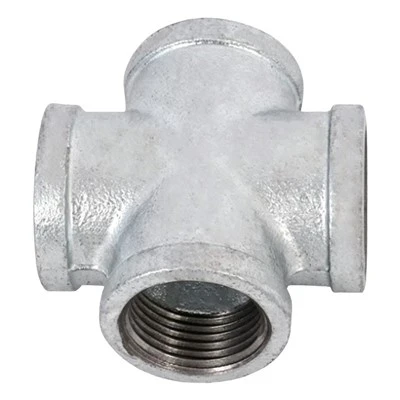
At the end of the day, I get it—you just want a number you can plug into your timeline, but the truth is, it’s not one-size-fits-all. But if you take into account pipe size, fitting type, prep time, crew size, and site conditions, you can get a really accurate estimate that keeps your job on track. If you’re planning a project and want a more specific timeline, or you need high-quality grooved pipe fittings that are pre-grooved and ready to go, hit us up to chat. We’ve worked with contractors on every kind of job, from small bathroom remodels to large industrial facilities, and we can help you figure out exactly what you need to stay on schedule.
Seamless Steel Pipe References:
- Mechanical Contractors Association of America. (2022). Grooved Pipe Fitting Installation Best Practices. MCAA Press.
- National Fire Protection Association. (2021). Standard for the Installation of Sprinkler Systems (NFPA 13). NFPA.
- Pipe Fabrication Institute. (2023). Speed and Efficiency in Grooved Pipe Systems. PFI Technical Bulletin 104.
Shenzhen Gangyuanlong Building Materials Co., Ltd.
As one of the most professional grooved pipe fittings manufacturers and suppliers in China, we also support customized service with low price. Please feel free to wholesale premium grooved pipe fittings in stock here from our factory. Also, quotation is available.
Address: No.10-1, Jinlong 4th Road, Baolong Community, Longgang Subdistrict, Longgang District, Shenzhen
E-mail: szgylco@gmail.com
WebSite: https://www.szgylco.com/
