If you’ve ever walked through a metal fabrication shop, heat treatment facility, or even a research lab working with high-temperature ceramics, odds are you’ve seen a Bell Furnace. These versatile, closed-chamber furnaces are workhorses for processes like annealing, brazing, sintering, and stress relieving, where precise, controlled heating is non-negotiable. But anyone who’s ever relied on a Bell Furnace knows its performance hinges on one often-underappreciated part: the heating element. As a supplier of Bell Furnaces for over 12 years, I’ve answered this question hundreds of times for metalworkers, lab managers, and engineers, and the answer isn’t one-size-fits-all. Let’s break down what Bell Furnace heating elements are, how they work, and why choosing the right one makes all the difference in your process. Bell Furnace
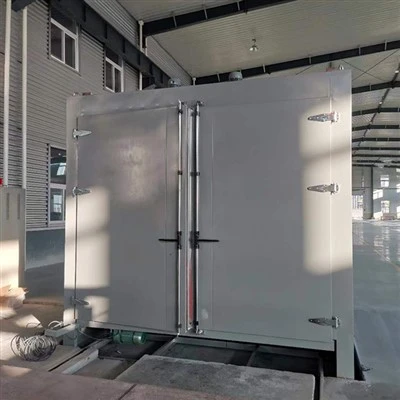
First, let’s ground this in what a Bell Furnace actually is, to set the stage for why the heating element matters. A Bell Furnace gets its name from its shape: it has two main parts, a stationary base (called a “hearth”) where parts to be treated rest, and a dome-shaped upper section (the “bell”) that lowers over the hearth to seal the chamber. This sealed, enclosed design lets you control the atmosphere inside—from inert argon or nitrogen for heat-treating sensitive metals like titanium or stainless steel, to reducing hydrogen atmospheres for brazing copper. Unlike continuous furnaces, which process parts nonstop, Bell Furnaces are batch-process, so their heating elements need to maintain consistent temperatures across the entire chamber, even as the bell is lifted and lowered for loading and unloading. That consistency is make-or-break for outcomes: a spot that’s 50 degrees too hot can warp a stainless steel part, while a spot that’s too cool can leave residual stress in a machined component.
Now, the heating element itself: these are resistive heating elements, meaning they work on the principle of Joule heating. When an electric current passes through a conductive material, the material’s resistance converts that electrical energy into heat. For Bell Furnaces, this isn’t just any resistive wire—they’re engineered to withstand the extreme conditions inside the chamber: sustained temperatures up to 2400°F (1315°C), exposure to reactive atmospheres, and sometimes contact with hot metal or ceramic parts during batches. Over the years, I’ve seen three main types of heating elements we supply for Bell Furnaces, each tailored to specific use cases, and choosing the wrong one is a common mistake I see new customers make.
The most common type we offer for standard industrial Bell Furnaces is Kanthal A-1 heating elements. Kanthal is a brand of iron-chromium-aluminum (Fe-Cr-Al) alloy, and A-1 is the grade specifically designed for high-temperature resistive heating. For context, around 60% of the Bell Furnaces we sell go to job shops that do batch annealing of steel parts, brazing of stainless steel fittings, or sintering of small ceramic components—and Kanthal A-1 is their go-to for good reason. It’s affordable compared to other alloys, has a long lifespan when used at temperatures up to 2350°F (1288°C), and is resistant to oxidation, which is key because any oxygen inside the Bell Furnace (even trace amounts) can eat away at the heating element over time. I remember a customer last year who switched from a cheaper nickel-chromium (Ni-Cr) element to Kanthal A-1 for their 500-pound steel annealing batches. His old Ni-Cr elements were burning out every 18 months, requiring downtime and replacement costs that ate into his profit. With Kanthal A-1, he hasn’t had to replace elements in three years. That’s the kind of real-world result we see every day.
For applications that run hotter, though, Kanthal A-1 hits a limit. If you’re sintering powdered metal parts or processing refractory metals like molybdenum, you might need a molybdenum (Mo) heating element. Molybdenum has a much higher melting point—around 4750°F (2620°C)—so it can handle sustained temperatures up to 2400°F (1315°C), which is non-negotiable for those high-temperature processes. But there’s a catch: molybdenum oxidizes rapidly at high temperatures when exposed to even small amounts of oxygen. That means when you use Mo elements, your Bell Furnace has to run in a strictly inert or vacuum atmosphere. We supply Mo elements with a protective coating, too, to extend their lifespan even in pure atmospheres. Last quarter, we worked with a medical device manufacturer that needed to sinter titanium implants, which requires heating to 2300°F in a vacuum. Their previous supplier used Kanthal elements, which couldn’t reach the required temperature, leading to inconsistent sintering and a 10% reject rate. Switching to Mo elements cut their rejects to less than 1%, and reduced their cycle time by 2 hours because the elements heated faster. It’s a specific use case, but one where the right heating element makes all the difference.
The third type we provide is silicon carbide (SiC) heating elements, which are a staple in high-temperature Bell Furnaces used for ceramics, glass fusing, or calcining raw materials. SiC elements are rigid, rod-shaped (not wire or foil like Kanthal or Mo), and can reach temperatures up to 2700°F (1482°C) without degrading. Unlike metallic elements, SiC is ceramic, so it’s resistant to oxidation even when there’s a little trace oxygen in the furnace atmosphere—no vacuum required for lower-medium temperature high-heat processes. That makes it perfect for labs and small manufacturing operations that don’t want to invest in a full vacuum system for their Bell Furnace. I had a research customer at a university last year who was testing new ceramic insulation materials; their old furnace used Kanthal elements that burned out every 6 months when they ran tests at 2500°F. Swapping to SiC elements cut their replacement frequency to every 2 years, saving them thousands in lab downtime and replacement costs. That’s another example of matching the element to the process, not just picking the most expensive option.
Now, it’s not just the material of the heating element that matters—it’s how it’s installed in the Bell Furnace. A lot of customers think the element is just a wire strung inside the chamber, but we engineer their placement specifically for uniform heating. For small Bell Furnaces (under 10 cubic feet), we wrap Kanthal wire around ceramic mandrels that line the chamber walls, so heat radiates evenly across the space. For larger furnaces (over 50 cubic feet), we use a combination of wall-mounted elements and top/bottom elements, because gravity can cause hot air to rise, leading to cool spots at the bottom of the load. Last year, a automotive parts manufacturer called us in a panic: their new Bell Furnace was having uneven heating, so 20% of their valve springs were coming out with inconsistent stress. We inspected the furnace and found their previous supplier had installed standard Kanthal wire without adjusting the placement for their 4-foot tall load. We reworked the element layout, adding extra elements near the hearth (the bottom of the chamber) and adjusting the wire spacing, and within a week their reject rate dropped to 0.5%. That’s the hidden value of working with a supplier that understands not just the elements, but how they fit into a Bell Furnace’s design.
I also want to address a common misconception we hear: “Can I re-use heating elements from an old furnace in my Bell Furnace?” The short answer is, not usually. Bell Furnaces operate at different temperatures, use different atmospheres, and have unique load dimensions. A Kanthal element that works in a box furnace might not have the right wattage for a Bell Furnace’s larger chamber, or might react badly to the reducing atmosphere used for brazing. Last year, a customer tried to salvage old elements from a retired heat treat furnace, and within a month the elements had corroded and caused a small atmosphere leak in his Bell Furnace. That leak led to oxidation on his copper brazing assemblies, resulting in $15,000 in lost parts. It’s a avoidable mistake, which is why we always offer element compatibility checks when a customer reaches out—we test their current furnace specs to make sure any replacement element fits, works, and doesn’t cause issues.
As a Bell Furnace supplier, our job isn’t just to sell equipment—it’s to make sure every part of that equipment works for your specific process, and the heating element is the heart of that. I’ve been in this industry long enough to know that a great Bell Furnace can’t fix a bad heating element, and a good heating element can make a mid-range Bell Furnace perform like a top-tier model. Whether you’re running a small lab with ceramic testing, a mid-sized job shop annealing steel, or a manufacturer sintering medical implants, we’ve worked with every type of heating element and can help you pick the right one for your needs. If you’re experiencing issues with uneven heating, frequent element replacement, or you’re building a new process and need a Bell Furnace paired with the right heating elements, reach out to our team to discuss your requirements. We don’t do one-size-fits-all solutions, and we don’t believe in selling you parts you don’t need—we believe in partnering with customers to keep their processes running smoothly.
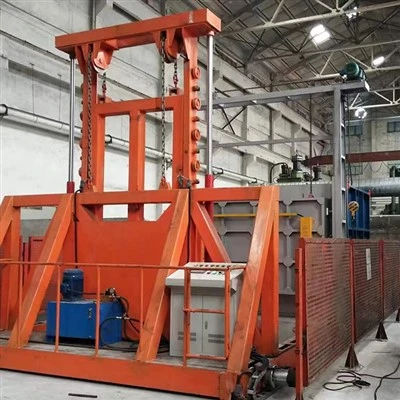
To put this all together, the heating element in a Bell Furnace isn’t a generic component—it’s a precision-engineered part tailored to your process, your temperature needs, and your atmosphere. From Kanthal for standard industrial heat treatment, to molybdenum for high-temperature vacuum sintering, to silicon carbide for lab and ceramic applications, the right element is the difference between consistent, high-quality parts and costly downtime. If you’re looking to upgrade your Bell Furnace, troubleshoot heating issues, or source compatible replacement elements, don’t hesitate to connect with our team to discuss your specific needs.
Annealing Furnace References
- Davis, J.R. (Ed.). (1998). Heat Treater’s Guide: Practices and Procedures for Irons and Steels. ASM International.
- Kanthal Corporation. (2022). Kanthal A-1 Resistant Heating Material Technical Data Sheet.
- Molybdenum Metal Co. (2021). High-Temperature Heating Elements for Vacuum Furnaces. Technical Bulletin.
- Shaw, W. (2019). “Selection of Heating Elements for Industrial Furnaces.” Journal of Industrial Heating, 86(3), 45–52.
Jiangsu Fangwei Furnace Industry Co., Ltd.
Jiangsu Fangwei Furnace Industry Co., Ltd. is one of the most professional bell furnace manufacturers and suppliers in China. With abundant experience, we are committed to providing high quality customized products with competitive price. Please feel free to buy advanced bell furnace made in China here from our factory.
Address: No.168, HuangNian Bridge, DaoShu Town, Danyang City, JiangSu Province, China
E-mail: fangwei@fwfurnaces.com
WebSite: https://www.fwfurnaces.com/
