If you’ve ever stood in the hardware aisle staring at a wall of screwdrivers, wondering why there are two totally different types that both claim to “loosen or tighten screws,” you’re not alone. As someone who’s been in the hardware products supply game for over a decade, I get asked this question from DIYers, contractors, and even new techs all the time. It’s not just about “which one fits which screw”—there’s actual engineering behind Phillips vs. flathead screwdrivers that makes each good for specific jobs, and mixing them up can turn a quick fix into a headache (or a stripped screw, which is the worst). Hardware Products

Let’s start with the basics: what each screw and driver is made for, because that’s where the difference actually comes from, not just the shape. Flathead screwdrivers—sometimes called slotted screwdrivers, because that’s what they fit—date back way longer than Phillips. Invented in the 1500s, slotted screws were the standard for centuries, and their design is simple: a single straight slot cut into the head of the screw, and a flat, thin blade on the screwdriver that fits right into that slot. The whole point of that design? It’s super straightforward to manufacture, both for screws and drivers. No fancy molding needed—just cut a slot, grind a blade, boom, you’re done. That’s why you’ll still see flatheads everywhere, from the tiny screws holding glasses frames together to the big ones on old furniture or farm equipment.
Phillips screwdrivers, on the other hand, are a relatively modern invention—we’re talking the 1930s, back when the US car industry was booming. Henry Ford was tired of slotted screws slipping mid-assembly; a mechanic would lose his grip, slip, scratch the car body, or worse, strip the screw slot so bad the driver wouldn’t hold at all. So a guy named Henry Phillips (funnily enough, it’s named after him) designed a cross-shaped screw head and a matching cross-shaped driver to fix that. The idea was that the driver would center itself in the screw head, no slipping, and the cross shape would distribute torque (that’s the twisting force, for the uninitiated) more evenly, so the screw wouldn’t strip as easily. The car industry loved it, and Phillips screws became the standard for mass-produced stuff—cars, appliances, electronics, even most furniture you buy at a big box store now.
But here’s the thing: those design goals lead to totally different use cases, which is where most people mix up the two. Flathead screwdrivers are best for small, precise jobs where you need control, or for when you’re working with old hardware. Think: adjusting a door hinge, tightening a loose screw on a vintage lamp, prying off a old paint can lid (yep, that’s what a flathead’s for, too). Because their blade is thin and flat, you can fit it into tight spaces that cross-shaped drivers can’t—like the narrow slot on a eyeglass screw, or the tiny screws inside a old radio. Plus, if you have a screw that’s stuck, a flathead is way easier to use with a little extra leverage, especially if you don’t have a power tool. Wait, speaking of power tools: you can use a flathead bit in a drill, too, but you have to be careful—too much torque and the blade will slip right out of the slot, mess up the screw, or even hurt you.
Phillips drivers? Those are made for mass assembly and jobs where speed matters, and when you’re using a power driver. The cross shape’s whole thing is that it locks into the screw head, so when you twist it, it doesn’t slip. That’s why Ford used them on car lines: a worker could screw a dozen bolts on a door panel in 30 seconds, no stopping to fix a slipped driver. They’re also the go-to for pretty much all consumer electronics—your laptop, phone, gaming console, all those tiny screws inside use Phillips heads. But here’s a common mistake people make with Phillips screwdrivers: using the wrong size. Phillips drivers come in numbers, right? #1, #2, #3, depending on the screw size. If you use a #1 driver on a big screw that needs a #2, the driver won’t fit right, and you’ll end up slipping. If you use a #2 on a tiny screw, it’ll strip the head. I see this all the time—customers grabbing whatever Phillips driver is closest, and then calling me saying their screw is ruined.
Now, the messy part: when people mix these two. I’ve seen guys try to use a flathead in a Phillips screw head, and it’s like putting a square peg in a round hole. It might fit if you force it, but the flat blade doesn’t lock into the cross slots, so it’ll slip, strip the screw, and leave little scratches on whatever you’re working on. The same goes for using a Phillips driver in a flathead screw. The cross shape will only sit on the edges of the slot, not fit all the way in, so again, slippage, stripped screws, and a mess. I’ve had to replace more stripped screws than I can count because someone grabbed the wrong driver.
Wait, but are there any exceptions? Yeah, a few. Some newer screws are combo heads—they have both a slot and a cross, so you can use either driver. Those are pretty common on things like door handles or cabinet hardware, just to give people a little flexibility. And then there’s the whole “Phillips vs. Pozidriv” thing that a lot of people don’t know about—Pozidriv is a variation of Phillips that has slightly wider cross slots and a small indent in the center, so it’s better for higher torque jobs. But that’s a rabbit hole for another day; most of what you’ll run into is the standard two.
As a hardware supplier, what I always tell customers is: don’t skimp on your drivers. A cheap flathead or Phillips driver from the dollar store? It’ll bend, chip, or slip way easier than a good one. Our drivers are made with high-grade steel, so they hold their shape, fit exactly, and won’t strip your screws. Because at the end of the day, the right driver for the right job saves you time, saves you money on replacing ruined screws, and keeps you from frustration.
Now, when should you pick which one? Let’s break it down quick for you:
- Grab a flathead if you’re working on small, precise old hardware, need to fit into a tight narrow slot, or need a little extra leverage to loosen a stuck screw.
- Grab a Phillips if you’re working on mass-produced stuff (appliances, electronics, furniture), using a power drill, or need to do a lot of screws quickly without stopping to fix slips.
And if you’re ever not sure which one you need, just look at the screw head: if it’s got a straight single slot, it’s flathead. If it’s got a cross shape, it’s Phillips. That’s it—no overcomplicating it.
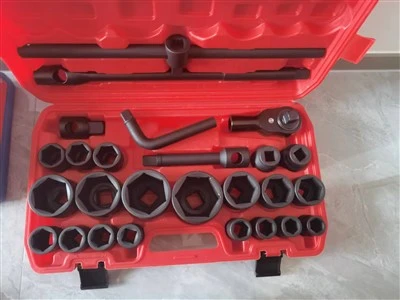
If you’re a contractor stocking up on hardware for a big job, or a DIYer outfitting your toolbox, we’ve got all the screwdrivers you need, plus every other hardware product you could think of. Whether you’re a pro who needs bulk supplies or a hobbyist just building up your home tool kit, we can hook you up. Reach out to us to chat through what you need, no matter the project—we’re here to help make sure you don’t end up stuck with a stripped screw.
Mechanical Parts References
- “The History of the Screwdriver and Screw,” The American Heritage Science Dictionary
- Phillips Screw Company, “Product Design and Engineering Notes”
- Hardware Association, “Best Practices for Screwdriver and Screw Compatibility”
- Popular Mechanics, “How to Avoid Stripping Screws: A Guide for DIYers and Pros”
- Society of Manufacturing Engineers, “Fastening Technologies for Mass Production”
Ningbo Jinghao Warm Upsetting Hydraulic Technology Co., Ltd.
As one of the most professional hardware products manufacturers and suppliers in China, we offer a wide range of products with superior quality. Please feel free to wholesale bulk customized hardware products from our factory. For quotation, contact us now.
Address: 32-1, Phase II, Wanyang Innovation & Entrepreneurship City, Shipu, Xiangshan County, Ningbo City
E-mail: 13736096018@163.com
WebSite: https://www.warmherding.com/
