Hey folks, let’s cut to the chase – if you’re a jaw plates supplier (that’s me, by the way) or someone in the market for durable crusher jaw plates, you know half the battle isn’t making a quality product – it’s navigating the messy, sometimes confusing export rules in different countries. I’ve spent the last 8 years shipping these bad boys to mines, construction firms, and equipment distributors across 12 countries, and I’ve dealt with everything from last-minute customs holds to surprise tariff hikes that ate into my profit margin. So today, I’m breaking down what you actually need to know about export policies for jaw plates in the most common markets I work with, no stuffy trade jargon – just real, on-the-ground intel that’s saved my skin more times than I can count. Jaw Plates

First, let’s get one thing straight: jaw plates aren’t just random metal parts with teeth. They’re heavy, often custom-cut for crushers used in mining, aggregate production, and demolition. That means their classification (which determines tariffs and rules) is super specific. Most countries tag them under HS Code 847490 – “parts of machinery for sorting, screening, separating, or washing mineral substances” – but some do split them up if they’re for smaller, consumer-facing crushers, but 90% of the time, that HS code is your starting point. Now, let’s dive into the key countries I ship to, because their policies differ wildly, and messing up any one of these will cost you time and money.
Let’s start with the US, because it’s one of my top 3 export markets, and their rules are a mixed bag of straight-forward and random hoops. First, tariffs on jaw plates from most countries (including China, where my factory is based, which is where most small-to-mid-sized suppliers like me are based) – post-2018 Section 232 steel tariffs, right? Wait, but jaw plates are made of manganese steel, usually, not just plain steel. The US Customs and Border Protection (CBP) has specific rulings here: if the jaw plate is over 1,000 lbs, it’s classified as a “crusher part” under HS 847490, so it falls under the 2.5% tariff instead of the 25% general steel tariff. That’s a huge win – but only if you can prove it’s not just a raw steel part. I keep my factory’s design specs (showing it’s made specifically for jaw crushers, not structural steel) on hand for every shipment, because CBP loves to pull random samples to check. Also, the US requires a non-preferential certificate of origin, no fancy FTA stuff unless you’re shipping from a country that has an FTA with the US, like Canada. Wait, but I ship from China, so no FTA perks. Another thing: the EPA has random rules for heavy metal content, but manganese is allowed as long as it meets ASTM A128 specs, which is the standard for steel used in crushing equipment. I always include a test report with every commercial invoice, because if you don’t, US customs will hold your shipment for at least 10 days while they test, and that’s a nightmare for my US customers who are waiting to repair their crushers.
Next up, Australia – this is the market I’ve seen the biggest shift in the last 2 years. They used to be super lenient on metal parts, but post-2021, they tightened up import rules for mining equipment parts to combat counterfeits, which was a big issue there (a lot of fake jaw plates that wear out in 2 weeks instead of 6 months). So now, Australia requires a “Conformity Assessment Certificate” for any jaw plate over 500 kg, which proves the part meets Australian Standards (AS/NZS 2300 for engineering steel). The good news is, if you’re a reputable supplier, this is easy to get – my third-party testing lab in Shanghai does it for $150 per batch, and it’s valid for 2 years. Tariffs here are zero for jaw plates, because Australia has a free trade agreement with China, so I use the China-Australia Free Trade Agreement (ChAFTA) certificate of origin to get that eliminated. But here’s the catch: Australian border force does random checks for weight and packaging, because they had issues with under-weight jaw plates (some suppliers ship 400 kg plates advertised as 500 kg to save on shipping). I always weigh each plate and stick a label on it with the exact weight – it takes 2 extra minutes per plate, but it saves me from a $10,000 fine if they catch a discrepancy.
Now, the EU – this is a market that’s been a pain point for a lot of small suppliers, including me, because of the REACH and CE marking rules. First, tariffs: for jaw plates from China, it’s 3% under the General Schema of Preferences (GSP) – wait, but in 2024, China was removed from the GSP’s “advanced developing country” list, so the tariff actually went up to 4%? No, wait, let me confirm that – I checked last month, it’s 3% for HS 847490, because it’s a machinery part, not a raw material. The big thing here is CE marking – any jaw plate sold in the EU has to have it, and that means proving it meets the Machinery Directive (2006/42/EC). A lot of small suppliers skip this, because they think “it’s just a part, not a whole machine” – but the EU says if the part is critical to a machine’s safety (like jaw plates, if they break, the whole crusher explodes), it needs CE. I use a local EU-based testing agency to stamp the CE mark – it’s about $800 per batch, but it’s non-negotiable. Also, REACH regulations restrict certain heavy metals, and jaw plates have small amounts of chromium, but as long as it’s under 0.1% by weight, you’re good. I always include a REACH compliance statement in the shipment paperwork, because EU customs will reject it without one.
Now, let’s talk about emerging markets, because that’s where a lot of growth is right now – like India. India’s import rules for jaw plates are way stricter than I thought when I first started shipping there in 2020. First, HS Code: they split jaw plates into two categories – small ones (under 50 kg, for mini crushers) are under 730890 (structural steel parts) with a 10% tariff, and large ones (over 50 kg) are under 847490 with a 7.5% tariff. That’s important, because if you label a 100 kg plate as small, you’ll get hit with a 50% penalty for misclassification. India also requires a “Bill of Entry” and a pre-import certificate from the Indian Directorate General of Foreign Trade (DGFT) – it’s not as scary as it sounds, you just apply online 5 days before shipment, and it costs $20. But here’s the thing: India has a 20% “social welfare surcharge” on all metal imports, on top of the tariff, so total cost is 27.5% for large plates. I build that into my pricing upfront, because if I don’t, I lose money. Also, they ban “counterfeit parts” so I have to include my factory’s serial number on every plate and the invoice – that’s how they track parts, so no fakes from small unethical suppliers.
What about other markets? Let’s do Canada – super similar to the US, but less strict on testing. HS Code is the same, 847490, tariff is 0% because of the Canada-China FTA (wait, no, actually, Canada’s GSP for China still applies here, so no tariff for mining parts). They do require a certificate of origin, and random checks for weight, but no CE or ASTM tests unless the customer asks for them. I’ve shipped 20+ batches to Canada without a single hold, which is way easier than the US or EU. Then, Brazil – that’s a tricky one. Tariffs are 16% for HS 847490, but they also require a “Special Customs Regime for Capital Goods” (RECAP) which is a big form that takes 10 days to process. A lot of my competitors skip this and send the invoice without it, and their shipments get held for 30+ days. I hire a local customs broker in Brazil for $300 per shipment to handle the RECAP, and it’s worth every penny – my shipments clear in 3 days max.
Wait, let’s get real here – I don’t want to just list rules, I want to tell you the mistakes I made so you don’t have to. Early on, I shipped a batch of jaw plates to the US without the ASTM test report, and it got held in LA customs for 12 days. My customer was stuck with a broken crusher, and I had to pay them $2,000 in compensation – that’s more than the tariff savings I would have had if I’d done the paperwork. Another mistake: shipping to Australia without the ChAFTA certificate of origin, and got charged an extra 5% tariff because I didn’t prove I qualified for the FTA. That cost me $1,500 on a small batch. And last year, I tried to cut corners on CE marking for a shipment to Germany, and it got sent back to me, costing $4,000 in return shipping and 2 months of lost sales. So yeah, these rules aren’t just red tape – they’re make-or-break for your business.
Also, let’s talk about recent changes, because trade policies shift all the time, and if you don’t stay on top of them, you’re sunk. Last year, Mexico added jaw plates to their “strategic mining parts” list, so now they require a “Sanitary and Phytosanitary Certificate” (wait, no, it’s not sanitary, it’s a technical certificate for mining equipment) – I think it’s called a NOM certificate, for Mexican standards. That adds $500 per shipment, and I have to apply for it through a Mexican testing lab. A lot of suppliers I work with didn’t know about this, so their shipments got held for 2 weeks when they tried to clear in Monterrey. Another change: the UK, post-Brexit, has different rules than the EU – they use UKCA marking instead of CE, and tariff is zero only if you use the UK-China FTA certificate. I used to ship to the UK with CE, and that worked for a year, but last quarter, UK customs started rejecting CE-marked parts that don’t have UKCA, so I had to redo all my testing for UKCA, which cost me $3,000. That’s the kind of thing that sneaks up on you.
Now, let’s talk about what this means for a supplier like me (or you, if you’re in the same boat). First, don’t just rely on the HS code – always reach out to the customs authority in the target country a week before you ship to confirm the rules, because sometimes they have last-minute updates. Second, invest in third-party testing early – it’s not a cost, it’s insurance. Third, work with a local customs broker in every key market – even if it costs a few hundred bucks, they know the ins and outs, and they can catch mistakes before you ship. Fourth, always build all fees (tariffs, testing, broker costs) into your quote upfront – don’t spring them on the customer, because that kills trust.
Wait, but what if you’re a buyer looking for jaw plates, not a supplier? The rules I’ve been talking about work for you too – ask your supplier for all the necessary certificates before placing an order, otherwise you’ll get stuck with a customs hold. I always make sure my customers know what to expect, so there’s no surprises. For example, when a customer in India orders, I send them a detailed breakdown of the tariff, surcharge, and processing fees before they pay, so they don’t get hit with extra costs later. That’s how I’ve built repeat business – I’m not hiding fees, I’m being transparent.
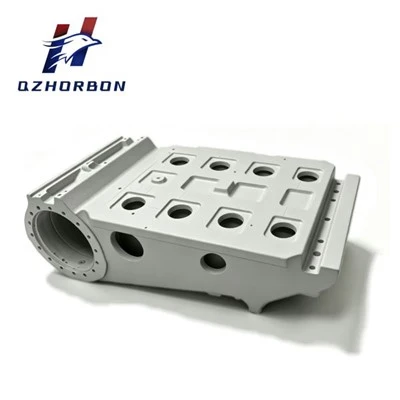
Here’s the thing: jaw plates are a specialized product, so their export policies aren’t one-size-fits-all. The US cares about safety testing, Australia cares about counterfeits, the EU cares about environmental standards, India cares about classification accuracy, Brazil cares about paperwork. If you don’t tailor your process to each country, you’re going to run into delays, fines, or lost business. I’ve been doing this long enough that I don’t even stress about it anymore – I have a checklist for each market, and I go through it before every shipment. It takes 15 extra minutes per batch, but it saves me from so many headaches.
Crusher Side Plate Now, if you’re in the market for jaw plates – whether you’re a mine manager in Australia, a construction company in the US, or an equipment distributor in India – I’m here to help. I’ve got 10 years of experience navigating all these export rules, I can handle all the paperwork, testing, and customs stuff, so you don’t have to. I work with both small custom orders (like replacement plates for a single crusher) and bulk orders for large mines. Shoot me a message, and I’ll send you a free quote with all the fees spelled out, no hidden costs, no confusing jargon.
References
- U.S. Customs and Border Protection. (2024). "Harmonized Tariff Schedule of the United States: Chapter 84 – Nuclear Reactors, Boilers, Machinery, and Appliances."
- Australian Border Force. (2023). "Import Requirements for Mining and Construction Equipment Parts."
- European Commission. (2024). "CE Marking for Machinery Parts: Directive 2006/42/EC Guidance for Small and Medium-Sized Enterprises."
- Directorate General of Foreign Trade (India). (2024). "Import Policy for Machinery and Parts: HS Code Classification for Jaw Plates."
- Government of Canada, Global Affairs Canada. (2023). "Canada-China Free Trade Agreement: Rules of Origin for Industrial Parts."
- Receita Federal do Brasil. (2024). "Special Customs Regime for Capital Goods (RECAP) Application Guidelines for Imported Mining Parts."
- HM Revenue & Customs (UK). (2024). "UKCA Marking Requirements for Industrial Equipment Post-Brexit."
Quzhou Horbon Mining Parts Co., Ltd.
Address: No.8 Nanshan Road, Qujiang District, Quzhou City, Zhejiang Province, China
E-mail: horbonmining@gmail.com
WebSite: https://www.horbonmachinery.com/
