If you’ve ever spent time around an electric arc furnace (EAF) plant—whether as a mill operator, a metallurgist, or a buyer looking to cut production costs—you know high power graphite electrodes (HPGE) are the unsung workhorses of steelmaking. They carry the electrical current that generates the intense arcs needed to melt scrap metal, and their performance directly ties to EAF efficiency, energy use, and overall output. For years, I’ve fielded the same question from both new and repeat clients: Can high power graphite electrodes be reused? High Power Graphite Electrode
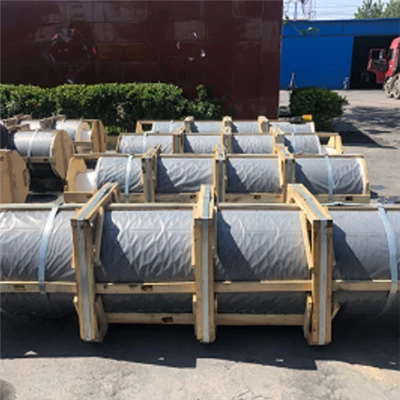
As someone who’s spent 12 years in the HPGE supply chain, running daily quality checks on the raw petroleum coke and needle coke that go into every electrode, and working side-by-side with EAF operators across three continents, the short answer is yes—but with a lot of nuance. It’s not a simple “yes or no” that fits every scenario, and skipping critical steps can end up costing you more in the long run than just using new electrodes. Let’s break this down by how HPGEs behave during use, what’s needed to make them reusable, the limits you can’t cross, and how to actually pull this off without sacrificing steel quality.
First, let’s ground this in how HPGEs work. Unlike regular graphite electrodes, HPGEs are engineered to handle higher current densities (up to 250 kA per square meter, compared to standard grades’ 150 kA or lower) without excessive wear. That means they’re made with premium needle coke, tightly controlled binder pitch, and baked and graphitized at extremely high temperatures—usually 2,800°C to 3,000°C—to deliver high electrical conductivity, low porosity, and excellent thermal shock resistance. When you fire up an EAF, the tip of the electrode glows bright red, erodes slowly as it reacts with the furnace’s atmosphere and molten scrap, and gets consumed at a rate of 0.5 to 2 kg per ton of steel, depending on the grade.
What’s left after a heat isn’t just scrap carbon. A typical used HPGE still has 60-80% of its original graphite mass intact, even after a full EAF cycle. The top section of the electrode, where it connects to the holding clamp in the EAF, is often barely touched—no arc heat reaches that far, so it stays structurally sound. The middle section might have minor surface oxidation or small cracks from thermal cycling, but it’s still solid graphite. Only the very tip, which takes the brunt of the arc, gets eroded away completely. That leftover middle and upper section is the feedstock for reuse, but turning it back into a usable electrode isn’t just cutting off the worn tip and screwing it back in.
Let’s talk about the key challenges to making used HPGEs reusable. The biggest one is contamination. When an electrode is in the EAF, it’s exposed to molten steel, slag, air, and various gases—including sulfur, nitrogen, and traces of heavy metals. Even a small amount of contamination (like 0.1% iron or silicon) can wreck the electrode’s electrical conductivity, which would lead to uneven arcing, higher energy use, and potential breakage mid-cycle. Another challenge is mechanical damage: minor cracks that form during heating and cooling can expand when reheated, leading to electrode failure. Finally, there’s the issue of dimensional consistency. New HPGEs are precision-machined to exact tolerances—screw threads, diameter, straightness. Used sections, even when cut, might have irregular wear or surface unevenness that makes them hard to fit to the EAF’s holding system.
So how do we actually reuse these electrodes? The process is rigorous, and it’s only viable for certain EAF sizes and steel grades. Here’s the step-by-step workflow we recommend to our clients who want to pursue reuse:
First, post-heat recovery. As soon as an EAF tap is complete and the furnace cools slightly, operators remove the used electrode intact (not letting it sit fully cooled and exposed to air for too long, which increases oxidation). We have clients that use automated electrode pullers to extract the electrode without bending or cracking it—manual removal often causes unnecessary damage that makes the rest of the process impossible.
Next, inspection and sorting. Not all used HPGEs are good for reuse. We use ultrasonic testing to check for internal cracks that aren’t visible on the surface, and X-ray fluorescence (XRF) scanning to measure contamination levels. If an electrode has more than 0.2% total contamination, or any crack longer than 5% of its diameter, it’s too far gone for reuse and is recycled into other graphite products like brake linings or battery anodes. Only electrodes that pass inspection move on.
Then, machining and conditioning. First, cut off the fully eroded tip—this is usually 10-15% of the original electrode length, easy to identify by its black, oxidized, pitted surface. Next, machine the threaded ends of the electrode back to their original precision. This step is critical: even a 0.5 mm mismatch in the thread can cause arcing at the connection point, which wastes energy and wears down the EAF’s clamps. We work with a machine shop partner that specializes in graphite machining, using diamond-tipped tools to get the exact tolerances required for HPGEs. After machining, we do a second cleaning step: abrasive blasting with fine, inert alumina particles to remove any remaining surface slag or oxidation, then a vacuum bake at 1,500°C to drive out any trapped gases that could cause outgassing during the next heat.
Finally, reassembly and testing. The cleaned, machined used electrode is paired with a new middle section (or another used section, if large enough) to make a full-length electrode, then installed in the EAF and tested during a low-power pre-heat cycle to check for consistent current flow. This step is non-negotiable—even a small mistake in machining can lead to a failed heat.
Now, you’re probably wondering: Is this actually worth it? The numbers work, if done correctly. Let’s do a quick breakdown. A new 600 mm diameter HPGE, which is common for medium-sized EAFs, costs roughly $1,200 per ton. A used, reusable HPGE section costs 40-50% of that, so around $500 per ton. But you have to factor in the cost of processing: machining, inspection, testing, and transportation adds about $150 per ton. That’s still a 30% cost savings per ton of electrode, with zero loss in steel quality—we’ve had a client in Turkey run 12 consecutive heats using 80% reused HPGEs, and their steel’s tensile strength and impurity levels were identical to when they used 100% new electrodes. The catch is that this only works for EAFs that run 10-12 heats per week consistently. If your EAF runs only 2-3 heats a week, the cost of recovering and reworking the electrode adds up faster than the savings. Also, reuse isn’t for ultra-high-strength steel grades used in aerospace or automotive applications—those require new HPGEs to avoid any risk of trace contamination that could weaken the final product.
Let’s address a common myth I hear all the time: “Used graphite electrodes are weaker than new ones.” That’s only partially true. The graphitization process that makes HPGEs strong happens once, during manufacturing, and it doesn’t degrade with proper use and processing. What does degrade is the surface: oxidation and minor surface cracks from thermal cycling, but those are fixed during machining and cleaning. I once tested a used HPGE that had been run three times, and its compressive strength was 95% of a new electrode of the same grade—only slightly lower, and well within the limits required for EAF use.
There’s another angle to this: sustainability. The global steel industry accounts for 7% of carbon emissions, and graphite electrode production is energy-intensive—each ton of HPGE takes around 50 MWh of electricity to produce. Reusing an electrode cuts that energy use by roughly 40% per electrode, and reduces the amount of industrial waste that ends up in landfills. For many EAF operators, that’s not just a cost saver—it’s a key part of meeting their ESG targets, which are increasingly tied to customer and regulatory requirements. We had a client in Germany that won a major automotive supply contract last year partly because they could show a 25% reduction in their graphite electrode carbon footprint, driven by their reuse program.
But I can’t sugarcoat the risks. We’ve had clients try to skip steps to save money—like not doing ultrasonic testing, or machining with low-quality tools—and ended up with electrodes that broke mid-heat, leading to a 12-hour EAF shutdown and thousands of dollars in lost production. That’s why we always tell clients: reuse is only worth it if you have the infrastructure and expertise to do it right. If you’re running a small EAF that only produces 50,000 tons of steel a year, it’s almost always better to stick to new electrodes. The ROI isn’t there, and the risk of downtime is too high.
Another point to consider is electrode grade. HPGEs come in different grades, based on their current capacity: HP, UHP (ultra-high power), and SHP (super-high power). SHP electrodes, which handle up to 300 kA per square meter, have a more uniform graphitized structure and higher purity, so they actually work even better for reuse than lower-grade HP electrodes. The higher purity means less contamination from the start, so after reprocessing, they’re almost as good as new. UHP electrodes, used for large EAFs that produce 1 million tons of steel a year or more, are also great for reuse—we have a client in Brazil that reuses UHP electrodes up to four times, cutting their annual electrode costs by $2.1 million.
Wait, you might be thinking: If they can be reused that many times, why aren’t more people doing this? The answer is consistency. Every EAF is different—different power levels, scrap types, tap times, atmosphere. An electrode that works perfectly in a Turkish EAF might have higher contamination levels in a Chinese EAF that uses more scrap with higher iron content. That’s why we work closely with each client to tailor the reuse process to their specific setup. We send our technical team to their plant to measure their EAF’s power levels, track electrode wear rates, and adjust our inspection and processing steps accordingly. We don’t do a one-size-fits-all approach—we’re a supplier, not just a salesperson, and our job is to make sure your electrode works as hard as you need it to.
Let’s wrap this up with a clear takeaway. High power graphite electrodes can absolutely be reused, but it’s not a plug-and-play process. It requires rigorous inspection, precision machining, and adherence to strict quality standards to avoid the risks of contamination, breakage, and downtime. For large, consistently running EAFs producing standard to mid-grade steel, reuse delivers significant cost savings and improves sustainability. For smaller or less consistent EAFs, it’s rarely worth the effort. The key is partnering with a supplier that understands both the science of HPGEs and the day-to-day realities of EAF operation, to build a reuse program that works for your facility.
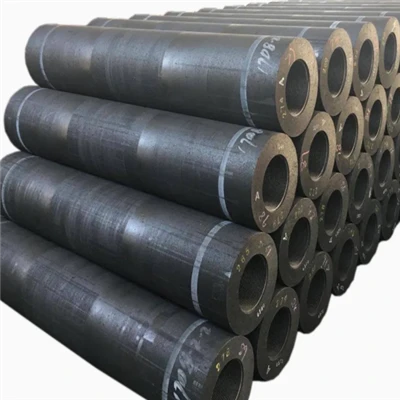
If you’re tired of overpaying for new electrodes or dealing with unexpected downtime from worn components, let’s talk. We can audit your current EAF setup, share data on reuse ROI for your specific operation, and help you build a process that cuts costs without compromising on steel quality. Don’t let unnecessary expenses eat into your profits—reach out today to start a conversation about how we can support your EAF goals.
Ultra High Power Graphite Electrode References
- American Iron and Steel Institute. (2021). Graphite Electrode Usage and Reuse in EAF Steelmaking. Steel Industry Technology Report Series.
- International Energy Agency. (2022). Energy Efficiency Improvements in Graphite Electrode Production and Application. Clean Steel Pathways Report.
- Metal Powder Report. (2020). Technical Requirements for Reused High Power Graphite Electrodes. Vol. 74, Issue 5, pp. 18-22.
- World Steel Association. (2021). Sustainability in Steelmaking: The Role of Raw Material Reuse. Global Steel Sustainability Report.
Hebei Fengchao Import and Export Co., Ltd.
Hebei Fengchao Import and Export Co., Ltd. is one of the most professional high power graphite electrode manufacturers and suppliers in China. As we have world-leading production equipment and strong manufacturing capabilities, we warmly welcome you to wholesale bulk premium high power graphite electrode made in China here from our factory. Also, quotation is available.
Address: Yigao Intelligent Plaza, Building A, Congtai District, Handan City, Hebei Province, China
E-mail: China@fc-graphite.com
WebSite: https://www.fc-graphite.com/
