When I sit across from a shop owner who’s been in glass processing for 12 years, showing them a new horizontal glass cutting line, I don’t just talk about the speed it can handle. I know they’re not just buying a machine—they’re investing in something that’ll shape their monthly costs, their ability to take on big jobs, and their bottom line for the next decade. Over the 15 years I’ve worked as a glass processing machinery supplier, I’ve watched way too many operators focus solely on the upfront price tag, only to run into hidden costs that derail their profit margins. Today, I want to break down the real cost factors that matter when you’re shopping for this equipment, from the small, easy-to-overlook details to the big-picture decisions that’ll make or break your investment. Glass Processing Machinery

First, let’s talk about what most people call the “base price” of a machine, but what I actually categorize as the core equipment cost that comes with design and build quality. Not all glass cutting machines are the same—you can get a small, manual table for $8,000, or an automated CNC line for $80,000, and the gap has nothing to do with “brand hype.” The difference comes down to materials: a machine that’s built with thick steel frames (not thin, warped plate) will last 20 years instead of 8, and won’t produce misaligned cuts that waste glass. I had a customer last year who bought a cheap edge polisher from a no-name manufacturer because it was $15,000 less than our model. Six months later, the polishing head’s bearing wore out, and the machine started scratching the edges of tempered glass panels he’d promised to a window contractor. He ended up redoing 12 panels at a cost of $2,400, plus lost the contractor’s repeat business, which was worth $18,000 a year. That core build quality isn’t a markup—it’s insurance against mistakes. It also includes the automation level: if you’re processing small, custom shower door glass, a semi-automated machine might save you upfront, but if you’re handling large commercial glazing, full automation cuts labor costs by 70% over five years.
Next, and this is where most buyers get blind-sided, is the cost of installation and site preparation. Glass processing machines aren’t like a fridge you can wheel into a spot and plug in. For every machine we sell, we do a site survey first: we measure floor load capacity (a CNC glass cutting line can weigh 12,000 pounds, so a second-floor workshop might need structural reinforcements), electrical output (some high-speed lines need 480-volt three-phase power, not the standard 120-volt most small shops have), and space for loading/unloading glass panels—you need at least 10 feet of clearance on both ends of a line to maneuver a 10-foot-tall glass sheet. A customer I worked with in Dallas tried to skip our site survey a few years back. He bought a used vertical glass washing machine that fit his budget, but his workshop’s floor couldn’t support its weight, so the machine settled over six months, causing it to misalign and break 18 sheets of $500 each. The cost to reinforce the floor was $7,500, on top of the broken glass. Also, installation usually isn’t free—we include it for standard models, but if your space needs custom plumbing (for the washing machine’s water system) or custom foundation work, that can add $3,000 to $10,000 depending on your location. I always tell buyers to budget 10% of the base machine cost for site prep, even if they think their space is ready. It’s not a guess—it’s based on 15 years of solving these exact problems.
Then there’s consumable parts and ongoing maintenance costs, which are often the biggest hidden expense over a machine’s lifespan. Every glass processing machine has parts that wear out: cutting blades, polishing wheels, washing machine brushes, hydraulic seals. The mistake buyers make is assuming all consumables are cheap and universal, but that’s not true. Some cheap machines use generic parts that break every 200 hours, while a quality machine uses proprietary parts designed to last 800 hours, but they cost a bit more upfront. Wait, let’s do the math: a generic cutting blade for a budget machine is $25, and it lasts 200 hours of operation. A proprietary blade for our machines is $75, lasts 800 hours. Over 10,000 hours of operation (about 5 years for a small shop), the generic blade costs $1,250, vs. the proprietary at $937.50—you save money in the long run, not spend it. Also, some manufacturers lock you into buying their branded consumables, which can inflate costs by 30-40% over the machine’s life. That’s a red flag. I make sure our machines use standard, readily available consumables so a buyer can pick them up from any industrial supply store, not just us. Maintenance is another factor: simpler machines that have fewer moving parts are cheaper to service, but they might not be as efficient. A complex automated line might need a technician every quarter, but a monthly service that costs $150, vs. a manual line that needs more labor to operate, costing $500 a month in wages for an operator to handle its inefficiencies. I always ask buyers to calculate the total cost of consumables and maintenance over 5 years, not just the upfront price of the machine. That’s where the real value shows.
Labor cost is often overlooked, but it’s tied directly to the machine’s automation level. Let’s say you’re a shop that processes 50 glass panels a day. A manual glass cutting table needs two operators: one to measure and hold the glass, one to cut, so that’s two full-time employees at $18 an hour, plus benefits, which is about $75,000 a year. A semi-automated line needs one operator, cutting that labor cost in half—$37,500 a year. A fully automated CNC line needs one operator, but the operator can handle other tasks while the machine runs, so you might only need a part-time operator, saving $60,000 a year. I had a customer in Houston who switched from a manual table to our semi-automated line two years ago. His labor costs dropped $32,000 in the first year, and he was able to take on more jobs because the machine could process 80 panels a day instead of 50. He paid off the machine in 18 months, instead of the expected 3 years. The key here is: if you’re investing in a machine, don’t just look at how much it costs to run it—look at how it frees up your labor to do more work, not just how many operators it takes. For small shops, even a small reduction in labor can make a big difference in profit margins.
Waste reduction is another cost factor that’s hard to measure but has a huge impact. Glass is expensive—clear float glass costs $3 to $10 per square foot, depending on thickness and type, and tempered or laminated glass can be $20 to $50 per square foot. A machine that cuts accurately will produce less scrap. Let’s use an example: if a manual cutting table has a 15% scrap rate, that means for every 100 sheets you buy, 15 are thrown away. A CNC automated line has a 5% scrap rate. If you’re buying 1,000 sheets of 10-square-foot glass a month at $5 a square foot, that’s $50,000 in materials. The manual table wastes 150 sheets, $7,500 a month, vs. the CNC line wasting 50 sheets, $2,500 a month. That’s $54,000 a year in saved glass. I had a customer in Atlanta who switched to our CNC line three years ago. He told me his scrap cost dropped by $48,000 a year, which was the same as his monthly mortgage for his shop. That’s the kind of savings you can’t ignore. Cheap machines often have poor alignment or inconsistent cutting, leading to more scrap, which adds up quickly. I always tell buyers to ask about a machine’s accuracy rate—for cutting lines, that’s usually within 0.5mm, which is the standard for quality work. Any less accurate, and you’ll be wasting glass.
Training and technical support are two more factors that are often left out of the initial cost calculation. A glass processing machine is only as good as the person running it. If you buy a complex CNC line, and your operator doesn’t know how to program it, you’ll be wasting its efficiency. That’s why we offer free, hands-on training at our facility for operators, plus 24/7 technical support via phone or video call. We also have local service technicians in most major cities who can be on-site within 48 hours if something goes wrong. Some budget manufacturers don’t offer this support—if your machine breaks down, you might have to wait a week for a technician, and a week of downtime can cost you thousands in lost jobs. A customer of mine in Phoenix bought a machine from a manufacturer in China that didn’t have a local support team. When the control panel broke, he had to fly a technician from China out, which cost him $8,000, plus he lost $12,000 in jobs while the machine was down. That’s a cost that could’ve been avoided with a supplier that offers local support. I always factor training and support into the total cost because a machine that’s supported will last longer and work better than one you’re left to figure out on your own.
Now, let’s talk about how to put all these factors together. I recently sat down with a buyer who was trying to choose between three machines: a $15,000 manual table, a $35,000 semi-automated line, and a $60,000 CNC line. His first thought was to go with the cheapest, but when we crunched the numbers, the CNC line had the lowest total cost over 5 years. Here’s why: upfront cost was $60k, vs. $15k for the manual, but labor costs were $60k a year for the manual, vs. $30k for the CNC. Consumables were $8k a year for the manual, vs. $3k for the CNC. Scrap cost was $54k a year for the manual, vs. $18k for the CNC. Over 5 years, the manual table would cost $15k + ($60k x5) + ($8k x5) + ($54k x5) = $15k + $300k + $40k + $270k = $625k. The CNC line would cost $60k + ($30k x5) + ($3k x5) + ($18k x5) = $60k + $150k + $15k + $90k = $315k. That’s half the cost, and he’d be able to handle larger jobs, grow his business, and take on more work. That’s the power of looking beyond the base price.
I know buying machinery is a big decision, especially when you’re trying to keep your business profitable. You don’t want to overspend, but you also don’t want to buy something that’ll hold you back. That’s why I always recommend taking a step back and looking at all the cost factors, not just the sticker price. Every shop’s needs are different—if you’re a small custom shop that only does a few shower doors a week, a semi-automated or even a manual machine might be right for you. If you’re a larger shop doing commercial glazing, you’ll need the efficiency and accuracy of a CNC line. The key is to be honest about your current workload, your future goals, and the costs you’ll face beyond the machine’s base price.
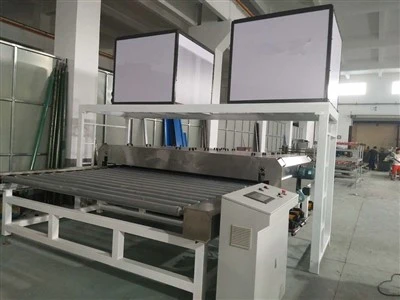
If you’re ready to stop guessing and start calculating these real costs for your business, I’d love to sit down with you and walk through your specific needs. I can show you how different machines will impact your labor costs, scrap rates, and overall profitability, without pushing you to buy something you don’t need. We can talk about site prep, consumables, support, and all the details that matter, so you can make a decision that’s right for your business. Don’t just look at the price tag—look at the total cost of ownership, and you’ll find the machine that’ll help your business grow for years to come.
Glass Grinding Machine References
- Glass Magazine. (2022). “Total Cost of Ownership for Commercial Glass Processing Equipment.”
- International Glass Federation. (2021). “Labor Efficiency and Automation in Small to Medium Glass Workshops.”
- Industrial Maintenance and Plant Operations. (2023). “Hidden Costs of Machinery Installation and Site Preparation.”
- American Glass Association. (2022). “Scap Reduction Strategies in Glass Fabrication Facilities.”
Foshan Sky Glass Co., Ltd.
We are one of the most experienced glass processing machinery manufacturers and suppliers in China. With a professional production team, we are able to meet the needs of the majority of our customers. Please feel free to wholesale advanced glass processing machinery for sale here from our factory. Customized orders are welcome.
Address: Jian Mei Business Center, Nan Hai Town, Fo Shan
E-mail: skyglassmanager18@gmail.com
WebSite: https://www.sky-glassdz.com/
