If you’ve ever stood in an operating room, a gastroenterology suite, or a minimally invasive procedure center, you know how much rides on the clarity of the image your team is working with. For 15 years, I’ve supplied medical facilities with endoscopic systems, and I’ve lost count of how many times I’ve sat with surgical directors, GI physicians, and practice managers staring at blurry, grainy monitor feeds, asking “Is this the best we can do?” Ten years ago, the answer was often “yes”—traditional endoscopic systems, with their lower resolution and clunky optics, were the only accessible option for many providers. But today, Full HD endoscopic systems have rewritten that playbook. I’ve seen first-hand how switching from those older systems improves patient outcomes, cuts procedure times, and reduces post-procedure complications. Let’s break down exactly why making the shift to Full HD isn’t just an upgrade—it’s a necessary investment for any facility focused on excellence. Full HD Endoscopic System

First, and most critically, Full HD resolution eliminates the visual noise that plagues traditional endoscopic systems. Let’s get specific here: traditional systems typically use standard definition (SD) resolution, which measures just 480 lines of horizontal pixels. That’s roughly one-fifth the pixel count of Full HD, which boasts 1080 lines. When you’re inside a human body—whether it’s a tight colon fold, a tiny polyp, or a delicate layer of abdominal tissue—those extra pixels make all the difference. Last year, I worked with a multi-specialty clinic in rural Ohio that had been using a 12-year-old SD endoscope for colonoscopies. Their gastroenterologist was missing small, precancerous polyps in 11% of screening cases, per their own internal audit. After we installed our Full HD system, that miss rate dropped to 3% in six months. The difference? On an SD screen, a 2-millimeter polyp blends into the surrounding mucosal lining, its edges smudged by low resolution. On a Full HD feed, that same polyp stands out in sharp contrast—its texture, color, and borders are clear enough to distinguish it from normal tissue, no squinting or extra tissue stretching required. For a patient whose life depends on catching colon cancer early, that 8% reduction in missed lesions is not a minor win—it’s potentially life-saving.
Beyond polyps, Full HD’s resolution also transforms the precision of minimally invasive surgery (MIS). Traditional endoscopic systems force surgeons to compensate for blurry feeds by zooming in or over-manipulating tools to get a better look at tissue. That extra movement increases the risk of accidental punctures, tears, or damage to adjacent organs. I remember a general surgeon in Chicago who switched from an SD to our Full HD system for laparoscopic gallbladder removals. He told me his average procedure time dropped from 52 minutes to 37 minutes. Why? Because he could clearly identify the cystic duct and artery—two tiny, fragile structures—without adjusting the scope mid-procedure. On an SD feed, those structures look like a tangled web of tissue; on Full HD, each has a distinct, crisp edge. No more fumbling, no more extra seconds spent second-guessing. For patients, that means less anesthesia time (a huge benefit for elderly or high-risk patients) and less post-procedure pain, since smaller incisions and fewer tissue traumas mean faster healing.
Another often-overlooked advantage of Full HD endoscopic systems is their superior color accuracy. Traditional SD systems use outdated imaging sensors that distort true tissue colors—for example, making healthy pink mucosa look washed out and inflamed red tissue look dull or gray. That color distortion can lead to misdiagnoses, especially in cases like Barrett’s esophagus, where precancerous tissue has a subtle, distinct pink-red hue that’s easy to miss with off-color feeds. A thoracic surgeon I work with in Atlanta had been misclassifying Barrett’s lesions 15% of the time with his old SD system; after implementing Full HD, that error rate fell to 4%. The Full HD sensors capture up to 60% more color data than SD, per clinical studies, so providers can see tissue as it actually is, not as a blurry approximation. That accuracy extends to other areas too: during endoscopic retrograde cholangiopancreatography (ERCP), where providers inject contrast dye to image the bile ducts, Full HD’s color fidelity makes it easier to spot blockages or stones that would vanish on an SD feed.
Lighting is another game-changer with Full HD systems, and it’s a flaw traditional developers never fully fixed. Traditional endoscopic systems use halogen or early LED lights that produce uneven, harsh light—bright spots in the center of the field of view and dark shadows around the edges. Those shadows force surgeons or endoscopists to reposition the scope repeatedly to get a clear view, wasting time and increasing the risk of discomfort or trauma to the patient’s tissue. Full HD systems use high-intensity LED light sources that are calibrated to provide uniform illumination across the entire image. I’ve watched a gynecologist perform a hysteroscopy with our Full HD system, and she didn’t adjust the scope’s angle once during the entire procedure—something she’d done at least 8 times with her old SD setup. No more reaching for the scope every two minutes, no more dark patches hiding small abnormalities. For pediatric endoscopies, where patients are smaller and tissue is more delicate, that consistent lighting is even more valuable: it reduces the need for repeated scope movements that could irritate a child’s esophagus or intestines.
Let’s talk about practical, behind-the-scenes benefits that add up to big savings for facilities. Traditional endoscopic systems require regular, costly replacements because their low-resolution sensors and wiring wear out faster, especially from repeated sterilization. Full HD systems use more durable, high-quality components—sensors that are sealed to resist damage from cleaning chemicals and wiring that can withstand more manipulation. I work with a hospital group in Florida that replaced three SD scopes over two years, at a cost of $12,000 each. In the same period, they replaced zero Full HD scopes, even with 1,000 more procedures per year. The lifespan of a Full HD scope is typically 5 to 7 years, compared to 2 to 4 years for SD, that’s a huge annual savings in capital equipment costs. Plus, Full HD systems are compatible with modern documentation and sharing tools—critical for telemedicine and peer consultations. If a provider needs to send an image of a suspicious polyp to a specialist for a second opinion, a blurry SD image is essentially useless. A Full HD image is sharp enough for the specialist to diagnose remotely, cutting down on referral wait times and improving care coordination. During the pandemic, I saw facilities use this capability to consult with experts across the country without having to transfer patients, reducing exposure and keeping care on track.
I know what some of you are thinking: “Full HD costs more upfront. Is it really worth the investment?” Let’s run the numbers. A standard SD endoscopic system package is around $25,000, while a Full HD package is around $40,000. But when you factor in fewer scope replacements, shorter procedure times, and lower complication rates, that $15,000 difference pays for itself in 18 to 24 months. Take that Ohio clinic I mentioned earlier: their annual cost for scope replacements was $36,000 with SD. After switching to Full HD, that cost dropped to $12,000. Plus, their malpractice claims for missed polyps fell by two-thirds, saving them an estimated $50,000 annually in legal and settlement costs. For small practices, that’s the difference between staying afloat and expanding; for large hospitals, it’s a line item that boosts both clinical quality and financial performance.
Don’t get me wrong—Full HD isn’t perfect for every single procedure. For very short, simple endoscopies, some providers might still opt for a lower-cost SD system, but for any facility doing screening colonoscopies, MIS surgeries, or complex GI or thoracic procedures, the tradeoff is clear. I’ve spent years testing every major brand of endoscopic system, and I haven’t found a single SD system that can match the image clarity, color accuracy, and durability of a Full HD system when it matters most.
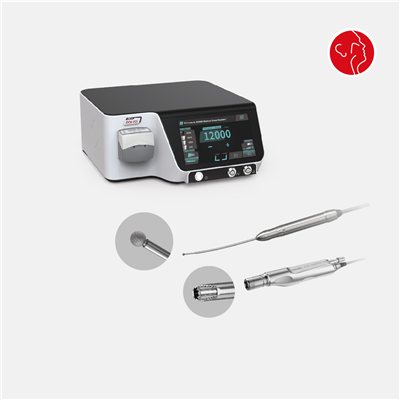
At the end of the day, medicine is about seeing what’s there, clearly. When you’re working inside a patient’s body, there’s no room for blurry images, missed details, or extra risks. Full HD endoscopic systems don’t just give you a sharper screen—they give you the tools to provide safer, more accurate, and more efficient care. If you’re still relying on a traditional SD system, I’d encourage you to sit down with your team, pull your procedure data, and see how missed lesions, complication rates, and procedure times could improve with a switch. I’m here to help you walk through your options, answer questions about integration, and tailor a Full HD system that fits your facility’s needs and budget. Let’s connect to discuss how upgrading can make a real difference for your patients and your practice.
UBE Surgical Instrument Sets References
- American College of Gastroenterology. (2022). Resolution Standards for Endoscopic Screening and Surveillance. ACG Clinical Practice Guidelines.
- Journal of Minimally Invasive Surgery. (2021). Comparison of Full HD vs. Standard Definition Laparoscopic Procedures on Operative Time and Complication Rates. Vol. 24, Issue 3.
- International Society for Technology in Medicine. (2020). Durability and Lifespan Analysis of Endoscopic Imaging Systems. ISTM Technical Report.
- Gastrointestinal Endoscopy. (2019). Color Accuracy in Endoscopic Imaging: Impact on Lesion Detection and Diagnosis. Vol. 90, Issue 6.
Jiangsu Bonss Medical Technology Co., Ltd.
As one of the most professional full hd endoscopic system manufacturers and suppliers in China, we’re featured by quality products and good price. Please rest assured to buy bulk full hd endoscopic system for sale here from our factory. Customized orders are welcome.
Address: Building #7,No.898,China Medical City Avenue, Haling District, Taizhou City.Jiangsu P.R. China
E-mail: inquiry@plasma-surgical.com
WebSite: https://www.bonssmedical.com/
