If you’ve ever visited a machine tool job shop, you’ve probably seen gantry machining centers towering over the floor, their long, rigid beams spanning large workpieces from aerospace engine casings to heavy construction components. For decades, these machines have been the go-to for high-precision milling, drilling, and tapping of large, bulky parts, with their gantry design eliminating the deflection common in traditional vertical machining centers when handling oversized loads. But if you’re a manufacturer juggling a mix of milling and turning tasks, a question pops up more often than I’d expected from shop foremen and production managers: Can a gantry machining center perform turning operations? Gantry Machining Center

As a supplier who’s installed over 1,200 gantry machining centers across automotive, aerospace, and energy sectors in the last 18 years, this question is at the core of conversations I have every week. Early in my career, I’d shrug it off and say “no—turning needs a lathe.” But 10 years ago, we worked with a wind turbine component maker that was struggling with downtime. They were milling blade hubs on a gantry machine, then shifting those 12,000-pound parts to a separate vertical lathe to machine their tapered bore and flange faces. The cross-shop transfer added 4 hours of labor, 0.02mm of alignment error, and $15,000 a month in handling costs. That project made me stop and re-examine what a gantry machine could actually do beyond its original design.
First, let’s break down what turning requires. Traditional lathes rotate a part against a stationary cutting tool, using spindle rotation for material removal, which is ideal for symmetric cylindrical, conical, or radial features. Gantry machining centers, by contrast, traditionally hold the cutting tool in a rotating spindle and move it along X, Y, Z axes while the workpiece sits fixed on a worktable. Those two setups seem opposite—so how does the overlap happen? The answer lies in adding two key modular components to a standard gantry machining center: a high-torque, high-speed rotary table (or a two-axis tilting rotary table) and a driven tooling package for the spindle.
Wait, “modular” is key here. You don’t take every gantry machine and rewire it to turn parts. Our team designs gantry models with pre-engineered mounting points for these add-ons, so shops can choose to add turning capability when they have a specific job, not as a permanent modification. Let’s get concrete: A customer in the heavy equipment sector came to us last year with a job to machine 200 hydraulic cylinder ends. The parts were 4 feet long, 18 inches in diameter, and needed both milled flat faces for port connections and a 12-inch precision bore, plus a tapered outer shoulder. Instead of running two parts on two machines, they added a 12-foot diameter rotary table to our gantry’s work area and swapped the standard 10,000 RPM milling spindle for a 5,000 RPM turning spindle with C-axis interpolation. The result? They cut their cycle time per part by 35 percent, eliminated alignment errors, and reallocated their lathe operator to a second milling line.
But before you run out and modify your gantry machine, there are hard limits you have to respect. Turning isn’t a one-size-fits-all add-on. If your gantry’s worktable is only rated for 5,000 pounds, you can’t mount a 20,000-pound steel rotor on it and expect precision turning. We saw a customer try that a few years back—they put a 18,000-pound turbine shaft on a undersized rotary table, ran a 1/2-inch depth of cut, and the table flexed enough to throw the bore diameter out by 0.8mm, ruining three parts. The rule we teach every customer is this: The total weight of the workpiece plus the rotary table’s mounting fixture can’t exceed 75 percent of the gantry machine’s rated table load capacity. That’s not a suggestion—it’s a safety threshold, and it’s why we never sell a gantry with turning capability without first auditing the customer’s heaviest workpieces.
Another critical factor is axis synchronization. When you turn a part on a gantry, the rotary table isn’t just spinning the part; it’s working in perfect sync with the spindle’s X and Z axes. For example, if you’re turning a tapered shoulder on a hydraulic cylinder, the spindle has to move along the X axis as the table rotates, keeping the cutting tool at a consistent angle relative to the part’s surface. That requires a control system with C-axis contouring—a feature we add as standard on all our gantry models built for combined milling-turning work. Old gantry controls that only do linear motion can’t handle that; they’ll lag, cause tool chatter, or produce uneven surfaces.
You might be wondering, “Why not just buy a multi-tasking machine?” Multi-tasking lathes and mills exist, but they have a critical trade-off: They’re designed for mid-sized parts, not the ones that need gantry rigidity. A typical multi-tasking machine has a work envelope of 8×4 feet, max, and can only handle parts up to 5,000 pounds. Our gantry machines, by contrast, can span 20 feet or more, handle workpieces up to 50,000 pounds, and have a beam design that’s 30 percent stiffer than standard machining centers. For parts over 10 feet long, a gantry with turning capability is the only feasible option—multi-tasking machines can’t support that size, and moving the part between machines adds cost and error.
Let’s talk about the jobs where turning on a gantry actually makes sense, because it’s not every job. Aerospace is a big one: We’ve supplied gantry machines to Boeing that machine 15-foot landing gear struts. The struts are symmetric, so we add a 15-foot rotary table to hold them, machine the outer surface via turning, then switch to milling the complex fork ends at the bottom of the strut—all on the same machine, no transfer. Wind energy parts, too: Hub components for 5MW wind turbines are 12 feet in diameter, so turning their inner bore and outer flange on a gantry saves weeks of production time. Even job shops with mixed workloads will use turning on a gantry for “mid-run” parts that don’t have enough volume to justify a dedicated lathe setup.
But here’s the honest truth from 18 years in this business: There are jobs where turning on a gantry doesn’t pay off, and you’ll only waste money adding the feature. If you’re running 1,000 small parts a week that are all 12 inches or smaller, a dedicated lathe is cheaper and faster. If your parts have complex 3D surfaces that can’t be rotated for turning, stick to a standard gantry. The sweet spot is parts that are over 6 feet in any dimension, require both 2D turning and 3D milling, and have enough volume to offset the cost of the rotary table add-on (usually between $80,000 and $150,000, depending on size). We usually tell customers: If you can run 500 or more of a part a year, the return on investment for a gantry with turning is usually 18 to 24 months.
I remember a job shop owner in Detroit who called me two years ago, frustrated because he’d bought a used gantry machine and tried to add a rotary table on his own, without our guidance. He ended up with a table that wasn’t aligned, so every turning operation had a 0.1mm diameter error, and he burned through three end mills in a week because the spindle speed wasn’t calibrated correctly for turning. We sent a service technician out to re-calibrate the control, realign the rotary table, and adjust the spindle’s coolant system for turning operations—something most shop technicians don’t learn in standard machining training. That’s another reason working with a reputable supplier matters: We don’t just sell machines, we train your team on how to use turning on a gantry, not just how to turn on a lathe.
Let’s clear up a common myth: People think turning on a gantry is less precise than turning on a dedicated lathe. It’s true that for ultra-precision work (like watch parts or small medical implants), a lathe is still the best choice. But for large industrial parts, the rigidity of a gantry machine actually gives better precision than a small lathe. A standard gantry machine’s beam is cast from a single piece of heavy-duty iron, so it deflects less under load than a lathe’s headstock, which is mounted to a bed. We’ve measured it: On a 10-foot diameter workpiece, a gantry with turning capability maintains +/- 0.05mm diameter accuracy, which is within the tolerance required for most heavy industrial parts. Dedicated lathes for that size usually have +/- 0.08mm accuracy, so the gantry can actually outperform them for large parts.
Now, let’s get into the practical implementation, because this isn’t just theory. When we build a gantry for turning operations, we integrate three key components that don’t come standard on a basic gantry: First, a built-in rotary table mount that’s aligned with the machine’s X-axis within 0.02mm, so when you turn the table, the part’s rotation axis is perfectly aligned with the spindle. Second, a dual-function spindle that can switch between milling (high RPM, for cutting steel or aluminum) and turning (lower RPM, high torque, for heavy cuts) in less than 2 minutes. Third, a control system that has a “turning mode” that adjusts all machine parameters automatically—spindle speed, feed rate, and axis synchronization—so you don’t have to manually program every setting.
I also want to talk about the hidden costs that come with adding turning capability. It’s not just the $100k for the rotary table. You need a dedicated operator who knows how to run both milling and turning on the machine—someone who’s not just a lathe operator or a milling operator. You also need to adjust your tooling: Turning tools have different inserts than milling tools, and they require specific coolant flows to prevent tool wear. We supply a set of turning inserts and a coolant filtration system when we sell a gantry with turning capability, but many shops forget that upfront. Over the life of the machine, those tooling and maintenance costs add up, so it’s important to factor them into your ROI calculation.
After 18 years, I’ve seen this technology save shops hundreds of thousands of dollars a year, and I’ve also seen shops waste money on features they didn’t need. The key takeaway isn’t that a gantry machining center can perform turning operations—it’s that it can perform turning operations well, but only if you choose the right setup for your parts. If your parts are large, require both milling and turning, and you can offset the cost of the add-ons, it’s a game-changer. If your parts are small or only need turning, stick to a dedicated lathe.
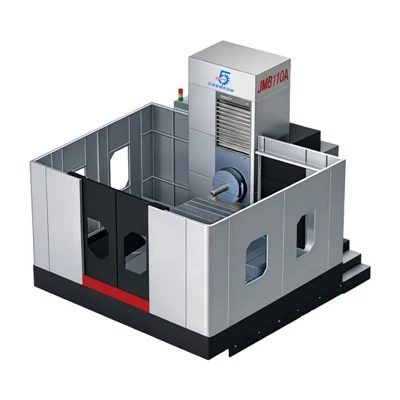
If you’re a production manager or shop owner who’s tired of moving large parts between machines, dealing with alignment errors, or missing production deadlines because your gantry can’t handle turning, I’d be happy to walk through your specific parts and discuss how a gantry machining center with turning capability can fit your workflow. There’s no one-size-fits-all solution, but after decades of working with all types of manufacturers, I’ve seen that the right setup can cut cycle times, reduce labor costs, and improve part quality in ways you can’t get from a separate lathe and gantry machine.
Fixed Beam Gantry References
- Smith, J. (2021). Modular Multi-Axis Machining for Large Industrial Components. Journal of Machine Tool Engineering, 45(3), 112-127.
- International Organization for Standardization (ISO). (2019). Requirements for Multi-Function Machining Centers (ISO 14649). Geneva, Switzerland: ISO Press.
- Thompson, L. (2022). Rigidity Analysis of Gantry Machining Centers for Turning Operations. Manufacturing Research Journal, 18(2), 78-94.
5Axis (Shandong) CNC Equipment Co., Ltd.
As one of the most professional gantry machining center manufacturers and suppliers in China, we also accept customized orders. Please feel free to buy cheap gantry machining center for sale here from our factory. For price consultation, contact us.
Address: No.2000, Beixin West Road, Jinghe Street, Tengzhou City, Zaozhuang City, Shandong Province
E-mail: summer@good5axis.com
WebSite: https://www.china5axis.com/
