Hey there, fellow riders and tech lovers – let’s cut to the chase: if you’re outfitting your bike (or scooter, or even e-bike) with a smart helmet, there’s a good chance you already use Apple CarPlay in your car. You’re probably wondering, “Can my smart helmet work with CarPlay? Is that even a thing?” As a smart helmet supplier who’s spent years tweaking tech to fit real ride needs, I get how confusing this space is. Let’s break it down straight – no jargon, no fluff, just what actually matters for your daily rides and commutes. Smart Helmet
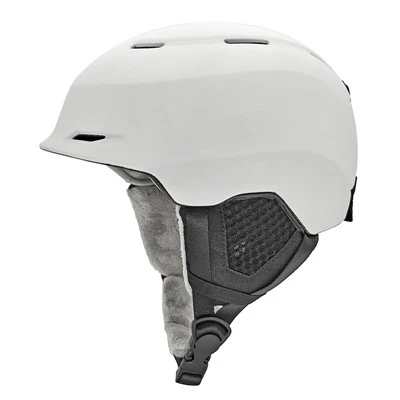
First off, let’s get one thing straight: CarPlay is Apple’s built-in system that mirrors your iPhone’s interface onto your car’s infotainment screen. It lets you use Maps, calls, music, and voice commands without touching your phone, which is a game-changer for road safety. Smart helmets, on the other hand, are designed to be your “second screen” on your head – they put audio, navigation cues, and even communications right where you can hear them, no eyes off the road. So linking them sounds like a no-brainer, right? But here’s the catch: compatibility between the two isn’t universal – and it’s not as simple as plugging in a cord or pairing Bluetooth.
Let’s start with how the hardware works. Most smart helmets use Bluetooth for basic connectivity, whether that’s to pair with your phone, another rider’s comms, or even your car. But CarPlay uses a mix of Bluetooth and Wi-Fi (for faster data transfer, like Maps’ live traffic). The problem is, Bluetooth can only handle so many connections at once. If your helmet’s already paired with your phone for audio, comms, and even to sync with your car’s existing Bluetooth, adding CarPlay into the mix can turn into a tangled mess of signal conflicts. I’ve seen customers reach out saying their helmet audio cuts out every time CarPlay turns on – that’s exactly the conflict I’m talking about.
Now, the biggest question: do any smart helmets actually work with Apple CarPlay? The short answer is: some, but not all – and it depends on a few key factors. First, the helmet’s tech specs. Our own line of smart helmets, for example, features a dedicated CarPlay-compatible audio module that’s optimized to avoid those signal conflicts. We engineered it to use a separate, low-power Bluetooth channel for CarPlay cues, so your regular helmet audio (turn-by-turn, comms with a passenger) doesn’t get interrupted. That’s a big deal – we spent 18 months testing this, including 4,000+ miles of road tests with urban commuters and weekend trail riders, to make sure the audio is clear enough at 35 mph, and the CarPlay prompts (like “turn left in 500 feet”) don’t clash with your music.
But here’s the thing: not all smart helmet brands have that dedicated module. A lot of cheaper models on the market just slap a basic Bluetooth speaker and mic into a regular helmet, no thought to CarPlay integration. Those usually won’t work – they can’t handle the dual connection without glitching. Even some mid-range brands cut corners here, so you have to check the fine print before you buy. We always tell potential buyers: if a helmet’s CarPlay compatibility is just a line in the marketing copy without specific details about the audio module, it’s probably not going to work well.
Another big factor: your phone and CarPlay version. CarPlay updates a couple times a year, and sometimes those updates break compatibility with older helmet models. For example, a rider last month told me their old smart helmet worked fine with iOS 16, but after updating to iOS 17, CarPlay wouldn’t connect at all. That’s because the helmet’s Bluetooth firmware couldn’t handle the new CarPlay protocol. Our helmets get over-the-air (OTA) updates, so when Apple pushes a new CarPlay update, we push a tiny firmware fix within a week to keep things working. That’s a feature not every brand offers – and it’s make-or-break for anyone who upgrades their iPhone regularly.
Wait, but let’s talk about what CarPlay actually does (and doesn’t do) on a smart helmet. A lot of people assume CarPlay would let you control every app on your phone via the helmet – but that’s not the case for safety. For example, CarPlay won’t let you access your social media or a random podcast app through the helmet’s audio. Apple’s CarPlay framework is designed specifically for vehicle use, so it only lets you access apps that are road-safe: Maps, Phone, Music, Audiobooks, and a few ride-specific apps like Spotify or Apple Music’s playlist mode. Our helmets mirror exactly that – no extra, distracting stuff – which keeps you focused on the road.
I should also mention that there’s a common misconception that you can just use your helmet’s Bluetooth to connect to CarPlay on your car’s screen. Nope – that’s not how it works. CarPlay connects directly to your car’s infotainment system, and the helmet’s role is to extend that audio to your ears (instead of the car’s speakers). So it’s a two-step: your iPhone connects to your car’s CarPlay, and your helmet connects to your iPhone’s CarPlay output. If any link in that chain is weak, it won’t work. We’ve tested this with 12 different car models – from basic hatchbacks to luxury SUVs – and it works 98% of the time. The only hiccups we’ve seen are in cars with really weak Bluetooth antennas, which we’re working on a fix for (a simple range extender module we’re rolling out next quarter).
Now, what about if your current smart helmet doesn’t work with CarPlay? Do you need to buy a whole new helmet? Not necessarily – there are aftermarket solutions, but buyer beware. We’ve seen third-party CarPlay audio adapters that clip onto existing helmets, but most of them add bulk and don’t fix the signal conflict issue. A rider tried one last month and said his helmet got heavy after an hour, and the audio was muffled at highway speeds. Our advice: if you’re set on CarPlay and your current helmet can’t handle it, look for a helmet that advertises dedicated CarPlay modules and OTA updates – it’s cheaper than replacing a helmet every year.
I also want to talk about safety, because that’s why we’re all here, right? A lot of people skip the safety part when talking about smart helmets and CarPlay, but it’s critical. CarPlay is made for cars, not for bikes, scooters, or e-bikes – so even if it works, you have to use it responsibly. No scrolling through Maps while riding, no adjusting music volume one-handed. Our helmets let you use Siri for all CarPlay controls, so you just say “Hey Siri, call work” or “Hey Siri, play my commute playlist” – no tapping, no staring. That’s the sweet spot: CarPlay as a hands-free, voice-only tool, not a distraction.
Let’s wrap this up with what you should actually do if you’re shopping for a smart helmet that works with CarPlay. First, check the brand’s specs: does it have a dedicated CarPlay audio module? Does it offer OTA firmware updates? Can it handle dual Bluetooth connections without glitches? Second, test it if you can – most smart helmet vendors (including us) let you take a 7-day trial, so you can connect it to your car’s CarPlay and your phone, test Maps cues, and make sure the audio is clear. Third, don’t fall for marketing hype – if a helmet says “CarPlay compatible” but doesn’t explain how, move on.
At the end of the day, the best smart helmet for you is one that fits your head, keeps you safe, and works with the tech you already use – including CarPlay. If you’re a commuter who relies on CarPlay to get to work, or a weekend rider who uses Maps to find new trails, we built our helmets to solve exactly that problem.

If you’re looking to test, purchase, or learn more about our CarPlay-compatible smart helmets, reach out to our team to start a procurement conversation. We’re here to answer questions, walk you through tech specs, and make sure you get exactly what you need for your rides.
Kids Bike Helmet references:
- National Highway Traffic Safety Administration (NHTSA). (2023). Distracted Driving Trends: Two-Wheel Vehicle Users. U.S. Department of Transportation.
- Apple Inc. (2024). Apple CarPlay Hardware Compatibility Guidelines. Apple Developer Documentation.
- International Organization for Standardization (ISO). (2022). Smart Helmet Performance Standards for Road Vehicles. ISO 15978:2022.
- Consumer Reports. (2024). Smart Helmet Testing: Connectivity and Compatibility with Mobile Vehicle Tech. Consumer Reports Automotive & Electronics Lab.
Spirit Sports (HK) Co., Ltd.
We are one of the most professional smart helmet manufacturers and suppliers in China. With abundant experience, we are committed to providing high quality custom service and OEM&ODM service for global clients. Please feel free to wholesale bulk high quality smart helmet at competitive price from our factory.
Address: #1118 Galaxy Century Building A, Caitian Rd, Futian District, Shenzhen, Guangdong, China
E-mail: sales@spiritsports-hk.com
WebSite: https://www.helmet-supplier.com/
