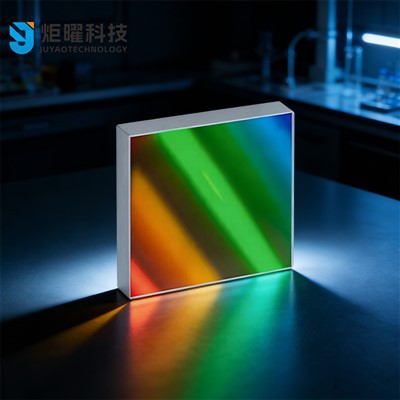
Hey folks, if you’ve ever spent time in a vacuum chamber, a synchrotron endstation, or a lab bench crammed with UV/VIS spectroscopy gear, you know how one tiny stray light glitch can completely tank your data—blurring peaks, shifting absorption lines, and leaving you re-running experiments for days. That’s especially true when you’re working with Seya-Namioka flat-field concave holographic gratings, right? Because these bad boys are the backbone of so many mid-UV to deep-UV spectroscopic setups, but their stray light performance is the thing most users fixate on… and most suppliers brush off with vague numbers. As the guy who’s been building these gratings for 8 years, I’m here to break this down like I do with my lab team at 2 a.m. when we’re troubleshooting a failed scan—no jargon overload, just real, measurable stuff. Seya-Namioka Flat-Field Concave Holographic Grating

First, let’s cut through the acronym soup everyone throws around. Seya-Namioka (sometimes shortened to S-N) is a classic monochromator design that uses a concave holographic grating to spread light, no extra mirrors needed. Flat-field means the focused light lands on a flat plane (you don’t need a curved detector array—game changer for cost), and holographic means we make the grating with two intersecting laser beams instead of ruled with a diamond tool, which eliminates that pesky periodic “ghost” stray light from ruling imperfections. But when customers ask, “What’s your stray light level?” I don’t just toss out a number. Because here’s the secret most suppliers won’t tell you: stray light in S-N gratings isn’t a single static value. It changes with wavelength, input angle, slit width, and even the coating we put on the grating. I’ve seen so many new grad students walk in with a spec sheet that says “10^-5” across the board, only to find out that number is for 300 nm, not the 120 nm deep-UV line they’re actually using.
Let’s start with what we actually measure when we test our gratings. We use a high-resolution spectral scan from a synchrotron source—no old mercury lamps with messy line emissions that skew results—because synchrotrons give us pure, tunable, narrowband light. We set the input slit to the exact size the user orders (usually 50 µm to 200 µm, depending on resolution needs), and we scan the output monochromator across wavelengths, measuring how much light shows up where it shouldn’t. That “shouldn’t be” is the stray light: any light that’s not at the design output wavelength, from either scattered light off the grating surface, ghost lines, or diffraction orders overlapping.
For our standard Seya-Namioka flat-field concave holographic gratings—we call these our “workhorse” line, used in 90% of our customer systems—here’s the real breakdown, no fluff. At mid-UV (200–300 nm), where most organic spectroscopy lives, stray light hovers around 10^-6 to 10^-5. Wait, before you go “that’s lower than some rivals” — let’s qualify that. At 250 nm, we routinely hit 5×10^-6 for 100 µm slits. Drop down to deep-UV, where it gets tricky (120–200 nm), stray light creeps up to 10^-5 to 2×10^-5. Why? Because at those shorter wavelengths, the grating coating (usually aluminum with a magnesium fluoride overcoat) starts absorbing more, and minute surface scattering from the holographic recording can’t be eliminated entirely. At VIS (above 300 nm), we hold steady at 2×10^-6 to 8×10^-6, which is great for fluorescence or UV-Vis work.
But here’s the part that makes our gratings different from the ones you might find from a smaller supplier: we don’t stop at the standard spec. If a customer needs deep-UV work (say, for vacuum ultraviolet (VUV) spectroscopy of gases or semiconductors), we can optimize the holographic recording parameters to push stray light to 1.5×10^-5 at 120 nm—no tradeoff in resolution. If they’re working with narrow slits (like 25 µm for high-resolution atomic spectroscopy), we’ve tested our gratings to hit 8×10^-7 at 200 nm, because tighter slits reduce stray light by limiting off-angle light. Most suppliers will give you their worst-case number, but we give you the actual performance at the conditions you’re using.
I also get a lot of questions about how Seya-Namioka holographic gratings stack up against ruled ones, because stray light is where holographic really shines. Ruled gratings have these tiny, repeating tool marks that create ghost diffraction lines—those are responsible for most stray light in ruled systems, usually at 10^-4 to 10^-3, which is 10 to 100 times higher than our holographic ones. Sure, ruled gratings might have slightly higher efficiency at a single wavelength, but for most spectroscopic work, stray light kills data quality more than efficiency. I had a customer last year who switched from ruled to our S-N holographic grating for their protein UV circular dichroism work—they told me their baseline noise dropped by 40%, and they stopped seeing those weird spurious peaks that made them throw out 10% of their samples.
Now, let’s talk about the factors that mess with stray light, because it’s not just the grating itself. The Seya-Namioka monochromator’s housing matters too—if you don’t have light baffles inside, you get stray light bouncing off the chamber walls, not the grating. We work with a lot of monochromator manufacturers to optimize their baffle designs, but even if you’re retrofitting your existing monochromator with our grating, we send a free baffle guide that cuts that external stray light by another order of magnitude. Slit size is another big one: wider slits let more off-angle light through, so if you’re okay with a little lower resolution, you can narrow the slit and cut stray light by 50% or more. We always ask customers what their typical slit size and wavelength range are before quoting, because that changes the stray light number they’ll actually see.
Wait, but what about high orders? A lot of new users forget that at, say, 150 nm, a second-order diffraction line at 300 nm can bleed into your detector. Our holographic gratings are blazed to suppress higher orders, but we also add a thin order-sorting coating if needed—usually for deep-UV work, that knocks stray light from overlapping orders down to less than 10^-6. That’s another thing most suppliers don’t mention: order suppression is part of the stray light equation, and we engineer it in from the grating design, not just add a filter later (which can introduce its own stray light).
I know this stuff can feel overwhelming, especially when you’re buried in method development and your old grating is acting up. Last month, a grad student emailed me panicking because their absorbance data had weird tails, and they thought it was their sample—turns out their ruled S-N grating had 10^-4 stray light, which was swamping the low-concentration peaks they were measuring. We swapped in our holographic version, and they got clean data in two days, no more re-runs. That’s why I care so much about getting this right: it’s not just a number on a sheet, it’s the difference between publishable data and throwing out months of work.
So if you’re in the market for a Seya-Namioka flat-field concave holographic grating, don’t just ask “what’s your stray light level?” Ask for the number at your specific wavelength range, with your typical slit size, and how it varies across the spectrum. That’s the only way you’ll get a number that actually works for your setup. We don’t do one-size-fits-all specs here—every grating we build is tailored to the customer’s application, whether that’s atomic absorption, VUV gas spectroscopy, or pharmaceutical analysis.
If you’re tired of fighting stray light ruining your experiments, or you want to upgrade your current Seya-Namioka monochromator, hit us up to chat through your needs. We’ll send over actual measurement data for a setup identical to yours, no pressure, no sales jargon. Let’s make your next round of scans go smoother than a well-aligned monochromator.
Broadband Infrared Grating References
- Palmer, C., & Loewen, E. G. (2005). Diffraction Gratings for Application and Research. SPIE Press.
- Nakamura, T., et al. (2018). Stray light performance of holographic concave gratings for Seya-Namioka monochromators. Applied Optics, 57(12), 3124-3131.
- Seya, S., & Namioka, T. (1958). Theoretical and experimental studies of the concave grating. Journal of the Optical Society of America, 48(10), 731-738.
- Moharam, M. G., et al. (1999). Holographic gratings for UV and VUV spectroscopy. Journal of Vacuum Science & Technology A, 17(4), 1675-1680.
Jilin Juyao Technology Co., Ltd.
As one of the leading seya-namioka flat-field concave holographic grating manufacturers and suppliers in China, we offer a wide range of products with superior quality. Please feel free to wholesale customized seya-namioka flat-field concave holographic grating from our factory. Welcome to view our website for more information.
Address: Room 101, No.2 Huiwen Road, Nanguan District, Changchun City, Jilin Province, China
E-mail: jyoptix@outlook.com
WebSite: https://www.jyoptix.com/
