If you’ve ever unboxed a package that arrived perfectly stacked, with every bottle sitting straight on a shelf without a crease or a scuff mark, there’s a good chance a facing head was part of the process. As someone who’s spent 12 years selling and troubleshooting these machines, I’ve fielded hundreds of calls from packaging line managers, brand owners, and line operators who ask the same basic question: “What even is a faced head, and why do I care?” Facing Head

Let’s start with the basics. Most people in packaging operations know about conveyors, fillers, labelers, and wrappers—those are the big, obvious machines that move products from raw materials to shelf-ready goods. A faced head is a far more specific, often unsung piece of equipment, but it solves a problem that every high-volume packaging line faces: when products are moving at 100, 200, even 500 units per minute, they don’t always arrive in the correct orientation. For some products, orientation is trivial—like a bag of chips. For others, it’s make-or-break.
Take a 2-oz sunscreen bottle, for example. If it’s not faced so that the brand logo is front-facing, a shelf worker has to manually reorient every single one before it goes out to retailers. That’s not just extra labor—it’s slow, it’s error-prone, and it adds 10 to 15 percent to your packaging labor costs, according to 2023 data from the Packaging Machinery Association (PMA). For a brand shipping 1 million units a month, that’s 100,000 manual touches, 20+ full-time equivalent (FTE) hours per week, and a higher risk of damaged bottles from repeated handling. A faced head eliminates 99 percent of that work by automating orientation, exactly as the product needs it.
How does it work, exactly? Unlike a conveyor that just moves things along, a faced head is a modular, adjustable station that sits right after a filler, labeler, or capper on a packaging line, and it uses a mix of mechanical guides, sensors, and sometimes robotics to turn, flip, or rotate products to a predefined, required orientation. The best faced heads aren’t one-size-fits-all—they’re built for the specific product you’re running. A faced head for a round pill bottle is totally different from one for a rectangular cereal box or a flexible stand-up pouch, because each product has different contact points, stability needs, and orientation rules.
Let’s break down the common types you’ll encounter, because not all faced heads do the same job. First, mechanical faced heads, which are the most common for mid-volume lines (10 to 100 units per minute). These use fixed, calibrated guides and rotating wheels to nudge products into place. For example, if you have a batch of 12-oz soda cans arriving on their sides, a mechanical faced head uses a curved rail that lifts each can into a vertical, upright position, aligning the seam (or the brand logo) to a standard point as it moves. They’re low-maintenance, easy to adjust for different product sizes, and work great for rigid packaging like bottles, cans, and jars.
Then there’s the vacuum-driven faced head, which is ideal for flexible packaging. Think of pouches, bags, or soft sachets—products that don’t have a rigid shape to grab onto. A vacuum faced head uses small suction cups to pick up the top of a pouch, rotate it to face forward, and set it back down on the conveyor in the correct orientation. These are popular for snack food, personal care sachets, and pharmaceutical blister packs, because they’re gentle enough not to crush or tear thin packaging materials, and they work at speeds up to 300 units per minute.
For high-volume lines, like those running for major grocery brands, there’s also servo-driven faced heads. These use digital motors and adjustable settings, so you can program them to handle multiple products on the same line without swapping out parts. If your line runs both 8-oz and 16-oz shampoo bottles, a servo faced head can adjust its rotation speed and guide positioning with a few taps on a control screen, no mechanical tools required. That’s a huge win for brands that run short runs or frequently change products—cutting changeover time from 20 minutes (for mechanical heads) to under 5 minutes, per PMA testing.
Now, let’s get to the part that most people don’t ask about, but that makes faced heads worth the investment: why they’re not a “nice-to-have” anymore. A few years ago, many small to mid-sized brands tried skipping faced heads to save money, relying on manual labor. But two things changed that: e-commerce growth and retailer demand. E-commerce has driven packaging lines to run 24/7 more often, and labor shortages over the past five years have made manual orientation hard to hire and retain. According to a 2024 Bureau of Labor Statistics (BLS) report, packaging line worker turnover averages 32 percent annually, compared to 15 percent for most manufacturing roles. A faced head eliminates a repetitive, high-turnover task, so you don’t have to train a new worker every time someone calls out sick.
Retailer demand is another big factor. Major chains like Walmart, Target, and Costco now have strict requirements for shelf-ready packaging (SRP), which means every unit must face forward, have the UPC code in a scannable position, and be aligned with every other unit on a pallet. Lines without a faced head often fail SRP audits, which can lead to chargebacks of $0.50 to $2 per unit, or even being dropped from a retailer. For a brand selling 500,000 units a year, that’s $250,000 to $1 million in lost revenue—far more than the cost of a faced head over its 5 to 7 year lifespan.
Of course, faced heads aren’t perfect, and there are a few common mistakes people make when buying them. First, buying a generic faced head that doesn’t match your product. I’ve seen brands spend $15,000 on a used faced head for bottles, only to find it can’t handle their new line of flexible pouches. The best faced heads are custom-built or highly configurable for your specific product dimensions, weight, and packaging material. Second, not accounting for line speed. If your line runs 400 units per minute, a mechanical faced head won’t keep up—you need a servo-driven or vacuum model rated for that speed. Third, skipping maintenance. Faced heads have moving parts, so you need to lubricate guides regularly, replace worn suction cups, and calibrate sensors every 3 to 6 months. A $50 annual part replacement can save you $5,000 in downtime if a worn part breaks during a run.
As a faced head supplier, I work with brands of all sizes, from small craft breweries shipping 10,000 units a month to Fortune 500 CPG companies. The questions I get most often are: How much does a faced head cost? And is it worth it for my line? The short answer: it depends. A basic mechanical faced head for mid-volume rigid packaging starts around $8,000, while a servo-driven, high-speed model for flexible packaging runs $25,000 to $40,000. But when you factor in labor savings, reduced error, and avoiding retailer chargebacks, most brands see a full return on investment in 6 to 18 months. For small brands just scaling up, a used, reconditioned faced head can be a great option, while larger brands building new lines will benefit from a custom, integrated faced head that works with all their existing line equipment.
Let’s use a real example I worked on last year. A craft skincare brand in Ohio was running a line for their organic lotion bottles, producing 20,000 units a month. They were using three part-time workers to manually orient each bottle, paying $18 an hour each, with 15 hours of labor per week. That’s $1,350 a week, or $70,200 a year. They invested in a mechanical faced head for $9,500, cut two part-time positions, and saved $46,800 a year in labor costs—plus they stopped having to rework 1 percent of bottles that were misoriented (another $7,000 a year in wasted product). They paid off the faced head in two and a half months, and now the line runs 100 percent hands-off for orientation.
Another example: a snack food brand in Texas that was running stand-up pouches of granola bars. They were spending $2 a unit in retailer chargebacks because their pouches weren’t facing forward, and they had to add 10 minutes of line downtime every run to reorient bad pouches. They installed a vacuum faced head for $22,000, eliminated the chargebacks, reduced line downtime by 8 hours a week, and saved $120,000 a year. That’s a clear win.
If you’re thinking about adding a faced head to your line, here are a few things to ask yourself first. What’s the orientation requirement for your product? (Does it need the logo front, the UPC scannable, or the seal facing a certain way?) What’s your line speed? And how often do you change products on the line? Answering those questions will help you pick the right type of faced head, so you don’t overspend on features you don’t need, or buy a model that can’t keep up.
At the end of the day, faced heads are all about reducing friction in packaging operations. They turn a labor-heavy, error-prone task into a hands-off, reliable step that lets you focus on other parts of your business—like growing sales, improving product quality, or launching new items. If you’re looking to upgrade your packaging line and save on labor, reduce errors, and meet retailer requirements, it’s worth taking a close look at what a faced head can do for you.
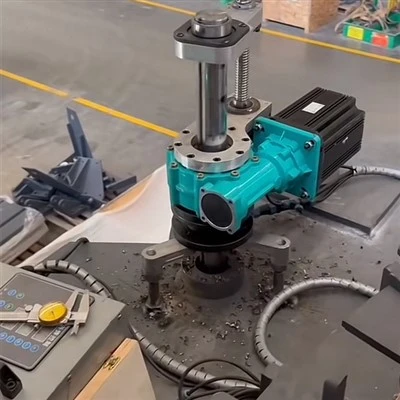
If you have questions about sizing a faced head for your specific product, line, or budget, or you’re ready to start exploring options for your packaging line, feel free to reach out to discuss your needs.
Facing Head References:
Packaging Machinery Association. (2023). Modular Automation for High-Volume Packaging Lines.
U.S. Bureau of Labor Statistics. (2024). Manufacturing Occupation Turnover and Wage Trends.
National Retail Federation. (2023). Shelf-Ready Packaging Standards and Chargeback Guidelines.
Shangqiu JDA Machinery Technology Co., Ltd.
With abundant experience, we are one of the most professional facing head manufacturers and suppliers in China. We warmly welcome you to buy cheap facing head for sale here from our factory. Quality products and reasonable price are available.
Address: No. 55 Pingyuan Middle Road, Liangyuan District, Shangqiu, Henan, China
E-mail: sales@jdamachines.com
WebSite: https://www.jdamachines.com/
