Hey everyone, I’m Jake, and for the last 8 years, I’ve been working with titanium alloys—first as an engineer, now as a supplier for folks in aerospace, marine, medical, and automotive who need materials that can handle way more than your average metal. If you’ve ever looked up “titanium vs. steel,” you’ve probably seen a million clickbait headlines saying one’s “stronger” than the other, and it’s enough to make you want to close the tab. Let’s cut through the noise, no stuffy lab jargon, just real talk from someone who works with this stuff every single day. First off: the answer isn’t a flat yes or no. It depends on what you mean by “stronger.” Titanium Alloy

Let’s start with the basics. When people say a metal is “strong,” they usually mix up two common terms: tensile strength and yield strength. Tensile strength is how much force it takes to pull a metal apart until it breaks—like stretching a rubber band until it snaps. Yield strength is how much force it takes to bend or deform it permanently, even if it doesn’t break. That’s the stuff that matters for parts that have to hold shape, like airplane wing bolts or medical implant plates.
Now, let’s pull actual numbers here, no fancy graphs. Your run-of-the-mill carbon steel (the stuff used in construction, car frames, and most hardware) has a tensile strength between 400 and 550 megapascals (MPa). High-strength steel, the kind used in bridges or heavy machinery, can hit up to 800 MPa. Even super-hard tool steel tops out around 1,500 MPa. What about titanium alloys? Our most common commercial titanium alloy, Ti-6Al-4V (the workhorse of the industry, makes up 50% of all titanium used worldwide), has a tensile strength of about 900 MPa. If we go to a specialty titanium alloy, like Ti-10V-2Fe-3Al, that jumps to 1,100 MPa. Wait, so that’s higher than regular steel, but lower than tool steel? Got it. But here’s the thing most people miss: titanium’s strength-to-weight ratio is way better than almost any steel out there.
Let’s do a quick weight comparison. Titanium is about 45% lighter than steel. So if you have two parts—one made of Ti-6Al-4V, one made of standard carbon steel—both with the same tensile strength, the titanium part will be almost half as heavy. For aerospace, that’s a game-changer. Every pound you cut from a plane saves you thousands in fuel over its lifetime. For a racing car, lighter parts mean faster acceleration and better handling. For a wheelchair user, a titanium frame is way less tiring to push than a steel one. That strength-to-weight ratio? That’s where titanium beats steel hands down. It’s not just how strong it is, but how strong it is for how much it weighs.
But wait, there’s another type of strength that comes up all the time: hardness. That’s how resistant a metal is to scratches, dents, and wear. A lot of people think steel is harder than titanium, and for the most part, that’s true. Most steels have a hardness of HRC (Rockwell C scale) 20 to 50, while Ti-6Al-4V is around HRC 30. But here’s a catch: surface treatments. We can harden titanium alloys with things like nitriding, which adds a thin, super hard titanium nitride layer on the surface, bringing hardness up to HRC 70. That’s harder than most tool steels. So if you’re making a part that needs to resist wear—like a marine propeller shaft or a golf club head—we can tweak the titanium to be just as tough as steel, without the extra weight.
Now, let’s talk about where titanium actually outperforms steel, because that’s why our customers come to us, not the other way around. Corrosion resistance is a big one. Steel rusts. If you leave a steel bolt outside, even with a coating, it’ll start to flake after a few years. Titanium forms a natural oxide layer on its surface when it’s exposed to air or water, and that layer self-heals if it gets scratched. It barely corrodes at all—even in salt water, which is the worst environment for steel. Last year, we supplied titanium fasteners to a offshore wind farm project, and their engineers told us the steel fasteners they used before needed replacing every 2 years. The titanium ones? They projected they’d last 20+ years, no coating needed. That’s not just a convenience—it’s a huge cost saver over time, even if the upfront price of titanium is higher.
Another big one is extreme temperatures. Steel gets soft when it’s hot. If you heat carbon steel to 800 degrees Fahrenheit, it loses almost half its strength. Titanium, on the other hand, stays stable up to like 1,500 degrees Fahrenheit, and even at low temperatures (like in space, or in a freezer), it doesn’t get brittle like steel. That’s why NASA uses titanium for rocket parts and satellites. We also supply a lot of titanium for automotive turbochargers—those get super hot, way hotter than engine parts, and steel would warp. Titanium holds its shape, no problem.
But let’s be real, titanium isn’t better for every job. If you need a part that’s going to take a huge impact, like a truck bumper or a sledgehammer head, steel’s going to be cheaper and more durable for that specific use case. Steel is way more common, so it’s easy to get, easy to machine, and way less expensive per pound. Titanium’s upfront cost is 2 to 3 times more than steel, so if you don’t need that extra strength-to-weight or corrosion resistance, steel’s the way to go. That’s why we always tell customers: it’s not about which is “stronger” overall, it’s about what you need the part to do.
I get questions all the time: “Is titanium stronger than steel?” And the answer I give them now, after all these years, is “It depends on your definition of strong, and what you’re building.” If it’s pure breaking strength? Some steels are harder. If it’s strength for its weight, or resistance to rust and extreme conditions? Titanium’s usually the better call.
Another thing people don’t talk about is fatigue strength. That’s how a metal holds up when it’s being bent and repeated over and over—like an airplane wing flexing thousands of times a flight, or a bicycle frame going up and down thousands of times a mile. Titanium has way better fatigue strength than most steels. I remember a customer who made high-end mountain bike frames—they used steel before, and frames would crack after about 5,000 miles of rough riding. Switched to our Ti-3Al-2.5V alloy, and now those frames go 20,000 miles with barely a stress crack. That’s the difference when you’re building something that’s under constant, repetitive stress.
Let’s also clear up a common myth: titanium is indestructible. It’s not. It’s not as hard as tool steel, so if you drop a titanium wrench on a concrete floor, it’ll scratch just like a steel one. It’s also not perfect for welding—you have to be more careful with titanium, because it can absorb nitrogen or oxygen when it’s hot, which makes it brittle if you don’t do it right. That’s something we teach all our customers: if you’re working with titanium, you can’t just treat it like steel. It needs a little more care, but the payoff is worth it for the right project.
For anyone reading this who’s in the market for metal parts—whether you’re a small business making custom racing parts, a engineer designing a medical implant, or a shop upgrading your marine equipment—let’s stop chasing the “stronger metal” myth. The best material is the one that fits your specific needs, budget, and environment. If you’re working on something that needs to be light, rust-proof, and hold up under stress, titanium alloys are almost always the right call. If you need a cheap, heavy part that takes big impacts, steel’s your guy.
I’ve been in this industry long enough to see customers waste money on the wrong metal, because they bought into the “titanium is better than steel” hype, or the other way around. That’s why I always take the time to ask questions: what’s the part going to be used for? What environment will it be in? How much does weight matter? What’s your budget? No two projects are the same, so no two materials work the same.
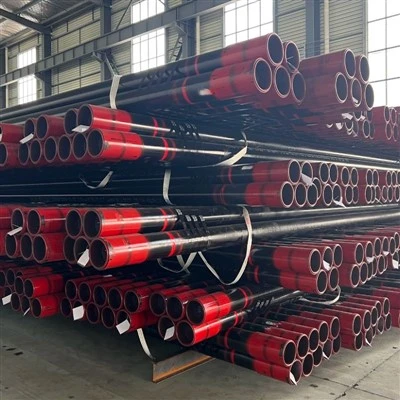
At the end of the day, titanium isn’t a replacement for steel, and steel isn’t a replacement for titanium. They’re two different tools for two different jobs. Titanium wins when you need that edge in strength-to-weight, corrosion resistance, or high-temperature stability. Steel wins when cost and raw hardness are your top priorities.
Main Products If you’re working on a project where you’re not sure which is right, or you’re ready to source titanium parts that fit your exact specs, feel free to reach out for a quick chat. We can walk through your needs, compare alloys, and figure out if titanium’s the right fit. No sales pitch, no pressure—just real talk from someone who’s been in the shop and on the job sites with this stuff for years.
References
- ASM International. (2007). Properties of Titanium and Titanium Alloys. ASM Handbook, Volume 1: Properties and Selection: Irons, Steels, and High-Performance Alloys.
- NASA. (2021). Titanium Alloys for Aerospace Applications. NASA Materials Science Division Report.
- International Organization for Standardization (ISO). (2018). ISO 5832-3: Implants for Surgery — Metallic Materials — Part 3: Wrought titanium 6-aluminium 4-vanadium alloy.
Jiangsu Xurui Metal Group Co., Ltd.
With abundant experience, we are one of the most professional titanium alloy manufacturers and suppliers in China. We are committed to providing high quality metal products for global clients. Please feel free to wholesale bulk high-grade titanium alloy in stock here from our factory.
Address: 32-117, South Stainless Steel Market, Xinwu District, Wuxi, Jiangsu, China
E-mail: Mia@xuruimetal.com
WebSite: https://www.xurui-steel.com/
