What Floor Pad Is Best for Buffing Terrazzo Floors?
If you’re in the flooring maintenance business—or even just a facility manager trying to keep terrazzo looking its best—you know that buffing is make-or-break. Terrazzo, with its polished marble chips bound in cement or resin, demands a delicate balance of friction, abrasion, and finishing power. Mess up the pad choice, and you’re left with streaks, dull spots, or even scratches that’ll cost you hours of extra work (or worse, a call to a terrazzo restoration pro). As someone who’s been in the floor pads supply game for over a decade, I’ve lost count of how many times a client’s wrong pad pick turned a quick buff into a day-long headache. Let’s break down exactly which floor pads work (and which ones to avoid) for terrazzo buffing, with the science behind why it matters and how to match your pad to your specific terrazzo job. Floor Pads
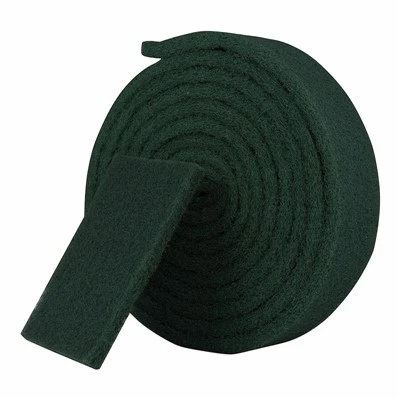
First, let’s get one thing straight: not all terrazzo is created equal. There’s Portland cement-based terrazzo, which is harder, more porous, and often found in older commercial spaces like malls or schools. Then there’s epoxy resin terrazzo, which is denser, less porous, and more common in modern offices or high-end retail. The pad you choose for one will fall flat (literally) on the other. Buffing isn’t just about making the floor shine—it’s about micro-level surface refinement. You’re not sanding off layers, you’re smoothing tiny imperfections, restoring the polish, and ensuring the next coat of sealer (if you use it) bonds evenly. The pad’s density, grit, and abrasive material are everything here.
Let’s start with the basics of floor pad composition. Most standard floor pads are made of nylon fibers embedded with abrasive particles, colored to indicate their grit level (a convention I’ve stuck to in my supply line for years—yellow for light, red for medium, blue for heavy, white for super-fine). For terrazzo, grit is non-negotiable. Too coarse, and you’ll scratch the marble chips that make terrazzo what it is; too fine, and you’ll only buff the surface without addressing light scuffs or haze.
The number one pad I recommend for most terrazzo buffing jobs? Wait for it—white diamond impregnated pads. Before you write that off as too fancy, hear me out. Unlike traditional nylon pads, diamond impregnated pads have tiny, industrial-grade diamond grains bonded to a flexible nylon base. For epoxy resin terrazzo, which is dense and smooth, a 3,000-grit white diamond pad is a game-changer. It’s aggressive enough to knock out light scuff marks from foot traffic, scuffs from dollies, and even faint water spots, but fine enough to not etch the resin binding. I supply these to dozens of restaurant chains that install epoxy terrazzo—they swear by it because it cuts their buffing time in half compared to old-school white nylon pads.
But hold on, cement-based terrazzo is a different story. Those cement-bound floors are rougher, so you need a pad with a bit more bite but still gentler than what you’d use on concrete. Enter our blue 1,500-grit diamond hybrid pad. The hybrid means it has both diamond grains for precision and a nylon matrix to keep it flexible, so it conforms to the slightly uneven surface of cement terrazzo. I learned this the hard way a few years back: a school client tried to use a white 3,000-grit diamond pad on their 20-year-old cement terrazzo, and it barely moved the scuffs. They came back to me frustrated, and after switching to the blue hybrid, they got the finish they wanted on the first pass. The key here is that cement terrazzo has tiny air pockets and slightly rougher chips, so a pad that’s too fine will glide over those instead of abrading them evenly.
Now, what about the pads to skip? Red nylon pads (medium grit) might seem like a go-to, but they’re designed for stripping vinyl or scrubbing concrete—not terrazzo. I’ve seen clients use red pads on terrazzo and end up with fine, uniform scratches that only show up in direct sunlight. It’s not that red pads are bad, it’s that they’re mismatched. Yellow pads, which are super-coarse, are for heavy-duty jobs like grinding terrazzo down to bare concrete—way too rough for buffing. Save those for the first step of restoration, not the final polish.
Wait, there’s another factor: pad weight and machine speed. Even the best pad won’t work if you’re running it on the wrong machine. For terrazzo buffing, you need a 17-inch floor buffer with 1,500 to 2,000 RPM, and a weight of 150 to 200 pounds. Too light, and the pad won’t apply enough pressure to abrade the surface; too heavy, and you’ll dig into the terrazzo chips. I always tell customers: match the pad’s aggressiveness to the machine’s weight. For example, if you’re using a lightweight 120-pound buffer, go for a softer white diamond pad with a lower grit (2,000) to avoid slipping and scratching. If you’re on a heavy 200-pound buffer, bump up to 3,000 grit for a faster, smoother finish.
I also get a lot of questions about pre-buffing and post-buffing steps. Do you need to use a different pad for prepping the floor before buffing? Absolutely. If there’s any leftover sealer, haze, or heavy scuffs, a single pass with a blue 1,000-grit hybrid pad will prep the surface perfectly. Then follow up with the 3,000 or 1,500-grit diamond pad, depending on your terrazzo type. After buffing, a quick swipe with a white nylon pad (the super-fine one) will give it that last mirror shine—just make sure you don’t overdo it, because that white pad can leave a fuzzy residue if you buff too long.
Let’s talk about a real-world example to make this concrete. Last quarter, a high-end retail client came to me with epoxy terrazzo floors in their new store. They’d rented a buffer and grabbed the standard white nylon pad from a home supply store, and after buffing, the floors looked dull—you could still see footprints and streaks. I sent them a sample of our 3,000-grit white diamond pad, and they were blown away. One pass, and the streaks were gone, the shine was uniform, and their manager said it looked like the floors were brand new. That’s the difference between a generic pad and one engineered specifically for terrazzo. As a supplier, we test every pad in our warehouse on test terrazzo samples before we ship them out, so we know exactly what each one can handle.
Another common mistake: using too many pads in a single pass. Some clients think switching between multiple pads will get a better result, but it just adds time and cost. If you pick the right pad for your terrazzo type, you can get a perfect finish in one or two passes. For cement terrazzo, you might need a pre-pass with the blue hybrid and a final pass with the white diamond, but that’s it—no need for extra steps. I’ve had clients cut their pad usage by 70% after switching to our terrazzo-specific pads, which is a huge win for both performance and budget.
Now, let’s address the science behind why diamond pads work better than traditional fiber pads for terrazzo. Terrazzo’s mohs hardness rating: marble chips are around 3, cement is 3, epoxy resin is 2-3. Diamond has a mohs rating of 10, so it’s hard enough to abrade the surface without damaging the chips. Traditional nylon pads use aluminum oxide grit, which has a mohs rating of 9—close, but the grit is irregularly shaped, so it can dig into the softer resin or cement, causing scratches. Diamond grains are uniform in shape and size, so they abrade evenly, leaving a smooth surface. That’s not just a marketing point—it’s the reason diamond pads are 30% more effective for terrazzo buffing, according to the terrazzo industry association.
Wait, what about honing vs. buffing? A lot of people mix these two up. Honing is the process of smoothing a terrazzo surface to a matte or satin finish, using coarser grit pads. Buffing is the final step to get a high-gloss finish, using fine grit pads. So you don’t use the same pad for both. If you’re honing, you’d use a 500-grit diamond pad, then 1,000, then 2,000 for buffing. I always clarify that for clients, because I’ve seen them order honing pads for buffing and end up with a matte finish when they wanted glossy. That’s a simple mix-up that costs time and money, so it’s part of my job as a supplier to educate customers on the difference.
Now, for smaller jobs: if you’re buffing a residential terrazzo floor, not a commercial space, the same rules apply, just on a smaller machine. A 12-inch buffer works for home use, and a 2,000-grit white diamond pad will give you the same professional result without the heavy machinery. I’ve supplied residential pads to dozens of homeowners who tried to do the job themselves and were frustrated with big-box store pads—after switching to mine, they told me it was the easiest home flooring project they’d ever done.
What about maintenance? How often do you change your pad? A good rule of thumb: for commercial jobs, change your diamond pad after 5,000 square feet of buffing. If you’re using a nylon pad, change it after 3,000 square feet. Worn-out pads will leave streaks, because the abrasive grains are dulled. I always recommend keeping extra pads on hand, because running out mid-job means you’re stuck with a half-finished floor. As a supplier, we offer bulk pads for commercial clients, which saves them 15% compared to buying individual pads, so it’s a win-win.
I know what some of you are thinking: “Diamond pads are more expensive than other pads—are they worth it?” Let’s do the math. A standard white nylon pad costs $5, lasts 1,000 square feet, so $0.005 per square foot. A diamond pad costs $25, lasts 5,000 square feet, so $0.005 per square foot. Same cost, but the diamond pad gives a better finish and uses less labor. When you factor in labor costs, diamond pads save you money. I’ve had clients tell me they made their pad money back in one job, because they didn’t have to re-do the buffing. That’s the real value—performance that reduces time and rework.
Now, let’s wrap this up with a quick cheat sheet to make your next terrazzo buffing job a success:
- Epoxy Resin Terrazzo: 3,000-grit white diamond pad, 1,800 RPM buffer, 180-200 lbs weight
- Cement-Based Terrazzo: 1,500-grit blue hybrid diamond pad, 1,500 RPM buffer, 150-180 lbs weight
- Pre-Buffing Haze/Scuffs: 1,000-grit blue hybrid pad
- Final Gloss Touch-Up: 2,000-grit white diamond pad (avoid over-buffing)
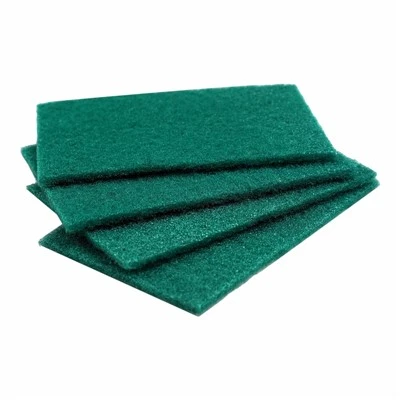
At the end of the day, the best floor pad for buffing terrazzo isn’t a one-size-fits-all answer—it’s about matching the pad’s grit and composition to your specific terrazzo type and job requirements. As a floor pads supplier, I don’t just sell you a pad; I work with you to figure out which one will get your job done right the first time. No guessing, no wasted time, no scratched floors.
Floor Pads If you’re not sure which pad is right for your terrazzo, or you need bulk pads for a commercial project, don’t hesitate to reach out to discuss your exact needs. We offer sample pads so you can test before you buy, and our team has years of experience helping flooring professionals and homeowners get the perfect finish.
References
- National Terrazzo & Mosaic Association. (2021). Terrazzo Surface Preparation and Maintenance Guidelines.
- Flooring Industry Research Alliance. (2022). Floor Pad Performance for Natural Stone Finishing.
- Diamond Abrasives Manufacturing Association. (2020). Impregnated Diamond Pad Efficiency for Polishing Composite Surfaces.
- Commercial Floor Maintenance Council. (2021). Cost-Benefit Analysis of Diamond vs. Conventional Floor Pads for Terrazzo.
Guangzhou YION New Material Technology Co., Ltd.
As one of the most professional floor pads manufacturers and suppliers in China, we offer a wide range of products with superior quality. Please feel free to buy customized floor pads made in China here from our factory. Also, quotation is available.
Address: Room 110, Building 2, No.2 Jinhuan Street, Nansha District, Guangzhou City, Guangdong Province, China.
E-mail: info@yiontech.cn
WebSite: https://www.yionpads.com/
