If you’ve ever tried to weigh a piece of heavy machinery, a shipment of construction materials, or even a large agricultural load at a remote job site, you know how frustrating it can be when a fixed scale won’t fit the space. For years, that’s where mobile weigh bars came in—those long, sturdy metal beams that slide under wheels or axles to turn any flat, solid surface into a temporary weighing platform. But if you’re new to mobile weighing, one of the most common questions I get from customers (and even from industry folks who’ve worked with other types of portable scales) is this: Do mobile weigh bars have a digital display? Mobile Weigh Bar
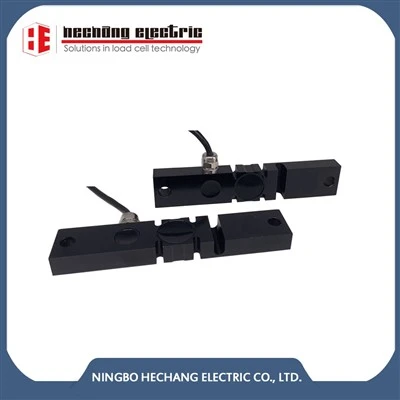
As a supplier of mobile weigh bars, I hear this question at least a dozen times a week, and the answer isn’t a simple yes or no. For most modern mobile weigh bars—especially the ones we design and manufacture for real-world, on-site use—digital displays are standard, but there are important nuances to understand, and there are still some older or specialized models that skip the digital part. Let me break this down the way I do with every customer who walks through our shop or calls with questions: starting with how mobile weigh bars work, why displays matter, and what to look for when you’re shopping for one.
First, let’s get the basics of how a mobile weigh bar works straight, because that’s the foundation for how displays fit in. A mobile weigh bar is a low-profile, rigid load-bearing bar, usually made from heavy-duty steel or aluminum, that has precision load cells built into its core. Load cells are the heart of any scale—they’re transducers that convert the pressure or weight applied to them into an electrical signal. That signal is tiny, and it needs to be processed and turned into a number that makes sense to a human. That’s where the display comes in.
Early mobile weigh bars, dating back to the 1980s and 1990s, were mostly analog. They used simple strain gauges wired to a dial or a small, bulky pointer that would move across a numbered scale to show weight. These were fine for basic, low-precision uses like weighing livestock on a farm or checking the load on a small pickup truck. But they had major flaws: they were hard to read in bright sunlight or low light, they were prone to drift (meaning the pointer would shift even when no weight was applied, leading to inaccurate readings), and they couldn’t store data, connect to other devices, or adjust for things like temperature changes that throw off weight measurements. By the early 2000s, digital displays had become affordable and reliable enough to replace analog for nearly all commercial and industrial uses, and that’s the shift our company made when we first started producing mobile weigh bars.
Today, nearly all mobile weigh bars sold for professional use have a digital display, but not all displays are the same. Let’s talk about the types you’ll find, because that’s where the real choice comes in. The most basic digital display is the built-in LED screen mounted directly to the weigh bar’s housing. These are small, lightweight, and perfect for users who just need a quick, on-the-spot reading. For example, a construction foreman weighing a skid steer at a job site doesn’t need to send that weight data to a back office right away—they just need to know how much the machine weighs to comply with road weight limits or calculate material loads. These built-in displays are usually backlit, so you can read them in the dark under a trailer or in a dimly lit warehouse, and most have a hold function that freezes the weight reading once the load is stable, which is super helpful when the machine or vehicle is moving a little while it’s on the bars.
But we also make mobile weigh bars with separate, remote digital displays, and that’s a popular option for a lot of our customers. A remote display connects to the weigh bars via a short Bluetooth or wireless signal, so you can stand 10, 20, even 50 feet away from the load while you read the weight. That’s a game-changer for people who are dealing with very large vehicles or heavy equipment—think semi-trucks, mining haul trucks, or agricultural combines. If you’re standing next to a semi’s trailer to align the weigh bars, you don’t want to have to crane your neck to read a tiny screen mounted on the bar itself, especially if the trailer is 50 feet long. A remote display lets you stand in a safe, convenient spot (like next to the cab) and get an accurate reading without having to climb on or around heavy equipment. Some of our remote displays are even touchscreen, so you can toggle between different units of measurement (pounds, kilograms, tons, metric tons) with a tap, instead of fumbling with small buttons on a compact built-in screen.
Now, there are a few edge cases where you might find mobile weigh bars without a digital display, and those are mostly for very specialized, low-cost, or niche uses. For example, some entry-level weigh bars made for occasional home use, like weighing a personal RV or a small trailer, might still have analog displays. These are usually low-precision, meant for one-off uses, and not designed for daily industrial or commercial work. We don’t carry these models because we focus on mobile weigh bars that are built to last in tough conditions, but they do exist if you’re only looking for a casual, non-professional tool. Another example is very old, vintage weigh bars that are still in working condition—if you find one at a salvage yard or on an auction site, it might have an analog display, but it won’t have the accuracy or durability of a modern digital model.
One thing I always emphasize to customers is that the quality of the digital display is just as important as whether it has one at all. A cheap, low-resolution LED display that fades in sunlight or doesn’t hold a reading accurately is useless, no matter what it says on the box. That’s why all our mobile weigh bars use industrial-grade digital displays, tested to work in temperatures from -20°F to 120°F, dustproof and waterproof to IP67 standards, so they can withstand rain, snow, dust, and mud on a job site without breaking. We also calibrate every display before it leaves our warehouse, and we include a quick calibration guide so customers can re-calibrate the bars easily on site if they move them or if conditions change—something that’s almost impossible to do with an analog display, since it’s all mechanical.
Another key feature of modern digital displays on mobile weigh bars is data connectivity. A lot of our customers need to track weight data for compliance, invoicing, or inventory purposes, so our displays can connect to smartphones, laptops, or office software via Bluetooth or Wi-Fi. That means you can save weight readings, email them to a client, or import them into a logistics spreadsheet without having to write down numbers manually, which cuts down on human error. For example, a waste management company using our weigh bars to track the weight of trash hauled to a landfill can automatically log every load, no extra paperwork needed. Some even have built-in memory that can store hundreds of readings, so you don’t have to have your phone or laptop with you to save data—you can transfer it later when you get back to the office.
I also want to address a common misconception I run into: some people think that because mobile weigh bars are portable, they’re less accurate than fixed scales, and that digital displays add unnecessary complexity that can lead to errors. That’s just not true. The digital display is actually a tool that improves accuracy, not hurts it. Analog displays have a margin of error of about 1-2% because they rely on reading a moving pointer, while modern digital displays have a margin of error of less than 0.1% for most of our models. That means if you have a 10,000-pound load, the digital display will be within 10 pounds of the actual weight, while an analog display could be off by 200 pounds or more. The digital display also eliminates human error from reading the pointer at an angle—you just look at the screen, and the number is exact.
Of course, like any piece of equipment, digital displays on mobile weigh bars do have their limits. They run on batteries, so you have to remember to charge them or replace batteries, which is less of an issue now than it used to be—our displays have a battery life of up to 6 months on a single charge, even with daily use. They also can’t work if the load cells or the connection between the bars and the display is damaged, but that’s the same for any digital scale, not just mobile ones. The key is to take care of your equipment: keep the display clean, avoid dropping it, and store the weigh bars in a dry place when not in use, and your digital display will work reliably for years.
So, to circle back to the original question: Do mobile weigh bars have a digital display? If you’re talking about modern, professional-grade mobile weigh bars designed for regular use in construction, agriculture, logistics, or waste management, the answer is a resounding yes. Digital displays are standard for all of our models, and we offer a range of display options to fit every customer’s needs—from compact built-in screens for quick on-site readings to remote touchscreen displays for large vehicles and heavy loads. For casual, low-use applications, you might find analog models, but they won’t offer the accuracy, durability, or convenience of a digital display, which is why most businesses that rely on weighing loads regularly make the switch.
Single Point Load Cells At the end of the day, the display on a mobile weigh bar isn’t just a fancy add-on—it’s the part that turns a set of sturdy metal bars into a functional, reliable weighing tool. It’s what takes the tiny electrical signal from the load cells and turns it into a number you can trust, whether you’re checking a small trailer’s weight or a 100-ton mining truck. If you’re in the market for mobile weigh bars and you have questions about display options, accuracy, or which model is right for your job, don’t hesitate to reach out to our team. We’ve been working with mobile weigh bars for years, and we can help you find the right setup that fits your needs and your budget. Whether you’re a small business owner looking to weigh deliveries or a large construction company needing to track heavy equipment loads, we have the mobile weigh bars with digital displays that will get the job done right, every time.
References
- American Society of Mechanical Engineers. (2019). Portable Weighing Equipment for Industrial Applications. ASME B107.100-2019.
- National Institute of Standards and Technology. (2021). Handbook 44: Specifications, Tolerances, and Other Technical Requirements for Weighing and Measuring Devices. U.S. Government Publishing Office.
- International Organization for Standardization. (2020). Weighing Instruments for Continuous Belt Weighing and Mobile Weighing Systems. ISO 9014:2020.
- Load Cell Central. (2022). A Guide to Mobile Weigh Bar Technology and Display Integration. Load Cell Central Technical Manual Series.
- Construction Industry Institute. (2020). Portable Weighing Solutions for Heavy Equipment and Material Loads. CII Practice Note 42-05.
Ningbo Hechang Electric Co., Ltd.
As one of the most professional mobile weigh bar manufacturers and suppliers in China, we also support customized service. We warmly welcome you to buy advanced mobile weigh bar for sale here from our factory. If you have any enquiry about cooperation, please feel free to email us.
Address: No.66 Yongmao West Road, Ningbo, China
E-mail: info@hcesensor.com
WebSite: https://www.hechangsensor.com/
