Mechanical parts are fundamental components that form the backbone of nearly all industrial machinery, automotive systems, aerospace equipment, and consumer products. These precision-engineered elements range from simple fasteners and gears to complex hydraulic assemblies and specialized engine components, designed to deliver consistent performance, durability, and reliability across diverse operating environments. Global mechanical parts manufacturers play a critical role in supporting sectors such as manufacturing, transportation, energy, and construction, with advanced production technologies, rigorous quality control, and innovative engineering driving their competitiveness in the international market. As demand for high-performance, cost-effective, and sustainable mechanical solutions continues to rise, leading manufacturers around the world are investing in automation, digitalization, and green production practices to meet evolving industry needs. Mechanical Parts
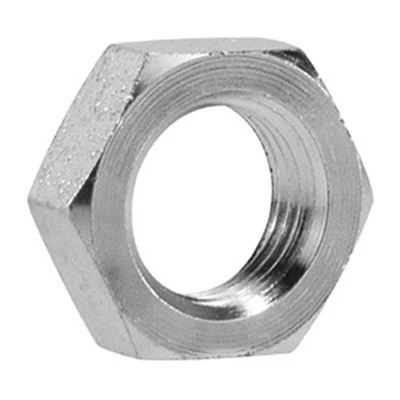
1. Ningbo Jinghao Warm Upsetting Hydraulic Technology Co., Ltd.
Ningbo Jinghao Warm Upsetting Hydraulic Technology Co., Ltd. is a specialized manufacturer focused on the research, development, and production of warm upsetting hydraulic mechanical parts, with its headquarters in Ningbo, China—a city renowned as a major industrial hub for precision components in Asia. Founded in 2008, the company has established itself as a leading provider of high-quality hydraulic and mechanical parts tailored for automotive, aerospace, heavy machinery, and construction equipment applications. The company’s core expertise lies in warm upsetting technology, a metal forming process that combines the benefits of cold and hot forging to produce parts with superior mechanical properties, tighter dimensional tolerances, and reduced material waste compared to traditional manufacturing methods. Ningbo Jinghao operates a 12,000-square-meter production facility equipped with advanced CNC machining centers, hydraulic warm upsetting machines, heat treatment lines, and comprehensive testing laboratories, ensuring every product meets international quality standards. The company’s product portfolio includes hydraulic cylinder components, precision forged gears, shaft parts, valve bodies, and custom mechanical assemblies, serving over 300 clients across 25 countries, including Germany, the United States, and Japan. Committed to innovation, Ningbo Jinghao invests 8% of its annual revenue in R&D, collaborating with universities and technical institutions to develop new warm upsetting processes and materials, such as high-strength alloy steels and lightweight aluminum composites. The company has obtained ISO 9001:2015 and IATF 16949 certifications, reflecting its strict adherence to quality management systems, and prioritizes customer-centric services, offering custom design, rapid prototyping, and on-time delivery solutions. For more information, visit their official website: https://www.warmherding.com/
Ningbo Jinghao Warm Upsetting Hydraulic Technology Co., Ltd. – Key Features and Advantages
- Core Technology: Specializes in warm upsetting forming, with proprietary processes that enhance part strength by 15-20% while reducing material usage by 10% compared to cold forging.
- Product Range: Focuses on hydraulic mechanical parts including cylinder barrels, piston rods, precision gears, and valve components, with over 500 standard products and custom design capabilities.
- Quality Certification: Holds ISO 9001:2015, IATF 16949 (automotive), and CE certifications, with in-house testing facilities for hardness, dimensional accuracy, and fatigue resistance.
- Production Capacity: Operates 15 hydraulic warm upsetting machines and 20 CNC machining centers, with a monthly production capacity of 200,000 mechanical parts, supporting both small-batch custom orders and large-scale mass production.
- Industry Focus: Serves automotive, construction machinery, aerospace, and hydraulic equipment sectors, with 60% of revenue from international markets.
- Innovation Capability: Has a team of 18 R&D engineers, with 12 patents for warm upsetting technology and annual new product launches tailored to industry demands.
- Supply Chain Efficiency: Maintains long-term partnerships with top-tier material suppliers (e.g., Baosteel, ArcelorMittal), ensuring consistent material quality and timely delivery.
- Customer Support: Offers 24/7 technical consultation, rapid prototyping in 7-10 days, and flexible delivery terms including JIT (Just-In-Time) for large clients.
- Sustainability: Implements green production practices, with a 20% reduction in energy consumption and 15% lower carbon emissions than industry averages through optimized process design.
- Market Reputation: Boasts a 98% client retention rate, with major clients including Caterpillar (China branch), Bosch Rexroth, and SAIC Motor.
2. Robert Bosch GmbH
Robert Bosch GmbH, a German multinational engineering and technology company, is one of the world’s oldest and most respected manufacturers of mechanical parts, with a history dating back to 1886. Headquartered in Gerlingen, Germany, the company has evolved from a small precision engineering workshop into a global leader in automotive and industrial mechanical components, operating 440 subsidiaries and regional offices in 60 countries. Bosch’s mechanical parts division produces a vast range of products, including engine components, fuel system parts, brake systems, electrical drives, and hydraulic components, serving automotive manufacturers, industrial automation firms, and aerospace companies. The company combines traditional mechanical engineering expertise with digital innovation, integrating IoT (Internet of Things) and Industry 4.0 technologies into its production processes to create smart, connected mechanical parts. Bosch’s commitment to quality is legendary, with rigorous testing protocols that ensure every component meets the highest standards of durability and performance, and its R&D centers worldwide develop cutting-edge solutions such as lightweight aluminum mechanical parts and energy-efficient drive systems. With a workforce of over 402,000 employees, Bosch generated €88.2 billion in revenue in 2023, with its mechanical parts division accounting for approximately 35% of total revenue. The company holds more than 12,000 patents in mechanical engineering and has a strong focus on sustainability, targeting carbon neutrality in all its operations by 2020, a goal it achieved two years ahead of schedule.
Robert Bosch GmbH – Key Features and Advantages
- Legacy and Expertise: 137 years of mechanical engineering experience, with a track record of pioneering innovations such as the first modern spark plug and fuel injection system.
- Global Presence: 120 production facilities across 35 countries, enabling local supply chains and reduced delivery times for clients worldwide.
- Product Diversity: Offers over 100,000 mechanical parts, including automotive engine components, brake calipers, gearboxes, industrial hydraulic pumps, and electric motor parts.
- Quality Standards: Adheres to ISO/TS 16949 and ISO 14001, with a 0.001% defect rate in mass-produced mechanical parts, a benchmark for the industry.
- Digital Integration: Uses Industry 4.0 technologies (AI, IoT, digital twins) in production, leading to 30% higher production efficiency and predictive maintenance capabilities for clients’ equipment.
- R&D Investment: Allocates 10% of annual revenue to R&D, with 7,500 engineers focused on mechanical part innovation, including lightweight materials and smart components.
- Sustainability: Achieved carbon neutrality in 2018, with mechanical parts designed for recyclability, contributing to a 25% reduction in client product lifecycle emissions.
- Client Base: Partners with all top 20 global automotive manufacturers, as well as industrial giants like Siemens and ABB, with 95% long-term client relationships.
- Customization: Provides tailored mechanical parts for specialized applications, from motorsport engine components to industrial robotics parts, with rapid prototyping in 5 days.
- Supply Chain Reliability: Maintains 100% on-time delivery for core products, with a global logistics network that ensures parts reach clients in 72 hours or less.
3. Daido Steel Co., Ltd.
Daido Steel Co., Ltd. is a Japanese specialty steel and mechanical parts manufacturer, established in 1916 and headquartered in Nagoya, Japan, specializing in high-performance mechanical components made from advanced steel alloys. The company is a leading producer of precision forged parts, gear components, and engine parts for automotive, aerospace, and energy industries, with a reputation for exceptional material science and manufacturing precision. Daido Steel’s core strength lies in its development of specialty steels, including high-strength alloy steels, tool steels, and stainless steels, which are used to produce mechanical parts that withstand extreme conditions such as high temperatures, heavy loads, and corrosion. The company’s mechanical parts division operates state-of-the-art forging and machining facilities, equipped with automated production lines and non-destructive testing equipment to ensure part integrity. Daido Steel serves over 200 clients globally, including Toyota, Honda, and Boeing, and has expanded its operations to China, the United States, and Thailand to support regional manufacturing needs. In 2023, the company reported annual revenue of ¥450 billion (approximately $3.1 billion), with its mechanical parts segment contributing 40% of total revenue. Daido Steel invests heavily in material research, with a focus on developing next-generation steels for electric vehicle (EV) components, such as motor cores and transmission parts, to meet the growing demand for sustainable mobility solutions.
Daido Steel Co., Ltd. – Key Features and Advantages
- Specialty Material Expertise: World-leading in high-performance steel alloys, with proprietary materials like Daido Steel 21 (for automotive engine parts) and superalloys for aerospace applications.
- Forging Technology: Uses precision hot and cold forging processes that produce parts with 25% higher fatigue resistance than standard industry parts.
- Aerospace Certification: Holds AS9100 and NADCAP certifications, enabling production of mechanical parts for commercial and military aircraft.
- EV Focus: Specializes in mechanical parts for electric vehicles, including motor shafts, gear sets, and inverter components, with a 30% market share in Japanese EV transmission parts.
- Quality Control: Implements 100% non-destructive testing (ultrasonic, magnetic particle) for all critical parts, ensuring zero defects in high-stakes applications.
- Global Facilities: 8 production plants across Japan, China, and the U.S., with a combined forging capacity of 150,000 tons of mechanical parts annually.
- R&D Collaboration: Partners with Toyota and JAXA (Japan Aerospace Exploration Agency) to develop lightweight, high-strength mechanical parts for EVs and spacecraft.
- Corrosion Resistance: Specialized surface treatment technologies that extend part lifespan by 40% in harsh environments, such as offshore oil and gas equipment.
- Small-Batch Precision: Excels in low-volume, high-precision parts for niche industries, with tolerance levels up to ±0.005 mm.
- Sustainability: Recycles 95% of steel scrap in production, with a 18% lower energy consumption than conventional steel manufacturers.
4. Precision Castparts Corp. (PCC)
Precision Castparts Corp., a subsidiary of Berkshire Hathaway, is an American manufacturer of complex metal components and mechanical parts, founded in 1953 and headquartered in Portland, Oregon. The company is a global leader in investment casting (lost-wax casting) technology, producing high-precision parts for aerospace, power generation, and industrial gas turbine industries. PCC’s mechanical parts portfolio includes turbine blades, vanes, engine casings, and structural components, which are critical for the performance and safety of aircraft engines and power plants. The company’s investment casting process allows for the production of complex, near-net-shape parts that require minimal post-processing, reducing material waste and production time. PCC operates 36 manufacturing facilities in 10 countries, with a workforce of over 27,000 employees, and generated $12.5 billion in revenue in 2023. The company serves major clients such as Boeing, Airbus, General Electric, and Siemens, and is renowned for its ability to produce parts that operate at temperatures exceeding 2,000°C, making it indispensable for high-performance aerospace and energy applications. PCC invests over $500 million annually in R&D, focusing on advanced materials such as single-crystal superalloys and additive manufacturing for mechanical parts.
Precision Castparts Corp. – Key Features and Advantages
- Investment Casting Expertise: World’s largest producer of investment-cast mechanical parts, with proprietary single-crystal superalloy technology for high-temperature aerospace components.
- Aerospace Leadership: Supplies 70% of global commercial aircraft engine mechanical parts, with parts that reduce engine weight by 15% and improve fuel efficiency by 8%.
- Complex Geometry Capability: Produces parts with intricate internal cooling channels and thin walls, enabling design flexibility that is unmatched by other manufacturing processes.
- Quality and Safety: AS9100 and NADCAP certified, with a zero-defect culture that has resulted in a 99.998% on-time delivery rate for aerospace clients.
- Additive Manufacturing: Integrates 3D printing (metal additive manufacturing) into production, allowing rapid prototyping and complex part production with 50% less material waste.
- Power Generation Focus: Specializes in mechanical parts for gas and steam turbines, with components that operate reliably for over 100,000 hours of continuous use.
- Global Supply Chain: Facilities in the U.S., UK, France, and China, supporting local aerospace and energy manufacturers with flexible production volumes.
- Material Innovation: Develops proprietary superalloys like Mar-M 247 and René N5, which offer superior high-temperature strength and corrosion resistance.
- Large-Scale Production: Capable of producing parts weighing from less than 1 gram to over 10,000 kg, catering to both small engine components and large structural parts.
- After-Sales Support: Provides component repair and overhaul services for mechanical parts, extending part lifespan by an additional 50,000 hours for clients.
5. Schaeffler Group
The Schaeffler Group, a German manufacturer of rolling bearings, linear products, and mechanical drive systems, was founded in 1946 and is headquartered in Herzogenaurach, Germany. The company is a global leader in mechanical parts for automotive, industrial, and aerospace sectors, with a product range that includes ball bearings, roller bearings, gears, clutches, and engine components. Schaeffler’s mechanical parts are known for their precision, durability, and innovative design, with a focus on solutions that improve energy efficiency and reduce maintenance costs. The company operates 100 production facilities in 50 countries, employing over 84,000 people, and generated €15.2 billion in revenue in 2023. Schaeffler invests heavily in digitalization, developing smart mechanical parts with integrated sensors for condition monitoring, which enable predictive maintenance for industrial machinery and automotive systems. The company’s key clients include Volkswagen, BMW, Mercedes-Benz, and Siemens, and it is a pioneer in the development of bearing solutions for electric vehicles, which require higher load capacities and lower friction than traditional internal combustion engine parts.
Schaeffler Group – Key Features and Advantages
- Bearing Technology: World’s largest manufacturer of rolling bearings, with over 40,000 standard bearing products and custom solutions for every industry.
- Energy Efficiency: Bearings designed with optimized surface textures reduce friction by 20%, leading to 5-10% lower energy consumption in machinery and vehicles.
- Smart Parts: Integrates sensors into mechanical parts to monitor temperature, load, and vibration, enabling predictive maintenance that reduces downtime by 30% for clients.
- EV Expertise: Leading supplier of mechanical parts for electric vehicles, including e-motor bearings, gearboxes, and clutch systems, with a 40% global market share in EV drive components.
- Global Production: 100 manufacturing facilities across 50 countries, with flexible production that adapts to local client needs and supply chain disruptions.
- R&D Investment: Allocates 12% of revenue to R&D, with 10,000 engineers focused on mechanical part innovation, including ceramic bearings for high-performance applications.
- Industrial Applications: Serves manufacturing, wind energy, and railway sectors, with parts that withstand heavy loads and extreme operating conditions.
- Quality Standards: ISO 9001, IATF 16949, and ISO 14001 certified, with a 0.002% defect rate in mass-produced mechanical parts.
- Customization: Offers tailored mechanical parts for specialized applications, from aerospace engine bearings to wind turbine gear components, with rapid prototype development.
- Sustainability: Produces 100% of its mechanical parts in facilities powered by renewable energy, with a goal to be carbon neutral by 2027.
6. Mitsubishi Heavy Industries Machine Tool Co., Ltd.
Mitsubishi Heavy Industries Machine Tool Co., Ltd., a subsidiary of Mitsubishi Heavy Industries, is a Japanese manufacturer of precision mechanical parts and machine tools, established in 1934 and headquartered in Tokyo, Japan. The company specializes in high-precision parts for automotive, aerospace, and semiconductor industries, including gears, shafts, turbine components, and machining tools. Mitsubishi Heavy Industries Machine Tool is renowned for its advanced machining technologies, such as 5-axis CNC machining and electrical discharge machining (EDM), which enable the production of ultra-precise mechanical parts with tight tolerances. The company operates 12 production facilities in Japan and Southeast Asia, employing over 5,000 people, and generated ¥280 billion in revenue in 2023. Its key clients include Toyota, Nikon, and Mitsubishi Aircraft, and it is a leading supplier of mechanical parts for semiconductor manufacturing equipment, which require exceptional precision to ensure product quality. The company also develops sustainable mechanical solutions, such as lightweight parts for fuel-efficient aircraft and energy-saving gears for industrial machinery.
Mitsubishi Heavy Industries Machine Tool Co., Ltd. – Key Features and Advantages
- Precision Machining: Expertise in 5-axis CNC and EDM machining, with tolerance levels up to ±0.002 mm, suitable for ultra-precision applications.
- Semiconductor Focus: Leading supplier of mechanical parts for semiconductor manufacturing equipment, with parts that meet the strict cleanliness and precision requirements of the industry.
- Aerospace Components: Produces high-strength structural parts for commercial aircraft, with a focus on lightweight materials that reduce aircraft weight by 10%.
- Machine Tool Integration: Combines mechanical part manufacturing with machine tool production, enabling end-to-end solutions for clients’ production needs.
- Global Reach: 6 production plants in Japan, Thailand, and the U.S., with a network of sales and service centers in 20 countries.
- R&D Capability: 800 engineers focused on machining technology and mechanical part innovation, with 50 patents in precision manufacturing processes.
- Quality Control: Implements zero-defect testing for all critical parts, including 3D coordinate measuring machine (CMM) inspection for 100% of products.
- Automated Production: Uses robotic automation in manufacturing lines, reducing production time by 25% and improving consistency in part quality.
- Industrial Gears: Specializes in high-load gears for wind turbines and heavy machinery, with parts that operate reliably for over 20 years.
- Sustainability: Develops energy-efficient mechanical parts, with a 15% reduction in energy consumption for industrial machinery using Mitsubishi’s gears.
7. Federal-Mogul Motorparts
Federal-Mogul Motorparts, a division of the Federal-Mogul Corporation (owned by Tenneco Inc.), is an American manufacturer of automotive mechanical parts, founded in 1899 and headquartered in Southfield, Michigan. The company produces a wide range of mechanical components for passenger and commercial vehicles, including pistons, piston rings, bearings, engine valves, and brake parts. Federal-Mogul is a global leader in automotive mechanical parts, with a focus on innovation in materials and design to improve engine performance, fuel efficiency, and durability. The company operates 25 manufacturing facilities in 15 countries, employing over 18,000 people, and generated $7.8 billion in revenue in 2023. Its key clients include Ford, General Motors, Volkswagen, and aftermarket distributors worldwide. Federal-Mogul invests heavily in material science, developing advanced alloys and coatings that reduce friction and extend part lifespan, making it a trusted partner in the automotive industry. The company also offers a wide range of aftermarket mechanical parts, serving millions of repair shops and vehicle owners globally.
Federal-Mogul Motorparts – Key Features and Advantages
- Automotive Expertise: 125 years of experience in automotive mechanical parts, with a product range covering 99% of global vehicle models.
- Material Innovation: Develops advanced coatings (e.g., DuroSlide) and alloys that reduce engine friction by 10%, improving fuel efficiency by 3-5%.
- Aftermarket Leadership: World’s largest supplier of aftermarket automotive mechanical parts, with a distribution network reaching 120 countries.
- Quality Certification: IATF 16949 and ISO 14001 certified, with parts that meet or exceed original equipment manufacturer (OEM) standards.
- Global Manufacturing: 25 production facilities across North America, Europe, and Asia, with a combined production capacity of 50 million engine parts annually.
- Engine Component Focus: Specializes in pistons, piston rings, and bearings, with parts that extend engine lifespan by 40% and reduce emissions.
- R&D Investment: Allocates 8% of revenue to R&D, with a team of 1,500 engineers focused on automotive mechanical part innovation for EVs and ICE vehicles.
- Custom OEM Solutions: Works with major automakers to develop tailored mechanical parts for new vehicle models, with rapid prototyping in 10 days.
- Distribution Network: Operates 10 regional distribution centers, enabling 2-day delivery for aftermarket parts across North America and Europe.
- Sustainability: Recycles 90% of metal scrap in production, with mechanical parts designed for recyclability to support circular economy goals.
8. Timken Company
The Timken Company, an American manufacturer of bearings and mechanical power transmission parts, was founded in 1899 and is headquartered in North Canton, Ohio. The company is a global leader in tapered roller bearings, gears, and mechanical drive systems, serving automotive, aerospace, industrial, and construction industries. Timken’s mechanical parts are renowned for their high load capacity, durability, and resistance to wear, making them ideal for heavy-duty applications such as mining equipment, wind turbines, and agricultural machinery. The company operates 50 manufacturing facilities in 26 countries, employing over 19,000 people, and generated $5.2 billion in revenue in 2023. Timken invests in digital solutions, such as smart bearing technology with condition monitoring sensors, to help clients reduce downtime and improve equipment performance. The company’s key clients include Caterpillar, John Deere, and General Electric, and it is a pioneer in developing bearings for renewable energy applications, such as wind turbine gearboxes.
Timken Company – Key Features and Advantages
- Bearing Innovation: World’s leading manufacturer of tapered roller bearings, with proprietary designs that increase load capacity by 20% and reduce wear by 15%.
- Heavy-Duty Expertise: Specializes in mechanical parts for harsh industries, including mining, construction, and oil and gas, with parts that withstand extreme loads and temperatures.
- Renewable Energy Focus: Leading supplier of bearings for wind turbines, with parts that enable wind turbines to operate reliably for over 25 years.
- Smart Parts: Integrates IoT sensors into bearings to monitor equipment health, providing clients with real-time data for predictive maintenance, reducing downtime by 40%.
- Global Facilities: 50 production plants across 26 countries, with local manufacturing capabilities to support regional industrial clients.
- Quality Standards: ISO 9001, AS9100, and NADCAP certified, with a 99.9% on-time delivery rate for industrial clients.
- Gearing Solutions: Produces high-precision gears for heavy machinery, with custom gear designs tailored to specific load and speed requirements.
- R&D Investment: Allocates 7% of revenue to R&D, with 1,200 engineers focused on mechanical part innovation, including ceramic bearings for high-temperature applications.
- Client Support: Offers on-site technical assistance and part repair services, ensuring optimal performance of mechanical parts throughout their lifecycle.
- Sustainability: Develops energy-efficient bearings that reduce machinery energy consumption by 10%, with a goal to achieve 30% lower carbon emissions by 2030.
9. Koyo Bearings (JTEKT Corporation)

Koyo Bearings, a division of JTEKT Corporation, is a Japanese manufacturer of rolling bearings and mechanical parts, founded in 1921 and headquartered in Osaka, Japan. The company is a global leader in bearings, automotive steering systems, and industrial mechanical parts, serving automotive, industrial machinery, and aerospace sectors. Koyo’s product range includes ball bearings, roller bearings, hub units, and steering components, known for their precision, durability, and low friction. The company operates 60 production facilities in 20 countries, employing over 30,000 people, and generated ¥620 billion in revenue in 2023. Koyo invests in advanced materials and manufacturing technologies, such as high-precision machining and surface treatment, to produce mechanical parts that meet the demands of modern automotive and industrial applications. The company’s key clients include Toyota, Ford, and Nissan, and it is a leading supplier of bearings for electric vehicles, which require higher efficiency and reliability than traditional ICE vehicles.
Koyo Bearings (JTEKT Corporation) – Key Features and Advantages
- Bearing Technology: Expertise in low-friction bearings, with proprietary surface treatments that reduce friction by 12%, improving energy efficiency in vehicles and machinery.
- Automotive Focus: Leading supplier of mechanical parts for automobiles, including hub bearings, steering systems, and transmission components, with a 25% global market share in automotive bearings.
- EV Solutions: Specializes in bearings for electric vehicles, with parts that support high motor speeds and reduce energy loss, contributing to longer EV range.
- Global Network: 60 production plants across Asia, Europe, and North America, with sales and service centers in 30 countries.
- Quality Certification: IATF 16949 and ISO 14001 certified, with a 0.003% defect rate in mass-produced automotive parts.
- Steering Systems: Produces power steering components for passenger and commercial vehicles, with parts that improve maneuverability and driver safety.
- R&D Capability: 2,000 engineers focused on bearing and mechanical part innovation, with 80 patents in surface treatment and precision machining.
- Industrial Applications: Serves manufacturing and railway sectors, with bearings that withstand heavy loads and operate reliably in continuous use.
- Customization: Offers tailored mechanical parts for niche applications, from aerospace bearings to high-speed machine tool components, with rapid prototyping.
- Sustainability: Implements energy-saving production processes, with a 15% reduction in carbon emissions since 2020, and recycles 92% of bearing scrap.
10. Ametek Precision Technologies
Mechanical Parts Ametek Precision Technologies, a division of Ametek Inc., is an American manufacturer of high-precision mechanical parts and electromechanical components, founded in 1970 and headquartered in Paoli, Pennsylvania. The company specializes in custom mechanical parts for aerospace, defense, medical devices, and semiconductor industries, including gears, shafts, structural components, and precision assemblies. Ametek’s core strength lies in its ability to produce ultra-precise parts with tight tolerances, often less than 0.001 mm, making it a trusted supplier for high-stakes applications such as surgical instruments and satellite components. The company operates 15 manufacturing facilities in 8 countries, employing over 7,000 people, and generated $3.2 billion in revenue in 2023. Ametek invests in advanced machining technologies, including micro-machining and laser cutting, to produce complex mechanical parts that meet the strict requirements of its clients. The company’s key clients include Lockheed Martin, Medtronic, and Intel, and it is a leader in developing mechanical parts for medical devices, which require biocompatible materials and high precision.
Ametek Precision Technologies – Key Features and Advantages
- Ultra-Precision Manufacturing: Specializes in micro-mechanical parts with tolerances up to ±0.001 mm, suitable for medical and semiconductor applications.
- Medical Device Focus: Leading supplier of mechanical parts for surgical instruments and implantable devices, with biocompatible materials and strict quality control.
- Aerospace and Defense: Produces structural parts and gears for military aircraft and satellites, with parts that meet AS9100 and NADCAP standards.
- Semiconductor Solutions: Supplies precision mechanical parts for semiconductor manufacturing equipment, with components that ensure wafer processing accuracy.
- Custom Design: Excels in custom mechanical part development, with in-house engineering teams that work with clients from concept to production.
- Global Facilities: 15 production plants across North America, Europe, and Asia, with cleanroom facilities for medical and semiconductor parts.
- Quality Control: Implements 100% inspection of critical parts using CMM and electron microscopy, ensuring zero defects in high-stakes applications.
- R&D Investment: Allocates 10% of revenue to R&D, with 1,000 engineers focused on micro-machining and material science for mechanical parts.
- Small-Batch Production: Specializes in low-volume, high-precision parts, with rapid prototyping in 3-5 days for client testing.
- Sustainability: Uses 100% recyclable materials in production, with energy-efficient machining processes that reduce carbon emissions by 20% compared to industry averages.
