Hey there, let’s cut to the chase: if you’re in the market for raised flooring—whether for a server room, office, retail space, or even a cleanroom—chances are you’ve heard people ramble about “moisture resistance” like it’s some magic buzzword. Here’s the thing: it’s not just a buzzword—it’s make-or-break for keeping your floor systems (and your bottom line) from getting ruined. As a raised flooring supplier who’s been in this game for over a decade, I’ve seen too many clients skip asking the right questions about moisture, only to deal with warped panels, corroded stringers, or mold growth a year later. Today, I’m breaking down exactly what moisture resistance means for raised flooring, how it works, what factors actually matter, and what you should look for when picking a product for your space. Raised Flooring
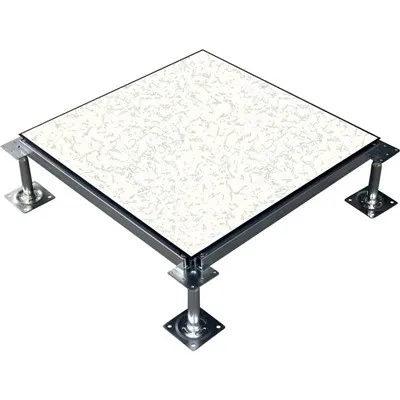
First, let’s define it simply, no jargon. Moisture resistance for raised flooring is how well the panels, pedestals, and stringers hold up when exposed to moisture in any form—think slab vapor, spilled water, high humidity, or even direct contact with water. It’s not the same as waterproofing, though that’s often tossed around interchangeably. Waterproofing would mean the floor won’t let any water through at all, which isn’t realistic or necessary for most applications. Moisture resistance is about slowing moisture penetration, preventing structural damage, and keeping the floor functional even when moisture is present. That distinction is key because a lot of suppliers will overhype “100% waterproof” panels when, in reality, moisture resistance is the real metric that affects long-term performance.
Now, let’s get into the science a little, because this isn’t just bro science. The biggest enemy of raised flooring is slab vapor—moisture trapped in the concrete subfloor under the panels. Concrete is porous; over time, moisture seeps up through the pores, especially if the subfloor wasn’t properly sealed during installation. For steel stringers and pedestals, this moisture can cause corrosion, which weakens the support structure. For wood or composite panels, it can make the material swell, warp, or delaminate (that’s when the top wear layer separates from the core). For commercial spaces like data centers, even a small amount of moisture can mess with underfloor cabling and HVAC systems, leading to downtime that costs thousands of dollars per hour.
So, how do raised flooring manufacturers build moisture resistance into their products? Let’s start with the panel core, because that’s where most problems start. The worst panels for moisture are plain particleboard or raw wood cores—they soak up moisture like a sponge. Good ones use engineered cores: high-density fiberboard (HDF) with a moisture-resistant resin, magnesium oxide (MgO) core, or cement-based core. MgO cores are a big one right now; they’re naturally water-resistant, non-combustible, and don’t swell even when exposed to high humidity. Cement cores are super heavy, so they’re only used for specific heavy-duty applications, but they’re basically impervious to moisture. Then there’s the wear layer on top of the panel—usually a vinyl, laminate, or steel sheet. A thick vinyl or steel wear layer acts as a barrier, stopping surface spills and some slab vapor from reaching the core. But here’s a catch: no wear layer is perfect, so even the best panels need additional prep if your subfloor has high vapor emission rates.
Next, the underlayment and subfloor prep. A lot of clients forget that the raised flooring itself isn’t the only part that affects moisture resistance. The subfloor needs to be tested first—we use a calcium chloride test, right? That measures how much moisture is coming up through the concrete, in pounds per 1,000 square feet per 24 hours. If the number is over 3 pounds, you need a vapor retarder between the concrete and the raised flooring panels. Some panels come with a built-in vapor barrier, but it’s thinner, so for high-moisture areas, we recommend adding a 6-mil polyethylene sheet on top of the concrete before installing the pedestals. That extra layer makes a huge difference. We had a client a couple years back—small retail space in a coastal area, super high humidity—who skipped the extra vapor barrier, and within 18 months their panels were warped so bad the underfloor HVAC vents were blocked. Lesson learned: moisture resistance isn’t just the product, it’s the installation prep too.
Then there’s the pedestals and stringers. Pedestals are the adjustable feet that hold the panels up, and stringers are the horizontal beams that connect them. If you’re using standard plastic pedestals, they’re pretty moisture-resistant, but metal stringers—steel, usually—need a coating to prevent corrosion. Galvanized steel is the basic option, but for super high-moisture spaces (like pool facilities or server rooms near water lines), we use powder-coated steel stringers. The powder coat is a thick, hard layer that keeps moisture away from the steel, so no rust, no weakening. We once had a data center client who used uncoated steel stringers after a pipe leak; within 6 months, the stringers had rusted so much some pedestals were wobbly. Now we always recommend powder-coated steel for any space where moisture is a risk.
Now, let’s talk about what moisture resistance isn’t good for. It’s not a get-out-of-jail-free card. If you have a space that’s going to be exposed to standing water—like a loading dock or a shower area—even the most moisture-resistant raised flooring won’t hold up. Standing water seeps into the seams between panels, gets under the pedestals, and you’re looking at mold, corrosion, and total failure. For those applications, you’d want a waterproof flooring system, which is a different product. Moisture resistance is for spaces where moisture is a potential risk, not a constant presence. That’s an important line to draw—we don’t want to oversell our products to a client who needs something they don’t.
Another common misconception: higher price equals better moisture resistance. Not always. There are cheap MgO core panels that have a thin, low-quality wear layer that starts peeling after a year, and expensive panels with a thick vinyl wear layer and a solid HDF core that will last 10+ years. The key is to look at the specs, not the price tag. Ask your supplier for the moisture vapor transmission rate (MVTR) of the panel and its wear layer—lower MVTR means more moisture resistance. For reference, a good moisture-resistant panel should have an MVTR under 0.5 grams per square meter per day. Also, check if the panel is certified by organizations like the Resilient Floor Covering Institute (RFCI) or the National Floor Products Association (NFPA)—those certifications mean the product has been tested for moisture resistance, not just marketed.
Wait, let’s throw in a real example to make this concrete (pun intended). Last year, we worked with a healthcare facility in Florida—super humid, concrete slab that had been sitting unfinished for 6 months before they installed the raised floor. They went with our standard moisture-resistant MgO core panels, added a 6-mil vapor retarder, and powder-coated steel stringers. A year later, they did a moisture test on the underfloor area and found zero additional vapor penetration, no panel warping, no stringer corrosion. That’s exactly what moisture resistance is supposed to do—protect your investment without breaking the bank.
Now, for the stuff that can mess up even the best moisture-resistant systems. Poor installation is number one. If your installer skips sealing the seams between panels, or doesn’t lay the vapor retarder correctly (leaving gaps), moisture can get in through those cracks. Also, if the space has poor ventilation, high humidity can get trapped under the floor, even if the panels themselves are moisture-resistant. We always recommend a minimum of 2 air changes per hour in the underfloor plenum for spaces with raised flooring—helps keep moisture from building up. If you’re in a coastal area, you might need to bump that up to 4 or 5 air changes.
So, what should you do if you’re evaluating moisture-resistant raised flooring for your project? First, start with a subfloor test. Don’t just guess how much moisture is in your concrete—test it. Second, match the product to your space. If it’s a standard office with average humidity, a mid-range HDF core with a 20-mil vinyl wear layer is more than enough. If it’s a data center in the Pacific Northwest, go for an MgO core with a 30-mil steel wear layer and powder-coated steel stringers. Third, don’t cut corners on installation prep. The vapor retarder and ventilation are just as important as the panels themselves.
And one last thing: if you’re not sure what kind of moisture resistance you need, or what product fits your budget, just reach out. As a raised flooring supplier who’s worked on thousands of projects, I can help you walk through your space, your subfloor, and your needs to pick the right system. No pushy sales pitches, no jargon—just straight talk about what will work for you, and what won’t.

Ready to talk through your project needs, get a customized quote, or ask more questions about moisture resistance for raised flooring? Reach out to our team directly to connect with a specialist who’ll help you make the right choice for your space.
Low Profile Raised Floor References
- Resilient Floor Covering Institute. (2022). Commercial Raised Access Flooring Performance Standards: Moisture Resistance Requirements.
- National Floor Products Association. (2021). Guide to Subfloor Moisture Testing for Raised Flooring Systems.
- International Code Council. (2023). Chapter 12: Mechanical Systems for Commercial Buildings, Underfloor Air Distribution and Moisture Control.
- MgO Manufacturers Association. (2022). Technical Data: Magnesium Oxide Core Performance in High-Humidity Environments.
Fineco Tech Co., Ltd.
As one of the most professional raised flooring manufacturers and suppliers in China, we’re featured by quality products and good service. Welcome to wholesale customized raised flooring made in China here from our factory. If you have any enquiry about cooperation, please feel free to email us.
Address: Wuyue Square, Wujin District, Changzhou, Jiangsu, China
E-mail: info@finecotech.com
WebSite: https://www.finecoglobal.com/
