As an end mills supplier deeply entrenched in the machining industry, I’ve witnessed firsthand the diverse needs and challenges faced by manufacturers. One of the most common questions I encounter is about the difference between end mills and drills. In this blog, I’ll delve into the intricacies of these two essential cutting tools, highlighting their unique features, applications, and the factors that set them apart. End Mills
Understanding the Basics
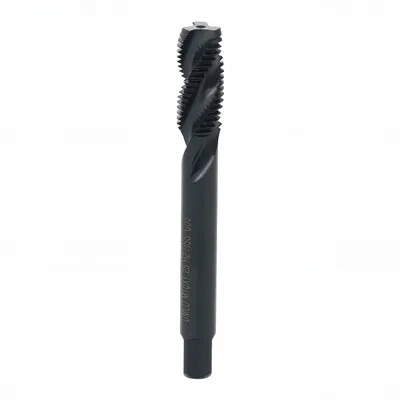
Let’s start by defining what end mills and drills are. A drill is a cutting tool designed primarily for creating round holes in various materials. It typically has a pointed tip and helical flutes that help to remove chips from the hole as it is drilled. Drills come in a wide range of sizes and types, including twist drills, spade drills, and center drills, each suited for specific applications.
On the other hand, an end mill is a type of milling cutter used for machining flat surfaces, slots, and contours. Unlike drills, end mills have cutting edges on the end and the sides, allowing them to cut in multiple directions. End mills are available in different geometries, such as square end, ball end, and corner radius end, to accommodate various machining requirements.
Cutting Geometry and Design
One of the most significant differences between end mills and drills lies in their cutting geometry. Drills are designed to cut axially, meaning they remove material in a straight line along the axis of the tool. The pointed tip of a drill helps to initiate the hole and guide the tool through the material. The helical flutes on a drill serve two main purposes: to provide a path for the chips to escape and to provide cutting edges that shear the material as the drill rotates.
End mills, on the other hand, are designed to cut radially and axially. The cutting edges on the end of an end mill allow it to plunge into the material, while the cutting edges on the sides enable it to mill the material horizontally. This versatility makes end mills suitable for a wide range of machining operations, including face milling, slotting, and profiling.
The design of the flutes also differs between end mills and drills. Drills typically have two or three flutes, which are optimized for chip evacuation and cutting efficiency in drilling applications. End mills, on the other hand, can have anywhere from two to eight or more flutes, depending on the specific application. More flutes generally result in a smoother finish and higher cutting speeds, but they also require more power and can generate more heat.
Applications
Another key difference between end mills and drills is their applications. Drills are primarily used for creating holes in materials, such as metal, wood, and plastic. They are commonly used in drilling machines, lathes, and milling machines to create holes of various sizes and depths. Drills can also be used for countersinking, counterboring, and reaming operations to improve the accuracy and finish of the holes.
End mills, on the other hand, are used for a wide range of machining operations, including face milling, slotting, profiling, and contouring. They are commonly used in milling machines, machining centers, and CNC routers to create complex shapes and features in materials. End mills can also be used for drilling operations, but they are not as efficient as drills for creating deep holes.
Cutting Performance
The cutting performance of end mills and drills also differs significantly. Drills are designed to cut at relatively high speeds and feeds, making them suitable for rapid hole-making operations. However, drills are not as effective at removing large amounts of material or creating complex shapes as end mills.
End mills, on the other hand, are designed to cut at lower speeds and feeds, but they can remove large amounts of material and create complex shapes with high precision. End mills are also more versatile than drills, as they can be used for a wide range of machining operations.
Material and Coating
The material and coating of end mills and drills also play a crucial role in their performance. Drills are typically made of high-speed steel (HSS) or carbide, which are both hard and wear-resistant materials. Carbide drills are more expensive than HSS drills, but they offer better performance and longer tool life, especially when machining hard materials.
End mills are also commonly made of HSS or carbide, but they can also be made of other materials, such as cobalt and ceramic. Carbide end mills are the most popular choice for machining applications, as they offer high hardness, wear resistance, and heat resistance. End mills can also be coated with various materials, such as titanium nitride (TiN), titanium carbonitride (TiCN), and aluminum titanium nitride (AlTiN), to improve their performance and tool life.
Selecting the Right Tool
When selecting between end mills and drills, it’s important to consider the specific application and the material being machined. If you need to create a simple hole in a material, a drill is the most appropriate tool. However, if you need to create a complex shape or feature in a material, an end mill is the better choice.
It’s also important to consider the size and geometry of the tool, as well as the cutting speed and feed rate. Using the wrong tool or cutting parameters can result in poor surface finish, tool breakage, and reduced productivity.
Conclusion
In conclusion, end mills and drills are two essential cutting tools in the machining industry, each with its own unique features, applications, and cutting performance. Understanding the differences between these two tools is crucial for selecting the right tool for the job and achieving optimal results.
Inserts As an end mills supplier, I’m committed to providing high-quality cutting tools and expert advice to help my customers improve their machining processes. If you have any questions about end mills or drills, or if you’re interested in purchasing cutting tools for your machining operations, please don’t hesitate to contact me. I’d be happy to discuss your specific needs and provide you with the best solutions.
References
- "Machining Fundamentals," Society of Manufacturing Engineers.
- "Cutting Tool Engineering Handbook," Kennametal Inc.
- "Modern Machining Technology," Industrial Press Inc.
Small Craftsman (Shandong) Machine & Tools Co., Ltd.
Small Craftsman (Shandong) Machine & Tools Co., Ltd. is one of the most experienced end mills manufacturers and suppliers in China, also supports customized service with low price. Please feel free to buy bulk high quality end mills in stock here from our factory. Contact us for pricelist.
Address: No.9 Quanxin Rd., Sishui Economic Developing Zone, Jining, Shandong, China.
E-mail: 6196@ocutchina.com
WebSite: https://www.ocutooling.com/
